For years, I had wanted to visit Minneapolis and spend enough time properly exploring its restaurant scene.
My first food-focused visit came in June 2024, when I went directly from the airport to lunch at Owamni by The Sioux Chef. Later that weekend, a local friend introduced me to Minneapolis's most famous contribution to burger culture: the cheese-stuffed Juicy Lucy at Matt's Bar.
Those first meals gave me a glimpse of what Minneapolis had to offer. When I returned in April 2026, I finally had the time and freedom to dig into the city's restaurants at my own pace.
Over four days, I began mornings with Hmong pastries, sampled Swedish-inspired dishes at a cultural museum, enjoyed Southeast Asian food, had a classic power lunch at a downtown steakhouse, and tried creative masa dishes at a standout Mexican restaurant. I also made time to cross into St. Paul for dinner with a recent James Beard Award winner.
If you're wondering where to eat in Minneapolis, this four-day itinerary provides a practical starting point. It follows my April trip, with two additions from an earlier visit, but isn't intended to be a definitive list of the city's best restaurants-there are still far too many places I need to try.
Minneapolis Food Itinerary at a Glance
Most mornings, I explored Minneapolis coffee shops and bakeries, and those will get their own guide. In the meantime, a couple of favorites to try are Bellecour Bakery for its laminated pastries and Spyhouse Coffee Roasters, which has five locations around town.
For this itinerary, I start with lunch each day, except for one important exception: breakfast at Diane's Place was too essential to skip.
| Day | Morning | Lunch | Dinner |
| Arrival night | — | — | Hell's Kitchen |
| Day 1 | Spyhouse Coffee | FIKA Café | Spoon and Stable |
| Day 2 | Bellecour Bakery | Open for exploring | Myriel in St. Paul |
| Day 3 | Diane's Place | Stock & Bond | Hai Hai |
| Day 4 | — | Lumi Restaurant | Oro by Nixta |
Arrival Night: An Easy Downtown Dinner
Dinner at Hell's Kitchen
Kel and I began the trip at Hell's Kitchen, a chef-driven downtown restaurant that has been 100% employee-owned since 2020. It was about a block and a half from the Hilton Minneapolis, where we were staying.
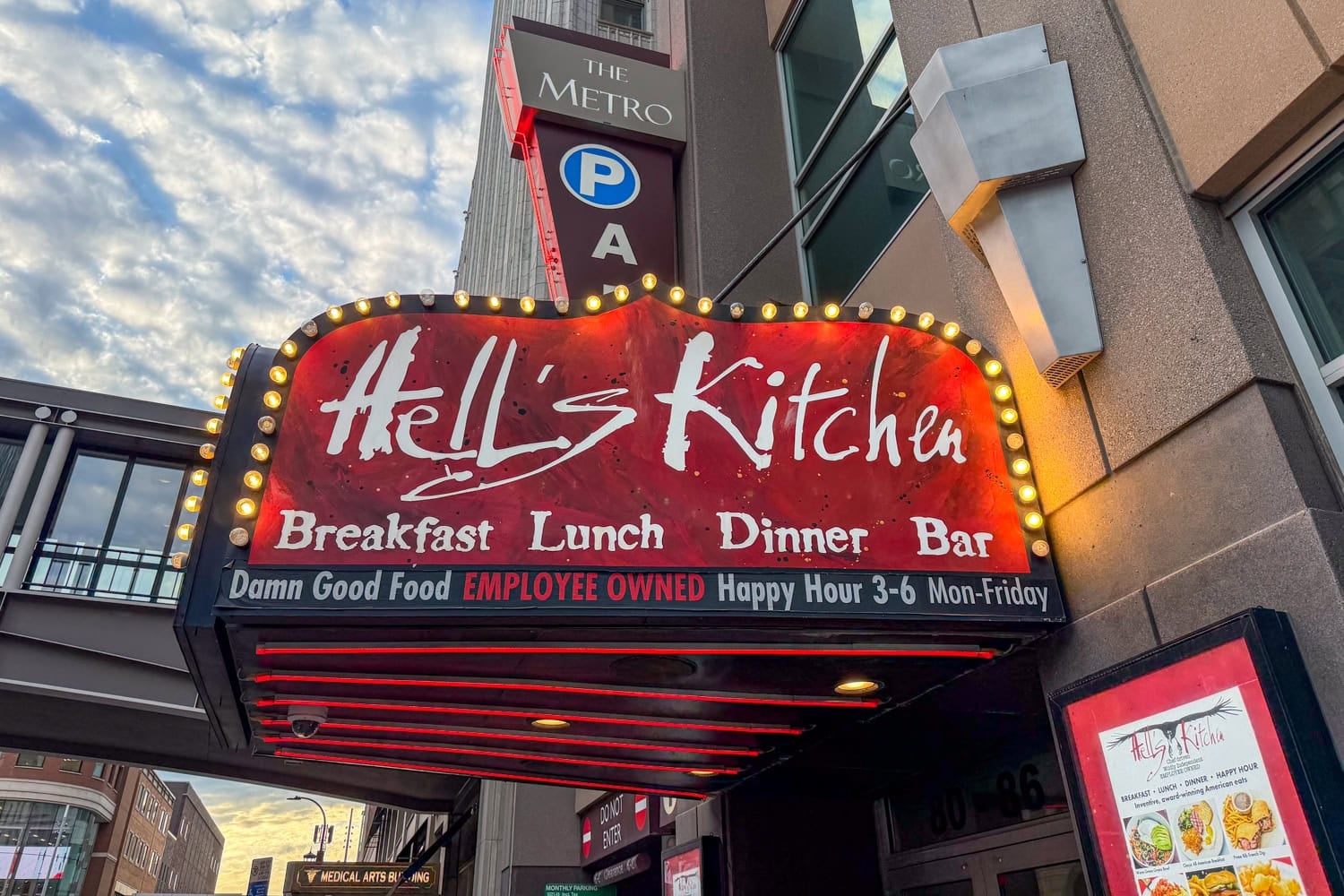
The theater-style marquee out front instantly brought Ralph Steadman to mind-the artist behind the wild illustrations for Hunter S. Thompson's Fear and Loathing in Las Vegas. That's no accident: the underground dining room is lined with an impressive collection of original Steadman pieces.
We tried the lavender-infused Pinkish Pony Club cocktail, toasted sausage bread, bison quesabirria tacos, and a half rack of baby back ribs. The ribs were flavorful, but the portion was much larger than I needed, given everything else on the table.
For dessert, I went for the Kiss My Lips Peanut Butter Mallow Cup, a giant version of a Reese's made with small-batch peanut butter and homemade marshmallow.
Between the fun comfort food and the dramatic setting, Hell's Kitchen was a memorable way to kick off our time in downtown Minneapolis-even if we ordered more than we could finish.
Day 1: Swedish Lunch and a North Loop Destination
Lunch at FIKA Café
I began my first full day with a solo lunch at FIKA Café, the Nordic-inspired restaurant inside the American Swedish Institute. The café takes its name from the Swedish tradition of fika: pausing during the day to enjoy coffee, something to eat and, ideally, good company.
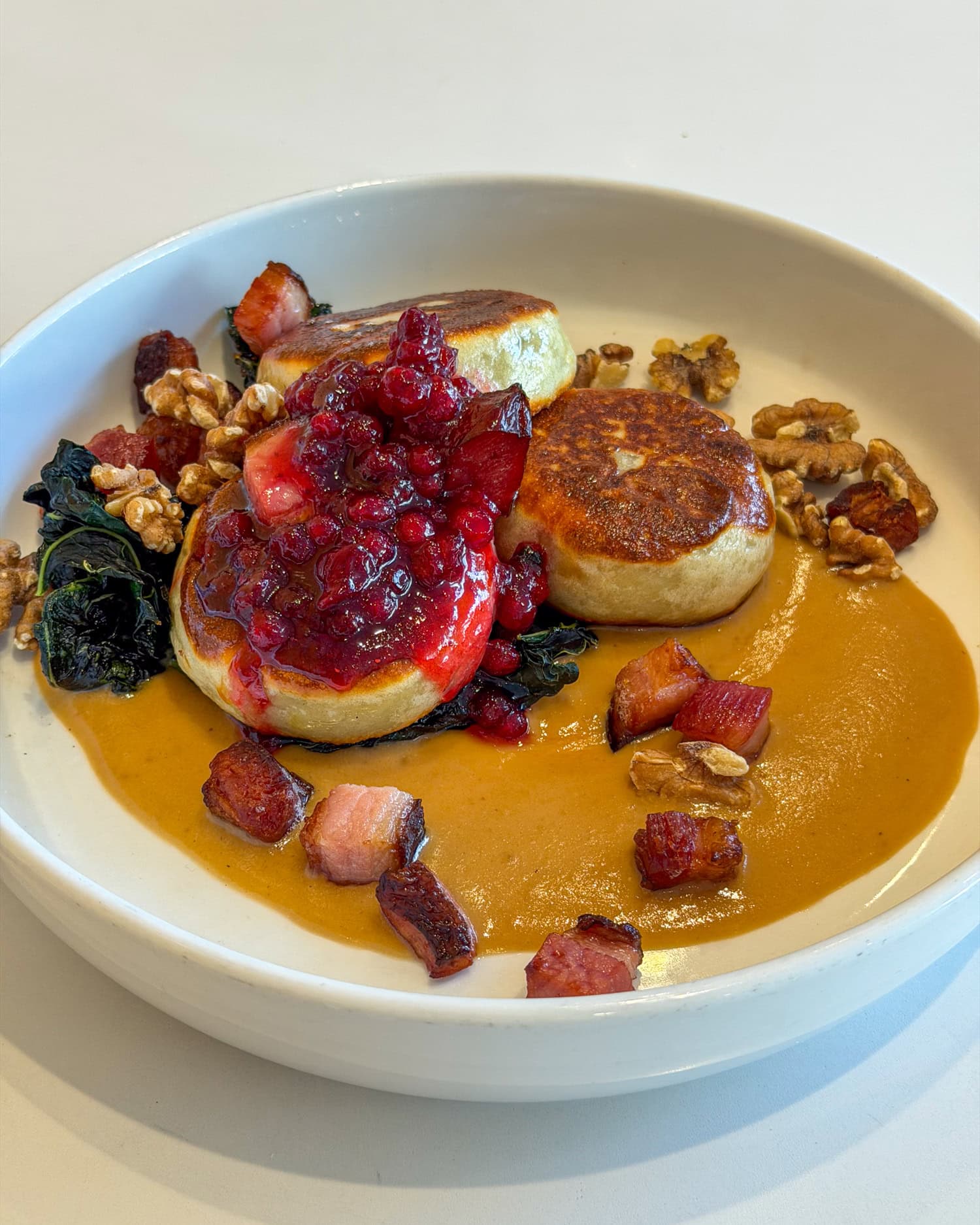
I arrived around 12:45 p.m. and ordered the kroppkakor: potato dumplings filled with beef and pork, served with lardon, kale, lingonberries and walnuts.
For dessert, I went with cardamom bread pudding topped with caramel and house-made whipped cream. The meal took me right back to my first trip to Scandinavia, when I visited Sweden and Denmark in 2019.
After lunch, I took a self-guided tour of the American Swedish Institute, an arts and cultural organization that explores Sweden, the wider Nordic region, and the Swedish-American experience. Its campus combines the contemporary Nelson Cultural Center, where FIKA is located, with the historic Turnblad Mansion.
Nicknamed "the Castle," the château-style mansion was built between 1904 and 1908 for Swedish immigrants Swan and Christina Turnblad. The family later donated it, and the institute took it over in 1929.
Pairing the tour with lunch made FIKA both a meal and a cultural experience, and a nice remembrance of my own travels in Scandinavia.
Dinner at Spoon and Stable
I reserved our 5:30 p.m. Wednesday dinner at Spoon and Stable a little more than two weeks in advance. After a brief wait near the bar, the host seated us at a table with a view across the soaring dining room toward the open kitchen.
Near our table, spoons were mounted vertically on the wall. Our server explained that chef Gavin Kaysen had collected them from restaurants around the world. They helped inspire the restaurant's name, along with the building's original use as a horse stable.
Kel and I ordered a feast to share. Drinks included a gin and raspberry tonic garnished with juniper berries and thyme, plus a Solstice nonalcoholic cocktail made with blood orange aperitif.
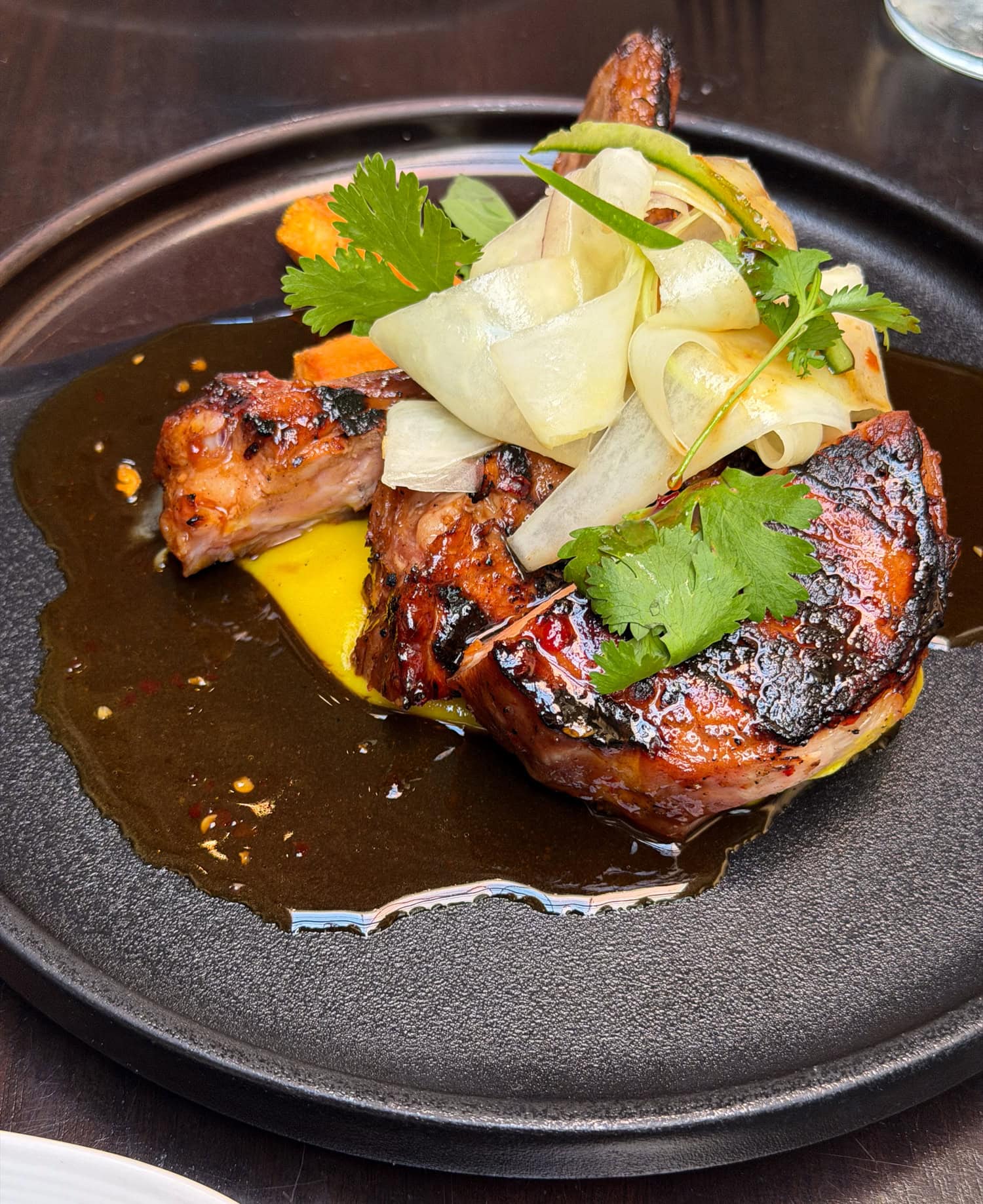
We tried two Spoon and Stable signatures: the bison tartare and a 10-ounce pork chop with tamarind glaze. We added duck-and-shrimp wonton soup, mafalde pasta with pork-fennel sausage ragù, and carrots with sunflower tahina.
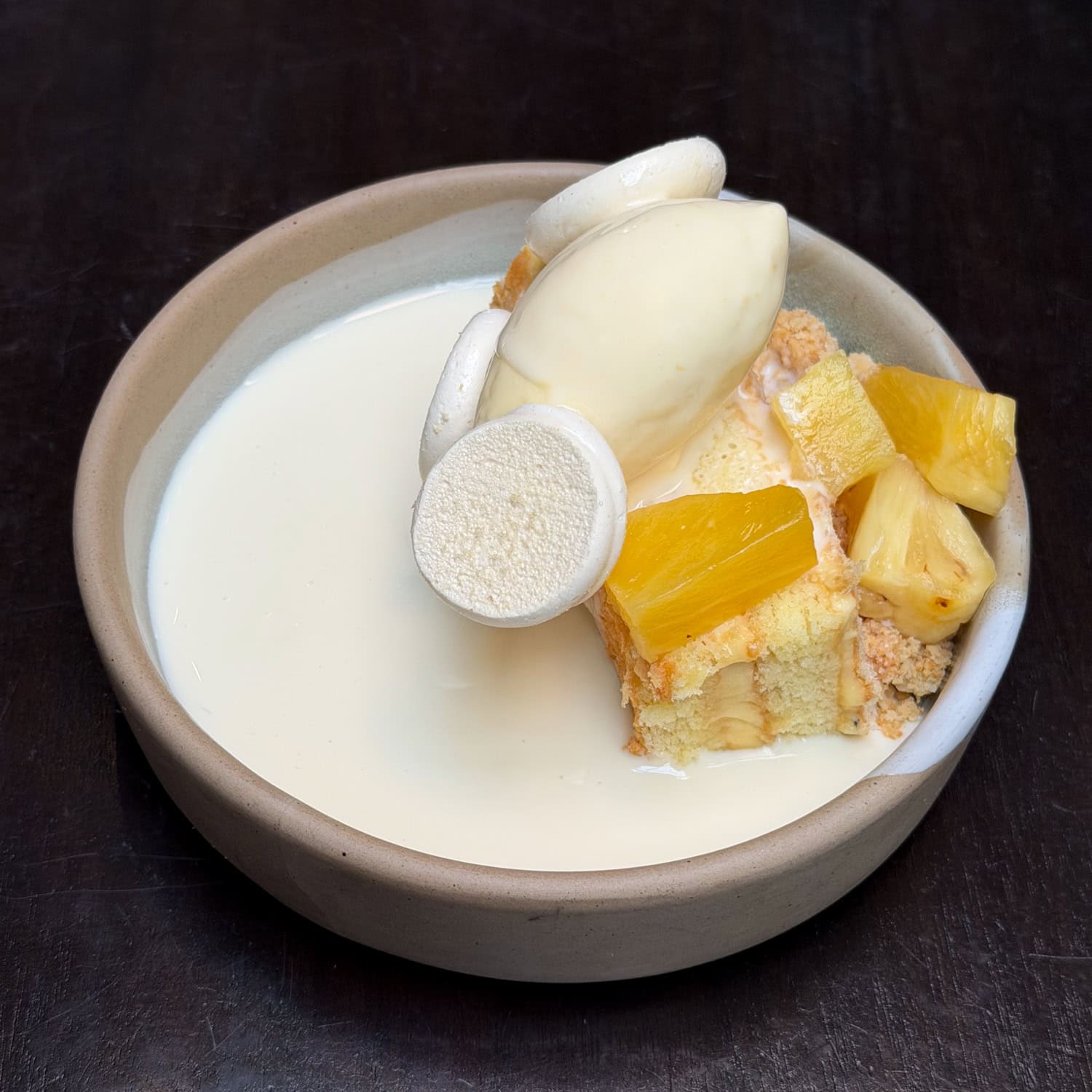
For dessert, we split a honey-and-cream cake with pineapple, honey meringue, and beeswax ice cream. The presentation was beautiful, and I liked the mix of tastes and textures.
With polished food, attentive service, and the energy of the open kitchen, it's clear why Spoon and Stable is still a Minneapolis favorite after more than ten years.
Day 2: Leave Room for St. Paul
Dinner at Myriel
The Twin Cities' dining scenes are closely connected, so it makes sense not to treat the Minneapolis city limits as a barrier. On Thursday, Kel and I headed to St. Paul for dinner at Myriel, chef Karyn Tomlinson's intimate, French-influenced spot.
Tomlinson won the 2025 James Beard Award for Best Chef: Midwest, so I was especially excited about this reservation.
Rideshares from our downtown hotel took about 20 minutes each way. We arrived for a 5:45 p.m. reservation and found a tightly arranged dining room with church pew-style seating and jazz in the background.
We ordered à la carte, beginning with bread and cultured butter. I had the cold and nicely balanced Sunshine Recorder vodka cocktail, while Kel chose the notably lemony Grey Fox nonalcoholic cocktail.
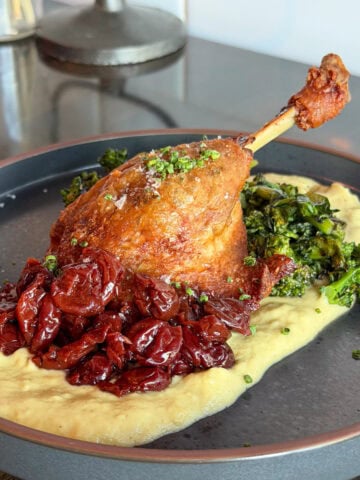
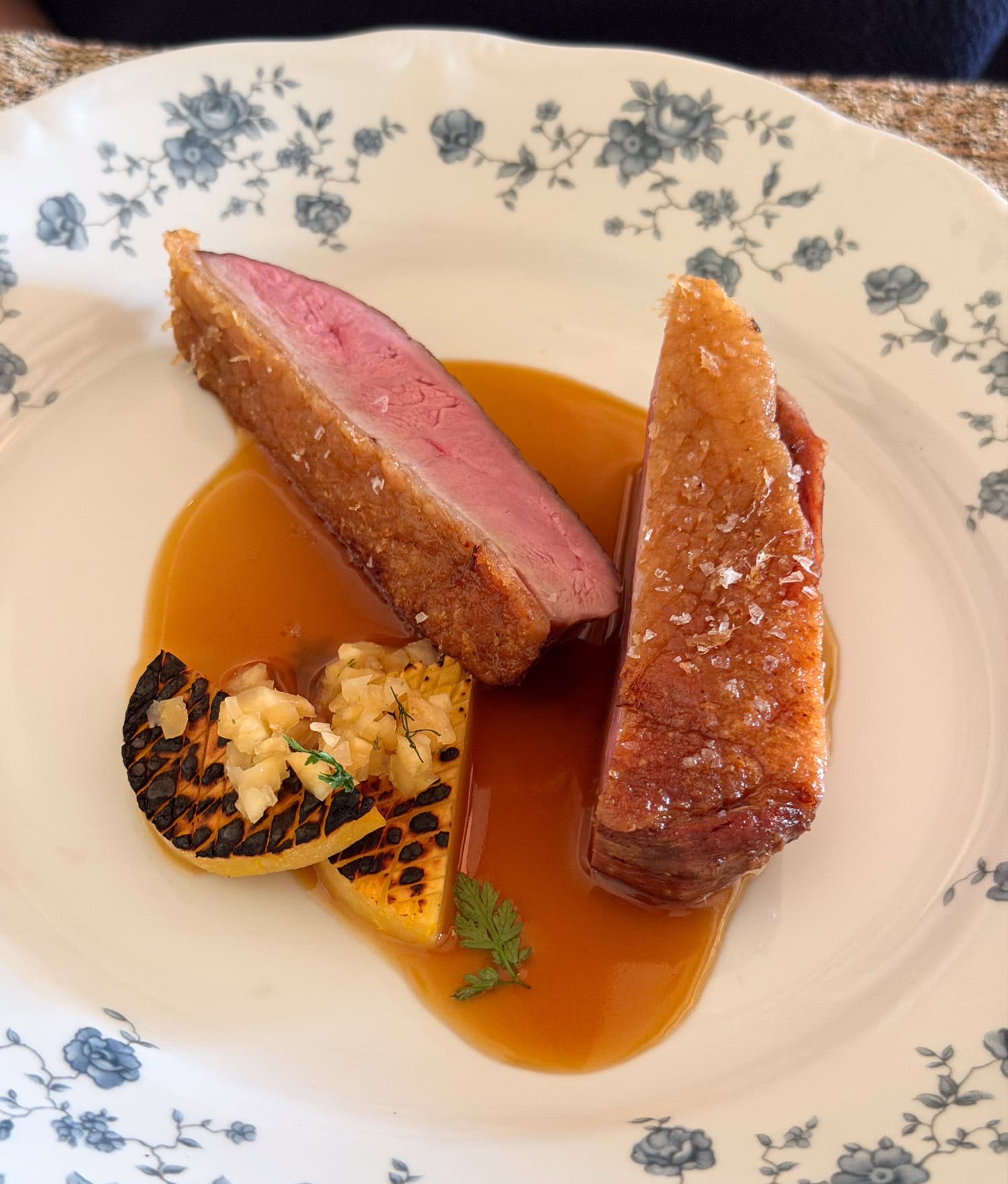
Our savory dishes included purple-top turnip soup, lamb meatballs, and Wild Acres duck breast with rutabaga and sorghum gastrique. The turnip soup had a particularly strong flavor that I didn't enjoy, but the duck was the most impressive savory course.
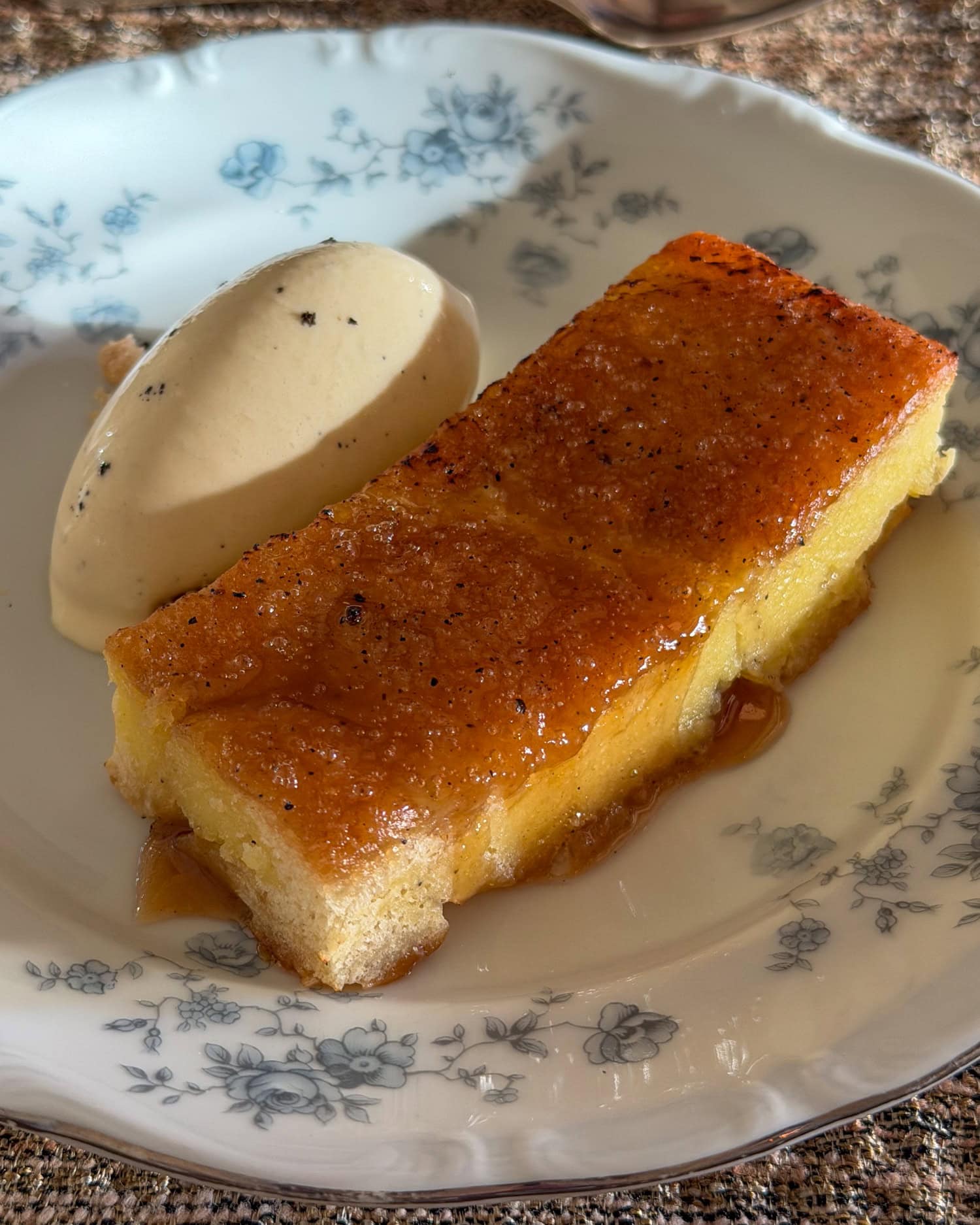
We finished with raspberry-sumac vacherin and prickly-ash pain perdu, followed by Swedish egg coffee. I liked both desserts. The dishes arrived at a comfortable pace, and friendly, professional service carried us through the 90-minute meal.
Myriel takes a little effort to reach from Minneapolis, but it's worth it if you enjoy intimate restaurants, seasonal cooking, and a strong sense of place. Having the evening free let us settle in and enjoy dinner without rushing to the next stop.
Day 3: Hmong Pastries, a Power Lunch and Southeast Asian Flavors
Day three was my most ambitious eating day, starting with breakfast at one of the country's most acclaimed new restaurants.
Breakfast at Diane's Place
Chef Diane Moua spent two decades working as a pastry chef before opening Diane's Place, where her classical training meets her Hmong American heritage. The restaurant was named Food & Wine's 2025 Restaurant of the Year, making it one of my most anticipated stops.
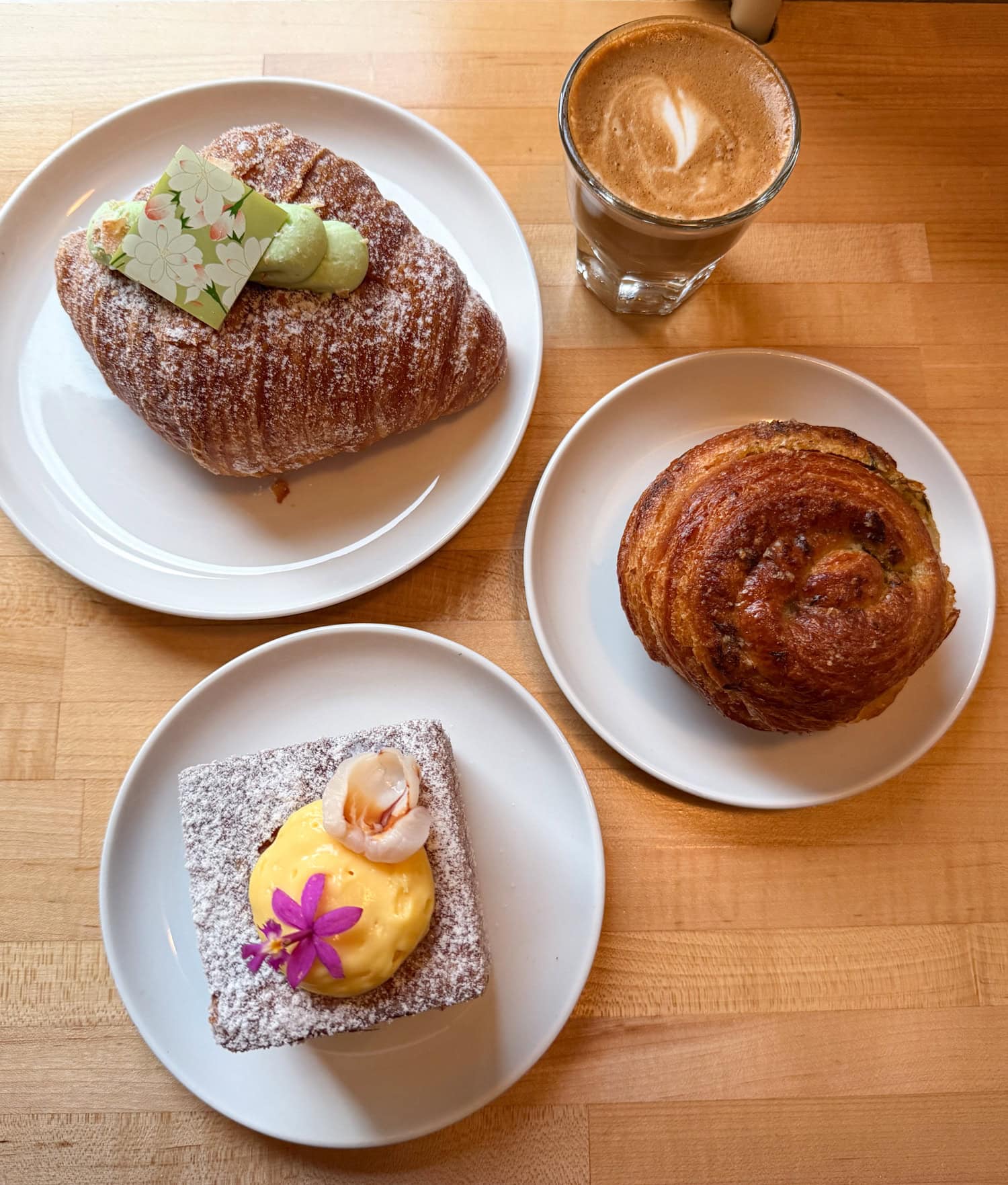
I arrived for an 8:15 a.m. Friday reservation and chose a countertop seat facing the front window. With a cortado, I ordered a coconut-pandan croissant, a mango-passion fruit-lychee croissant, and the green-scallion Danish, which a staff member recommended.
The pastries looked and tasted just as good as they did in the Instagram photos. I was also glad I ordered Diane's Hmong sausage with sticky rice, an over-easy egg, and sweet-and-sour sauce. It gave me a much better sense of Moua's cooking than pastries alone would have.
It was way too much food for one sitting, so I packed up the leftovers to take back to the hotel. I spent an hour at Diane's Place in total bliss and would go back in a heartbeat.
Lunch at Stock & Bond
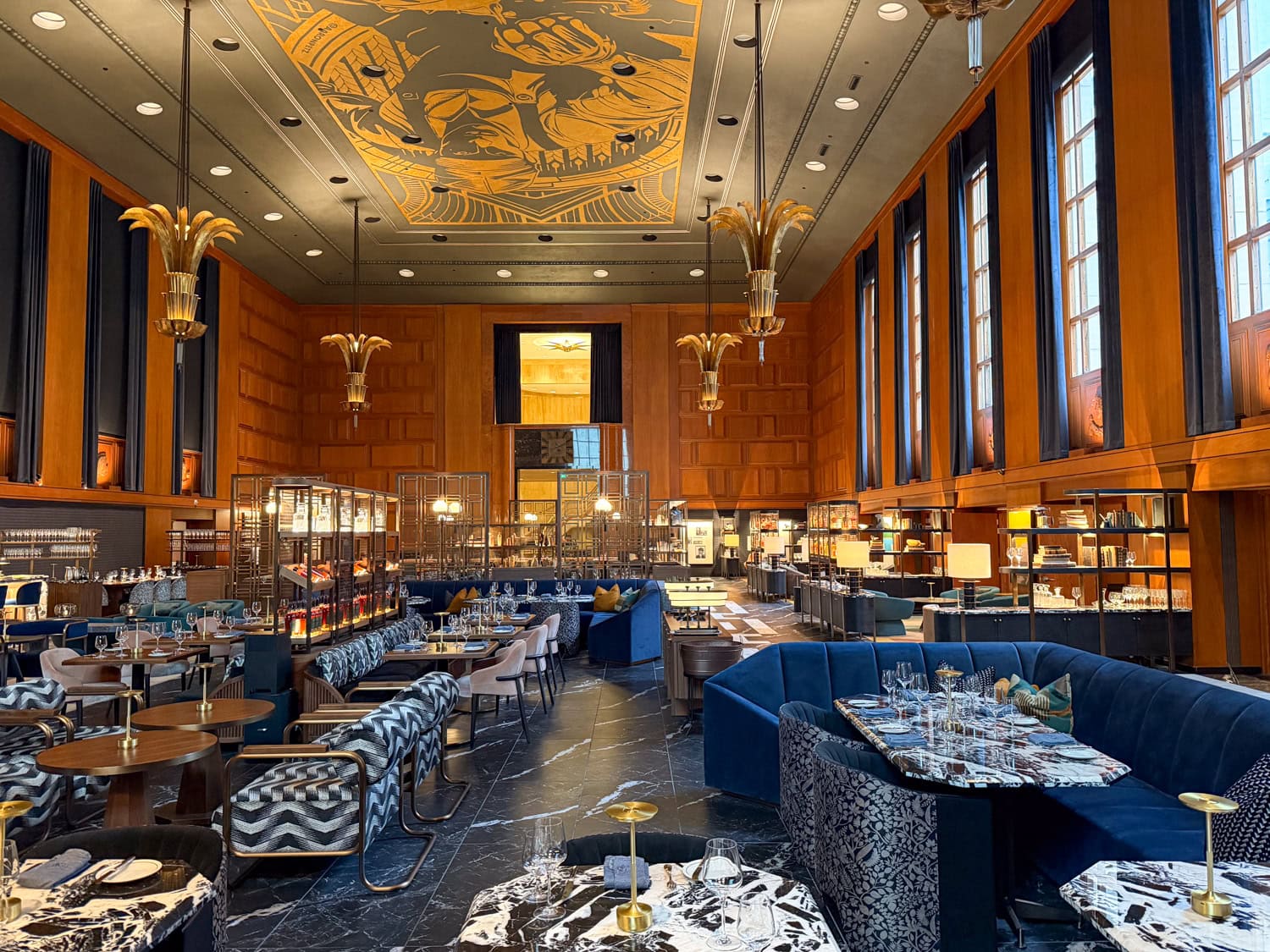
I wanted to visit Stock & Bond after seeing it included in Robb Report's 2025 roundup of America's most beautiful new restaurants. Housed inside the historic Farmers & Mechanics Savings Bank, the restaurant certainly looks the part.
The grand Art Deco space still has the bank's walnut panels and lotus-blossom chandeliers, now paired with jewel-toned seats, marble tables, and whiskey displays.
A gold mural stretches across the 38-foot ceiling. The setting felt ideal for a classic power lunch, so I welcomed the experience-even dining solo.
I started with the Bonded & Washed, made with tallow-washed Roknar rye, red-wine syrup, and Pedro Ximénez sherry. I especially liked the touch of sweetness from the red wine.
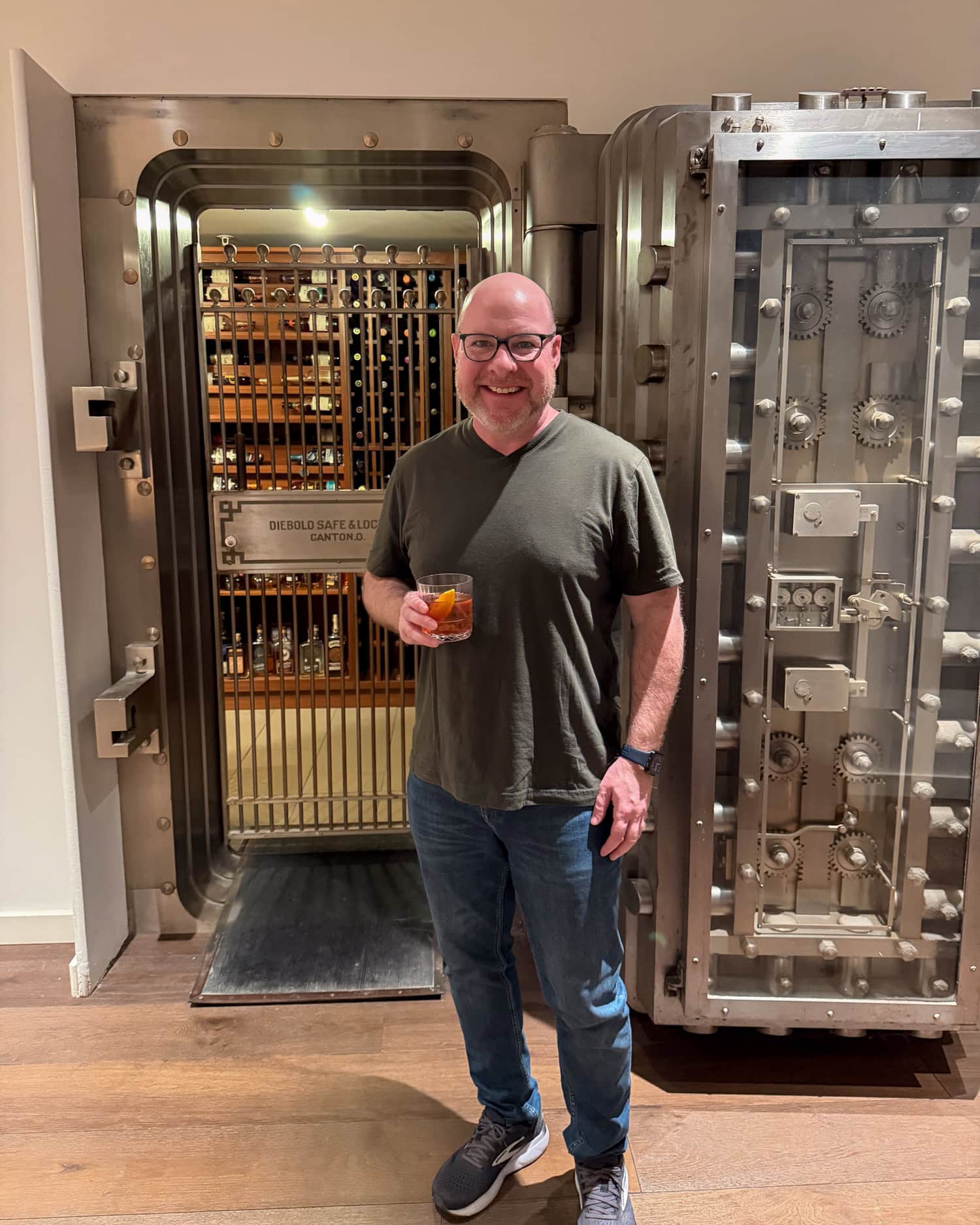
When my server offered to take my photo in front of the actual bank vault, I grabbed my cocktail and followed her. The enormous steel door and whiskey bottles stored inside made an ideal backdrop.
For lunch, I ordered the six-ounce Heritage Black Angus filet, cooked medium and served with au poivre sauce, plus grilled asparagus.
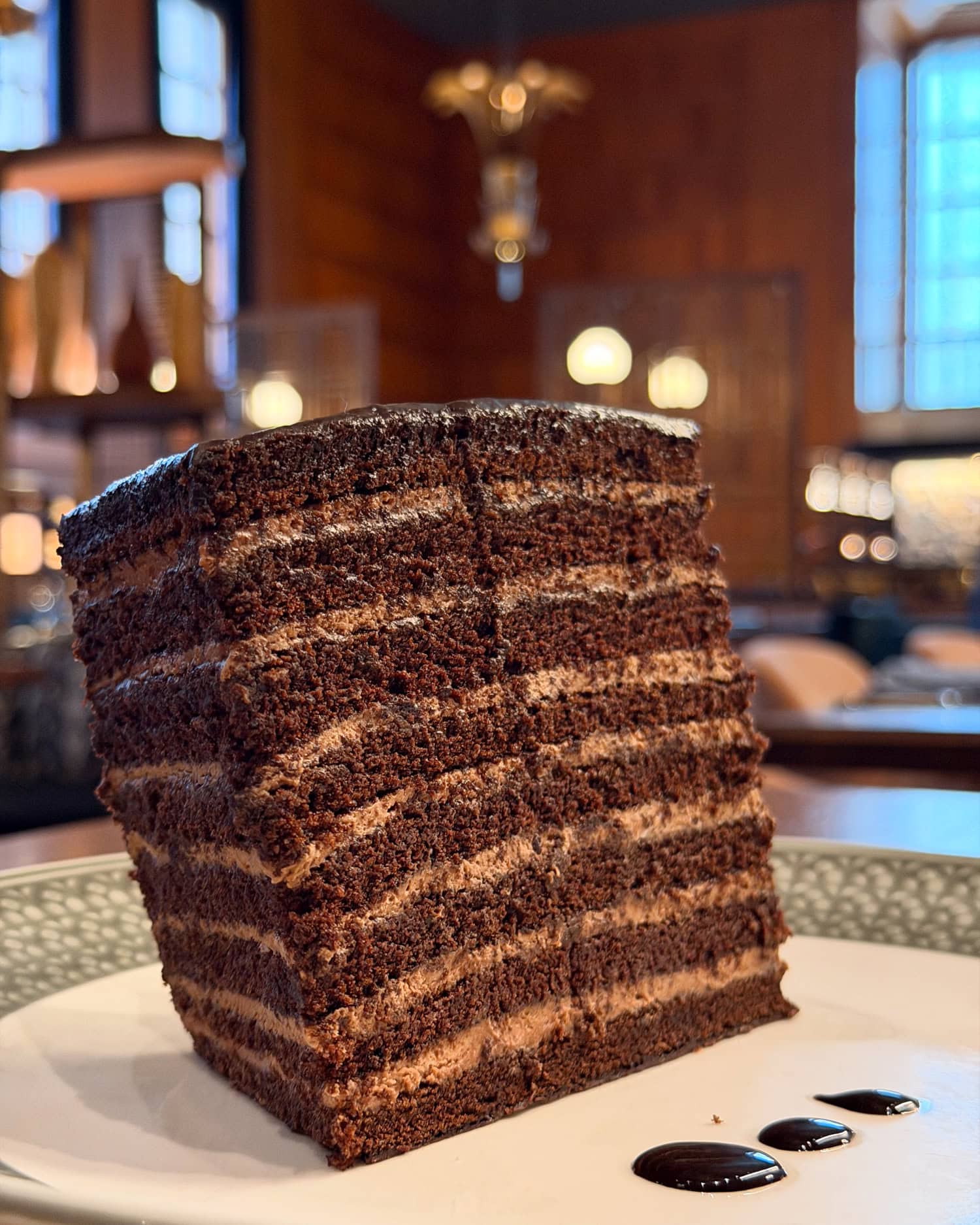
There was never any doubt about dessert: I chose the towering 16-layer chocolate cake, most of which returned to the hotel with me.
With tax and tip, my solo lunch came to about $150. It was a splurge, but the food, attentive service, and memorable setting made it rewarding.
Dinner at Hai Hai
For dinner, Kel and I headed to Hai Hai, chef Christina Nguyen's lively spot for Southeast Asian flavors. Nguyen won the 2024 James Beard Award for Best Chef: Midwest, but the restaurant keeps things relaxed and welcoming.
Hai Hai was already humming when we arrived for our 5:30 p.m. Friday reservation. Tropical plants filled the teal dining room, and our table by the front window got plenty of natural light.
I ordered the Bird of Paradise, a fruity rum cocktail with pineapple, passion fruit, orange, guava, and lime. Kel chose the alcohol-free #1 MOT, made with lemon aperitif, strawberry, citrus, and nonalcoholic cava.
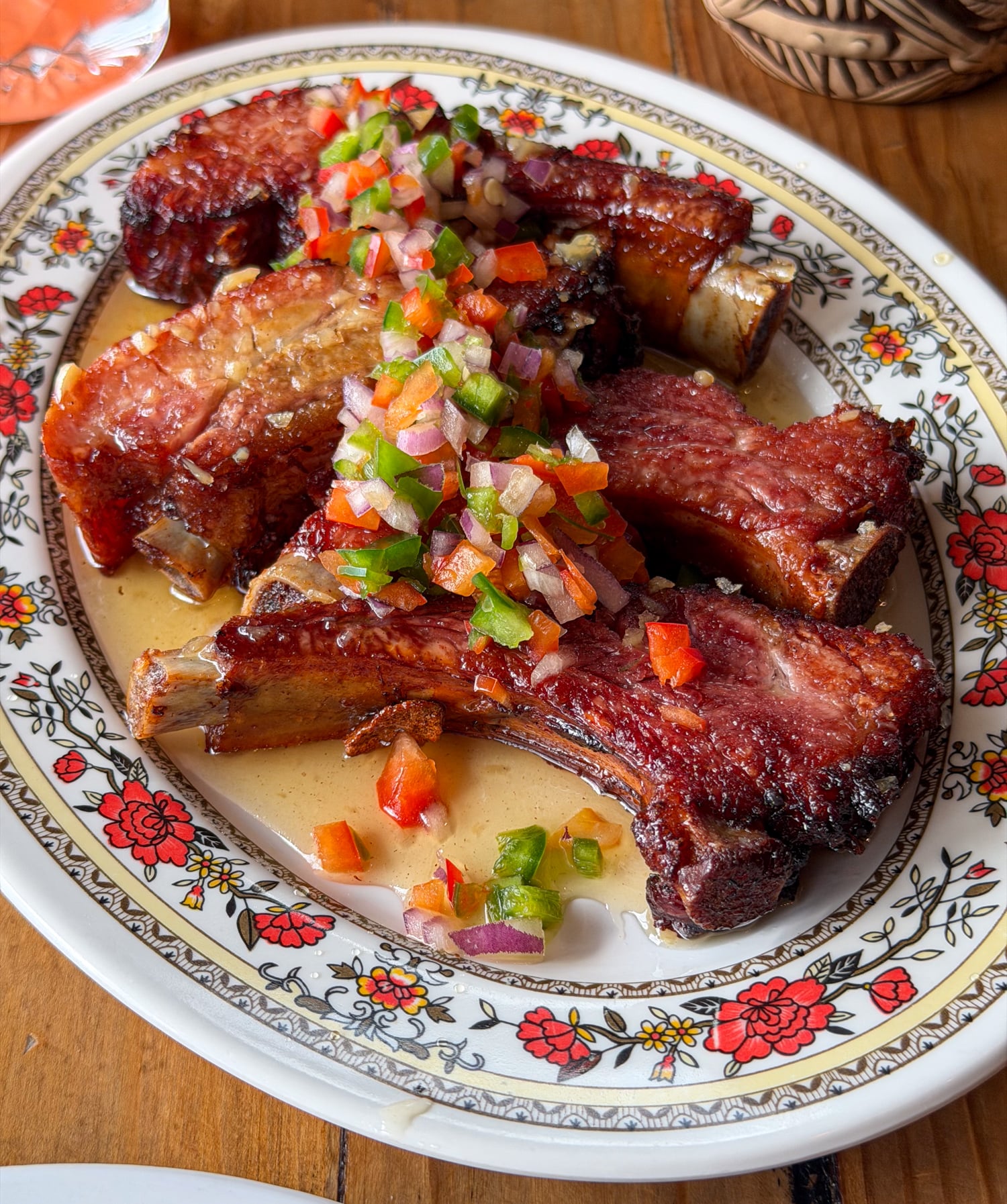
We shared adobo pork ribs, Hanoi sticky rice, and a Vietnamese crepe filled with pork belly and shrimp.
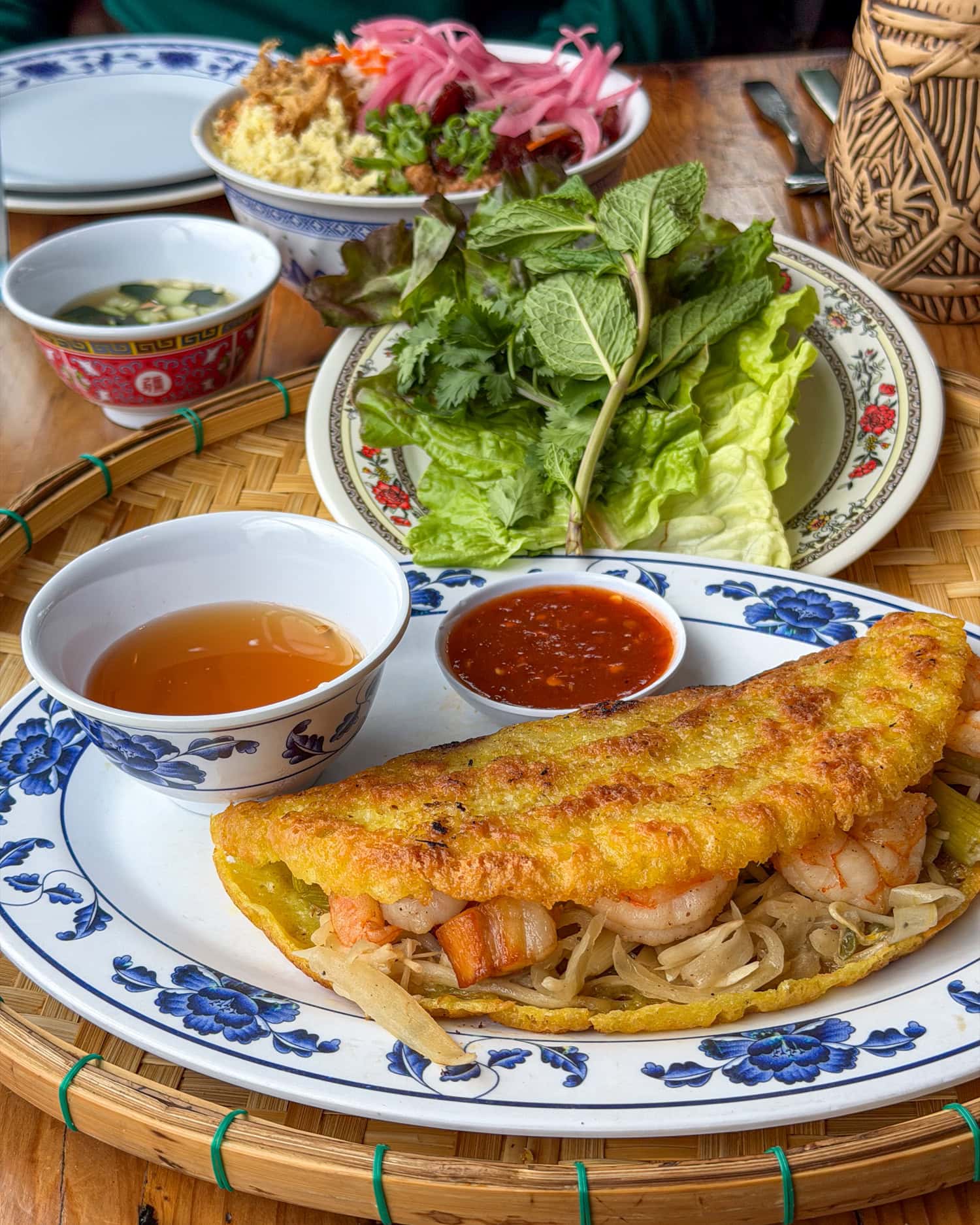
The ribs were fall-off-the-bone tender and full of flavor. I also liked assembling bites of the crisp turmeric-and-coconut crepe with lettuce, fresh herbs, and nước chấm.
Hai Hai's Vietnamese coffee tiramisu was a creamy, satisfying twist on the Italian classic.
Day 4: Turkish Cooking and a Celebration of Corn
Lunch at Lumi Restaurant
Kel and I picked Lumi because it was just a few blocks from our downtown hotel, and the Turkish menu promised to bring back memories of my six-week backpacking trip through Turkey.
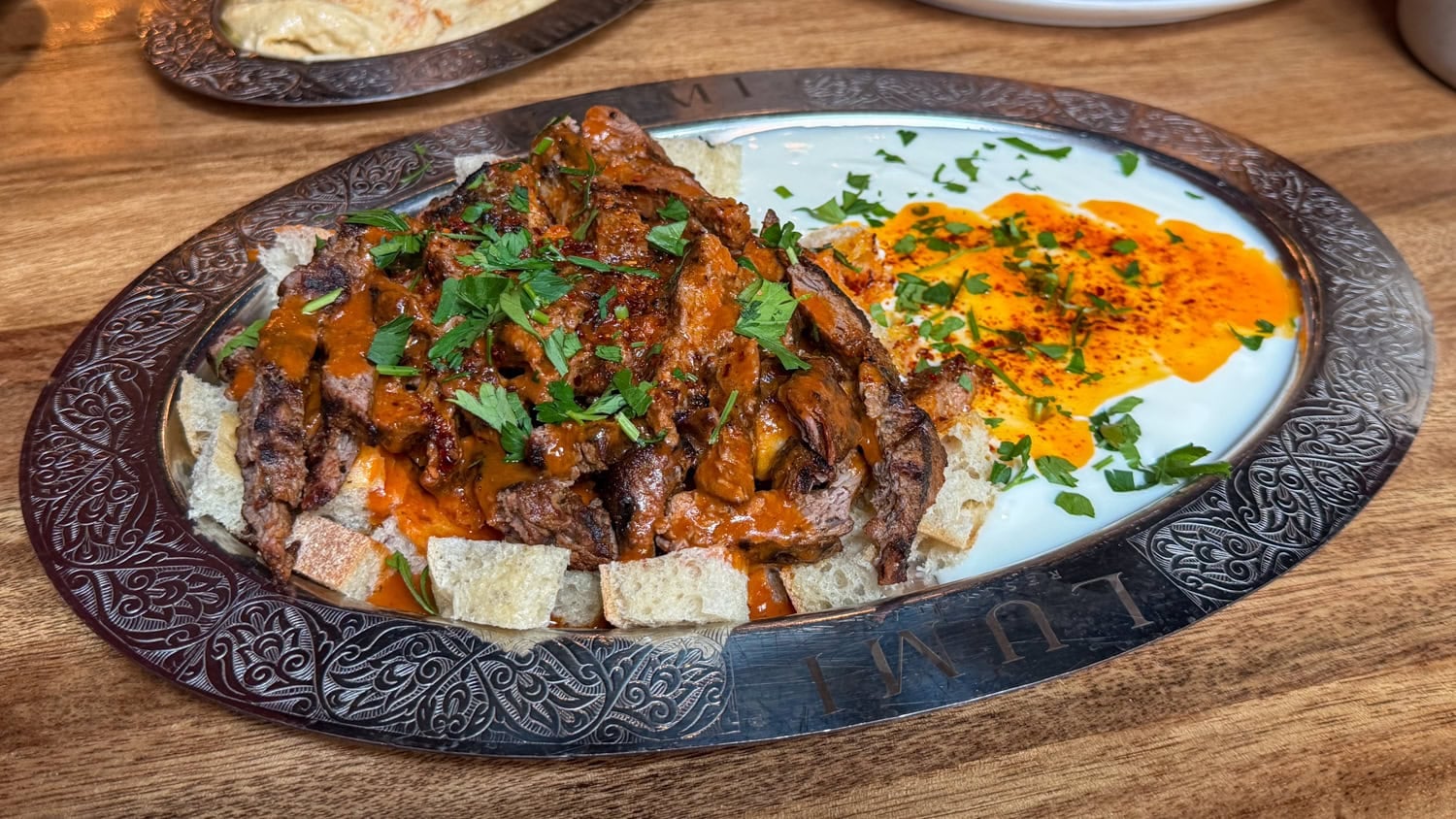
I began with Turkish tea, served in the familiar tulip-shaped glass. Tea is ubiquitous in Turkey, and during my trip I became accustomed to drinking it every day. We also shared hummus with warm bread and a sample portion of carrot dip.
For my main, I ordered İskender: sliced döner meat over bread with tomato sauce and yogurt, a longtime favorite of mine. The flavors brought me straight back to Turkey. Lumi is a handy downtown choice for Turkish and Mediterranean food in a laid-back setting.
Dinner at Oro by Nixta
For my final dinner, I went solo to Oro by Nixta. Despite the similar name, it's not connected to Nixta Taqueria in East Austin, which I'm also a fan of.
Oro grew out of Nixta Tortilleria, founded by Gustavo and Kate Romero, and remains centered on heirloom corn and the possibilities of masa. That focus is apparent upon entering, where a beautiful mural celebrates corn and the people and traditions surrounding it.
I was seated next to a thick wall with a cutout overlooking the entrance and nearby tables, which made for great people-watching. By 5 p.m., the small dining room was full, and the bar was busy, but the restaurant never felt too loud.
I started with Maize Dorado, a golden corn ale from local Nine Mile Brewing made with Oro's own heirloom nixtamalized corn. Co-owner Kate Romero stopped by to talk about the collab, one of several personal touches that made the evening memorable.
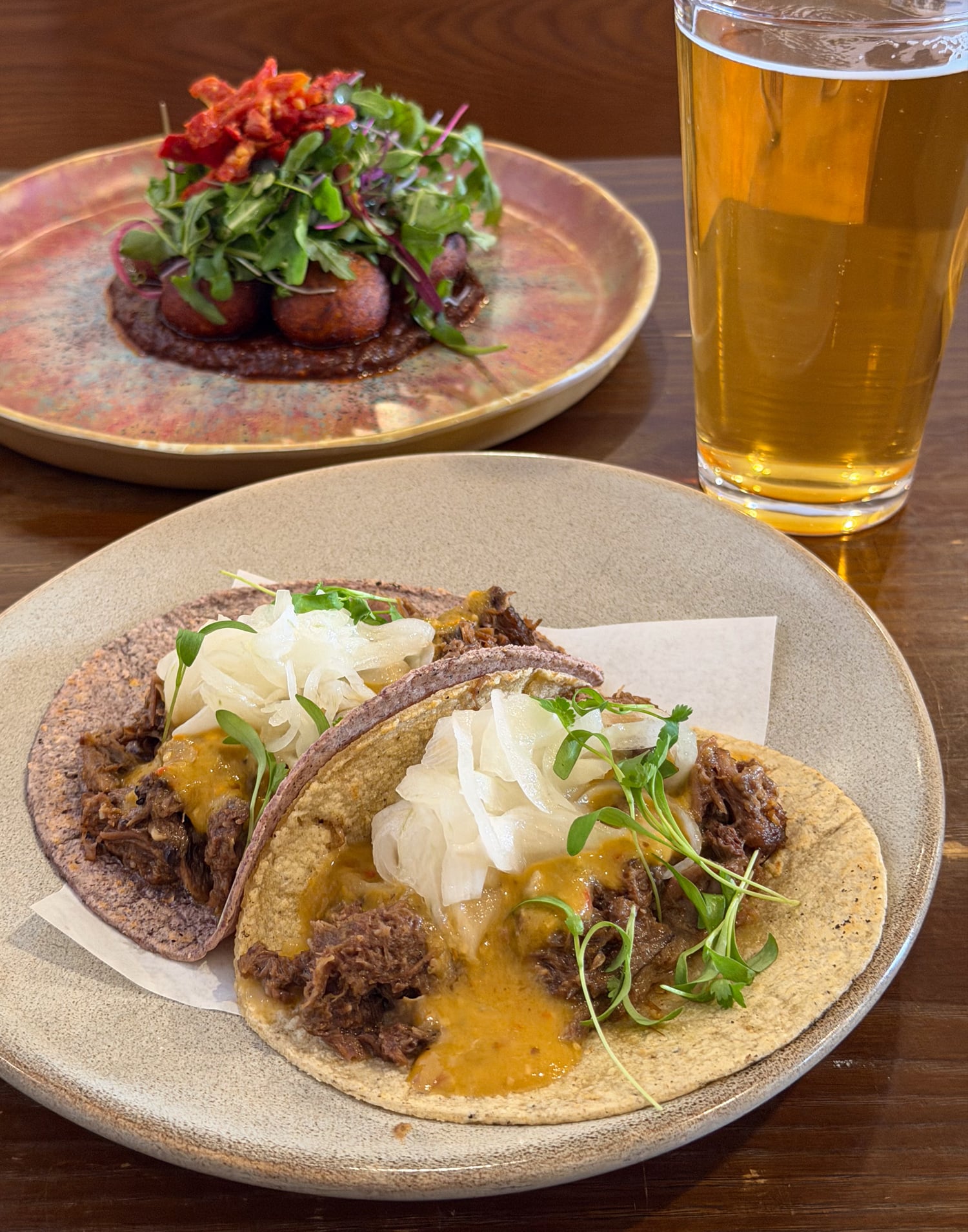
The chochoyotes de plátano were plantain-masa dumplings with bacon jam, sun-dried tomato, onion, and arugula. Next up were two beef tongue tacos with cured onion, cilantro, and salsa de chile de árbol, which is supposed to be the hottest salsa on the menu. My tingling lips confirmed it. Woooo!
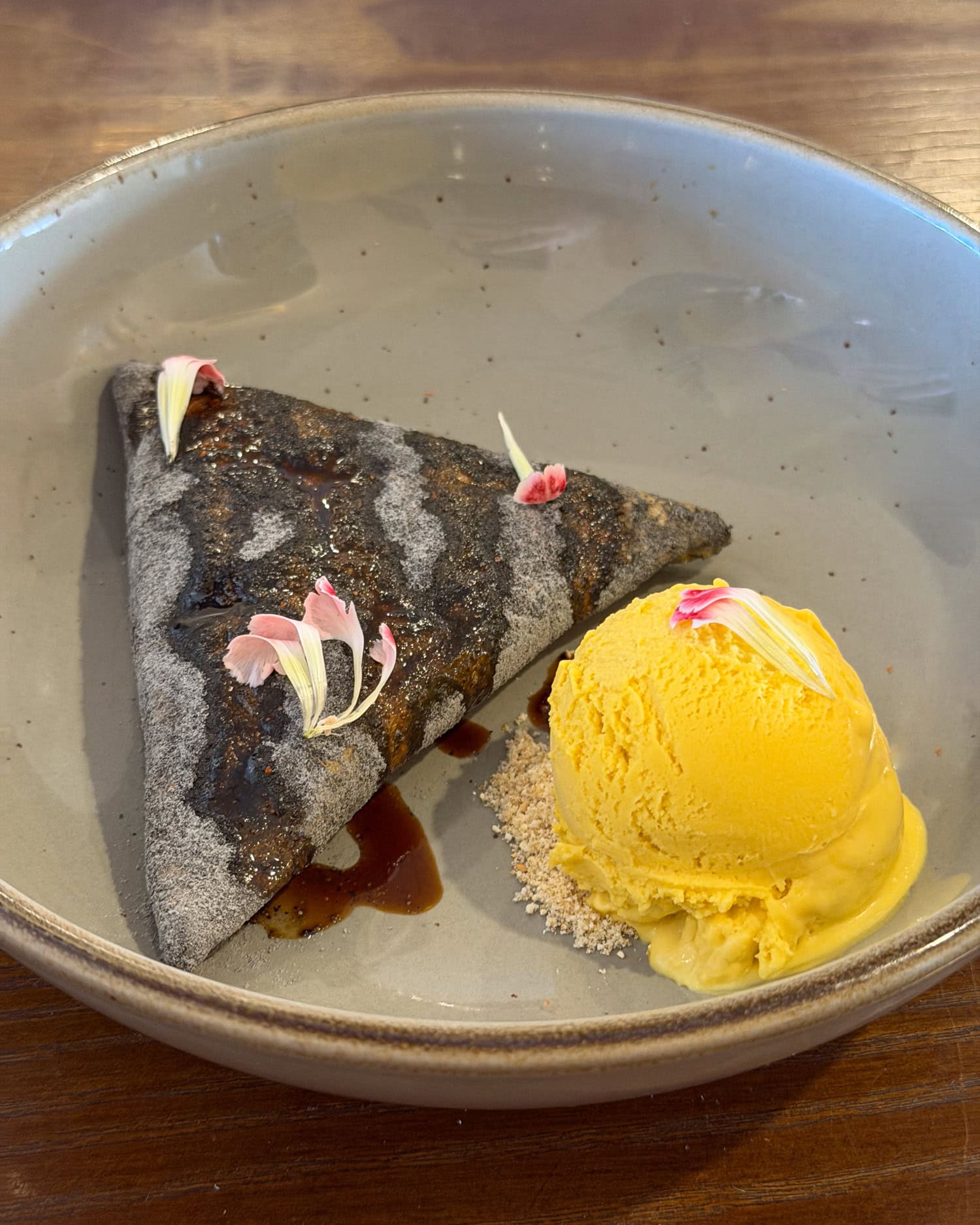
For dessert, I went with the tetela de guayaba special-a warm masa pocket filled with guava, cream cheese, and cinnamon, served with mango ice cream. I loved the hot-and-cold contrast. My server mentioned that tetelas aren't especially common in Mexico and can also be savory.
The Latin soundtrack made the meal even better, especially when I recognized "Sin Documentos" by Los Rodríguez, one of my favorite Latin rock songs. Chef Gustavo Romero was at the host stand when I left, wrapping up an evening of genuinely warm service.
Oro is just the kind of place I seek out when traveling-a restaurant with a clear sense of identity that feels unique to its city. It was a fitting way to end my trip.
Two More Minneapolis Food Experiences From My First Trip
My April itinerary built on two notable meals from an earlier visit in June 2024.
Lunch at Matt's Bar
Before attending an Austin FC match against Minnesota United, our local friend recommended that we try one of Minneapolis's signature foods: the cheese-stuffed burger known as a Juicy Lucy, or, as Matt's Bar spells it, the "Jucy Lucy."
There was a small line when we arrived for Saturday lunch, which passed right by the griddle, giving us a close-up look at rows of burger patties cooking. I ordered the famous Jucy Lucy with fries, careful not to burn myself on the molten cheese inside the patty.
Dim lighting, crowded tables, and a no-frills atmosphere made Matt's every bit the classic neighborhood dive bar-a fitting place to try this Minneapolis staple.
Lunch at Owamni by The Sioux Chef
Owamni was our first stop after Kel's friend picked us up at the airport on Friday. Although we arrived without a reservation at 2:45 p.m., we were fortunate to get counter seats overlooking the open kitchen.
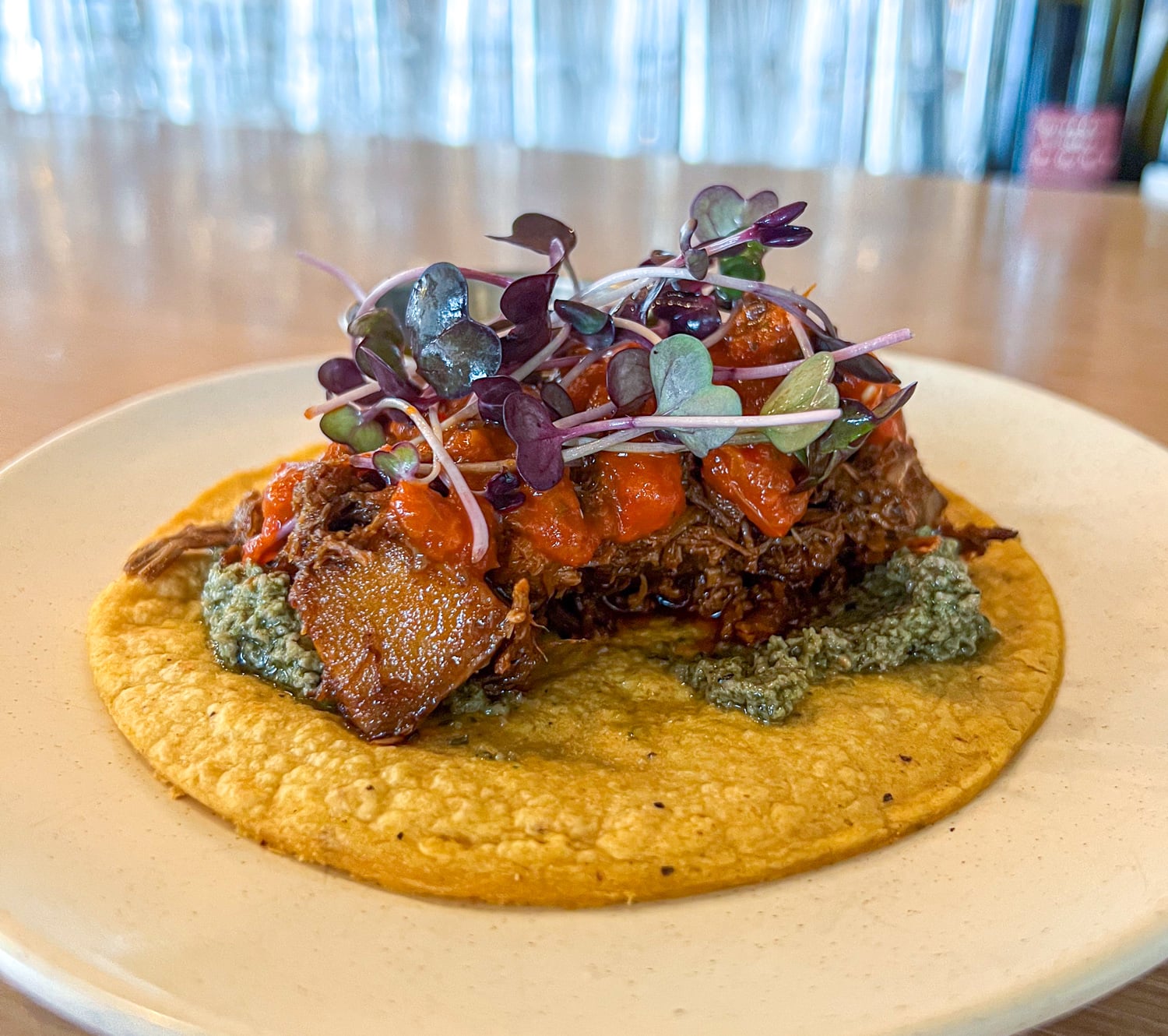
Chef Sean Sherman's menu centers on Indigenous ingredients and excludes colonial additions like beef, pork, chicken, wheat flour, cane sugar, and dairy. We shared corn tacos, sweet potatoes with maple chili crisp, and elk skewers.
My favorite was the bison birria taco with guajillo salsa, spring pesto, and bison broth. For dessert, I liked the squash custard with berries, meringue, and bison-fat caramel best.
You can read much more in my dedicated post, Dining at Owamni by The Sioux Chef.
Planning note: Owamni has left its original riverside location. Its successor, Indígena by Owamni, opened inside the Guthrie Theater in June 2026 with an expanded menu.
How To Decide Where To Eat in Minneapolis
Here are a few practical lessons I picked up from my two visits:
- Book dinner reservations, especially for Spoon and Stable, Myriel, and Oro. How far in advance tables open up varies by restaurant, so it's worth checking each place's website. Thirty days in advance is common practice.
- Try to group restaurants by neighborhood when you can. This itinerary covers downtown, the North Loop, Northeast Minneapolis, South Minneapolis, and St. Paul.
- To get between these neighborhoods, I mostly relied on rideshares like Uber and Lyft, which were easy to use and flexible for getting around. In busier areas like downtown or the North Loop, I walked between stops, while for longer distances (such as crossing to St. Paul) I booked a rideshare. Metro Transit buses and light rail are also options if you prefer public transportation, with most key areas connected.
- Leave space between meals. Three restaurants in one day is doable, but only if you plan breakfast and lunch carefully.
- Don't overlook solo dining. FIKA, Diane's Place, Stock & Bond and Oro all offered different experiences worth seeking out. Check out my guide to eating alone for tips on getting more comfortable with the practice.
- Mix up price points and restaurant styles. Sometimes, a Juicy Lucy in a dive bar tells you as much about a city as a multi-course tasting menu.
- Consider making a trip to St. Paul. The Twin Cities' food culture doesn't stop at the Minneapolis line.
Restaurant hours, menus, and reservation policies can change, so check each restaurant's website or Instagram profile before visiting.
Is Minneapolis Worth Visiting for Food?
After two food-focused visits, my answer is a definite yes.
What impressed me most wasn't a single defining Minneapolis cuisine, but the variety of perspectives across the city: Indigenous cooking at Owamni, Hmong food and French pastry technique at Diane's Place, Southeast Asian flavors at Hai Hai, Scandinavian traditions at FIKA, and Mexican heirloom corn at Oro.
Many of these spots also stand out for accommodating dietary needs:
- Owamni offers a range of gluten-free and vegan dishes, with a focus on Indigenous ingredients.
- Diane's Place bakes several vegetarian pastries and often includes gluten-free sweets.
- Hai Hai and FIKA both have creative vegetarian options on their menus, and Oro features vegetarian masa dishes alongside its celebrated tacos.
If you have specific dietary needs, it's a good idea to check menus in advance, but Minneapolis is a welcoming city for vegetarian, vegan, and gluten-free diners.
I still have plenty of places left to try. Spots like Bûcheron, Vinai, Kado no Mise, Gai Noi, and Demi give me more than enough reason to plan another trip.
If you want to catch Minneapolis at its most exciting, consider planning your visit around the city's seasonal food events, such as the Minnesota State Fair each August, which features a wide range of local and creative foods.
Keep an eye out for notable new restaurant openings on the horizon as well. Timing your trip with these events or new spots can add something special to your food itinerary.
For now, this itinerary reflects the Minneapolis I've come to know: ambitious but unpretentious, culturally layered, and much more interesting than its old "flyover" reputation suggests.