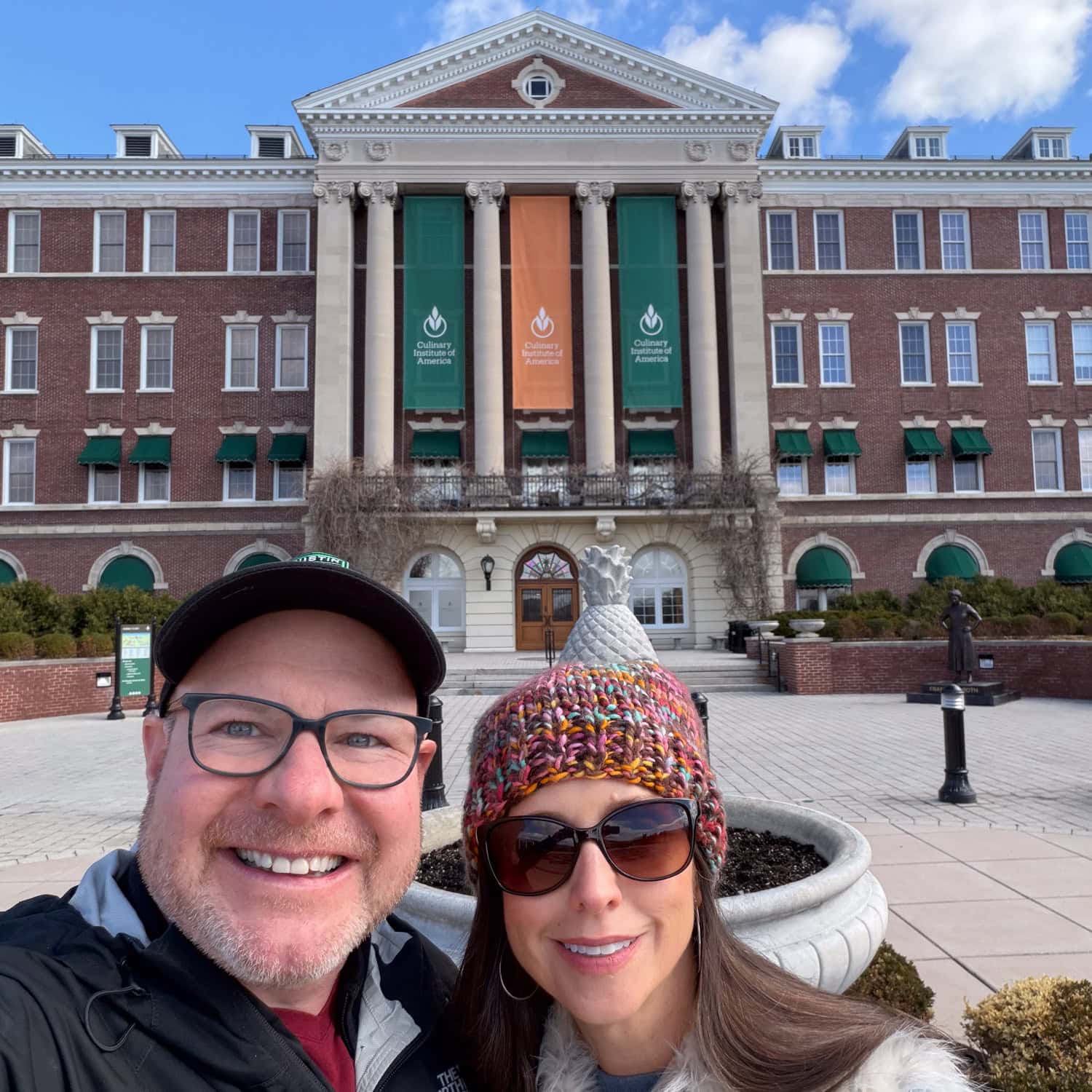
On our annual trip to New York City, we decided to tack on an overnight in Hyde Park. The plan was clear: spend a day dining at the Culinary Institute of America and, between meals, explore the famous culinary school.
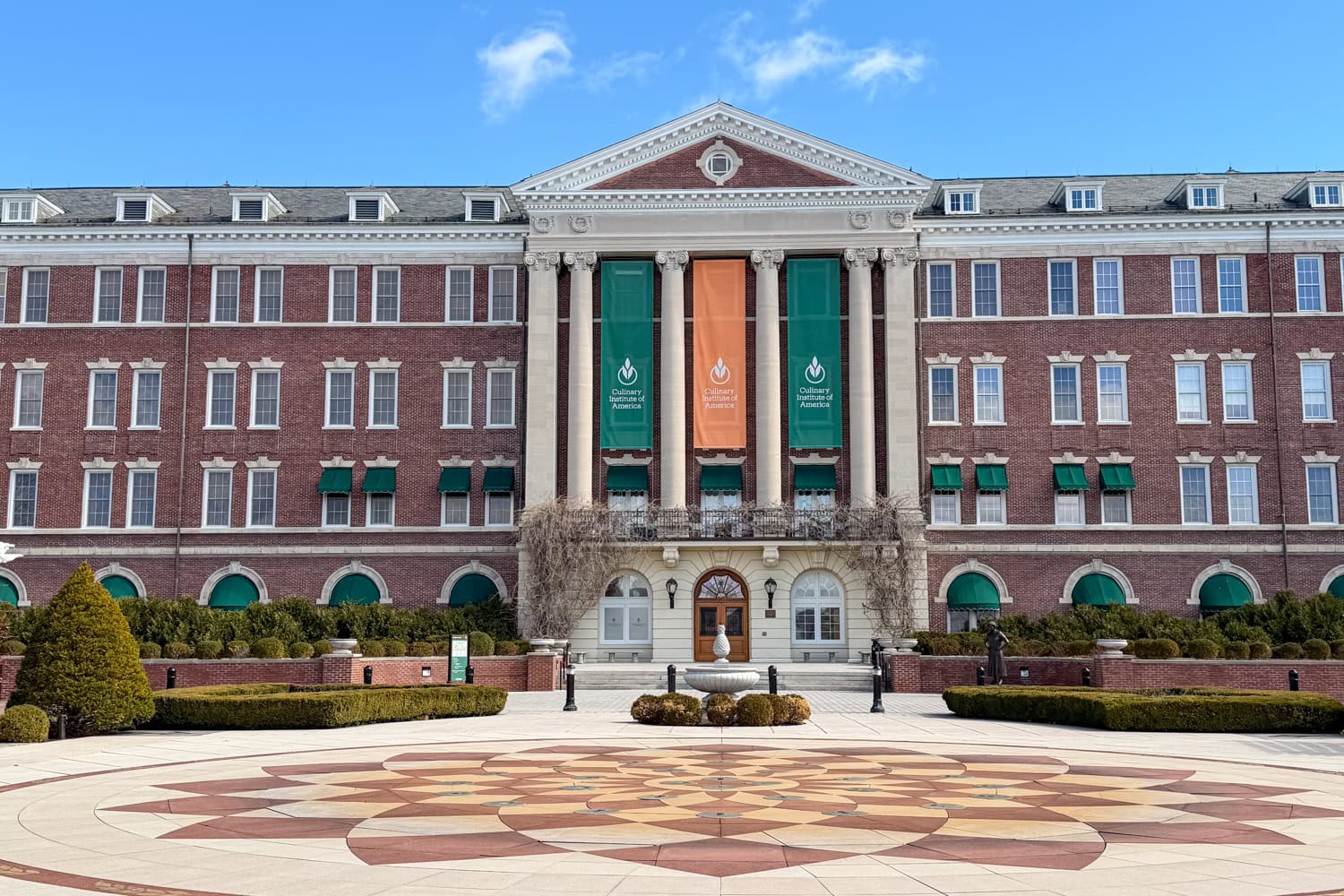
I first heard about the Culinary Institute of America-everyone calls it the CIA-thanks to Anthony Bourdain. He's probably the school's most famous graduate.
I read about it in his first book, Kitchen Confidential, and later saw it in the 2010 Hudson Valley episode of No Reservations (S6 E5).
The CIA stuck with me as the place where Bourdain learned to cook before setting off on the career that inspired so many of us to view the world through food.
It wasn't until decades later that Kel and I thought about visiting the campus ourselves. A family friend mentioned their own trip to Hyde Park, and it sounded like an easy detour from New York City-especially since you can actually eat at restaurants run by CIA students.
Before leaving home, we also watched the first season of Netflix's Next Gen Chef, a cooking competition filmed at the Hyde Park campus. By the time we arrived, a few of the buildings and on-campus restaurants already felt familiar.
Taking the Train From New York City
We planned the overnight stay in Hyde Park for the end of our usual mid-March trip to New York City. Before heading north, we spent several days revisiting old favorites and trying some NYC restaurants that had been on my list for years.
On Saturday morning, March 21, I bought same-day tickets on the MTA TrainTime app. We caught the 7:57 a.m. Hudson Line train from Grand Central Terminal for the two-hour ride up to Poughkeepsie.
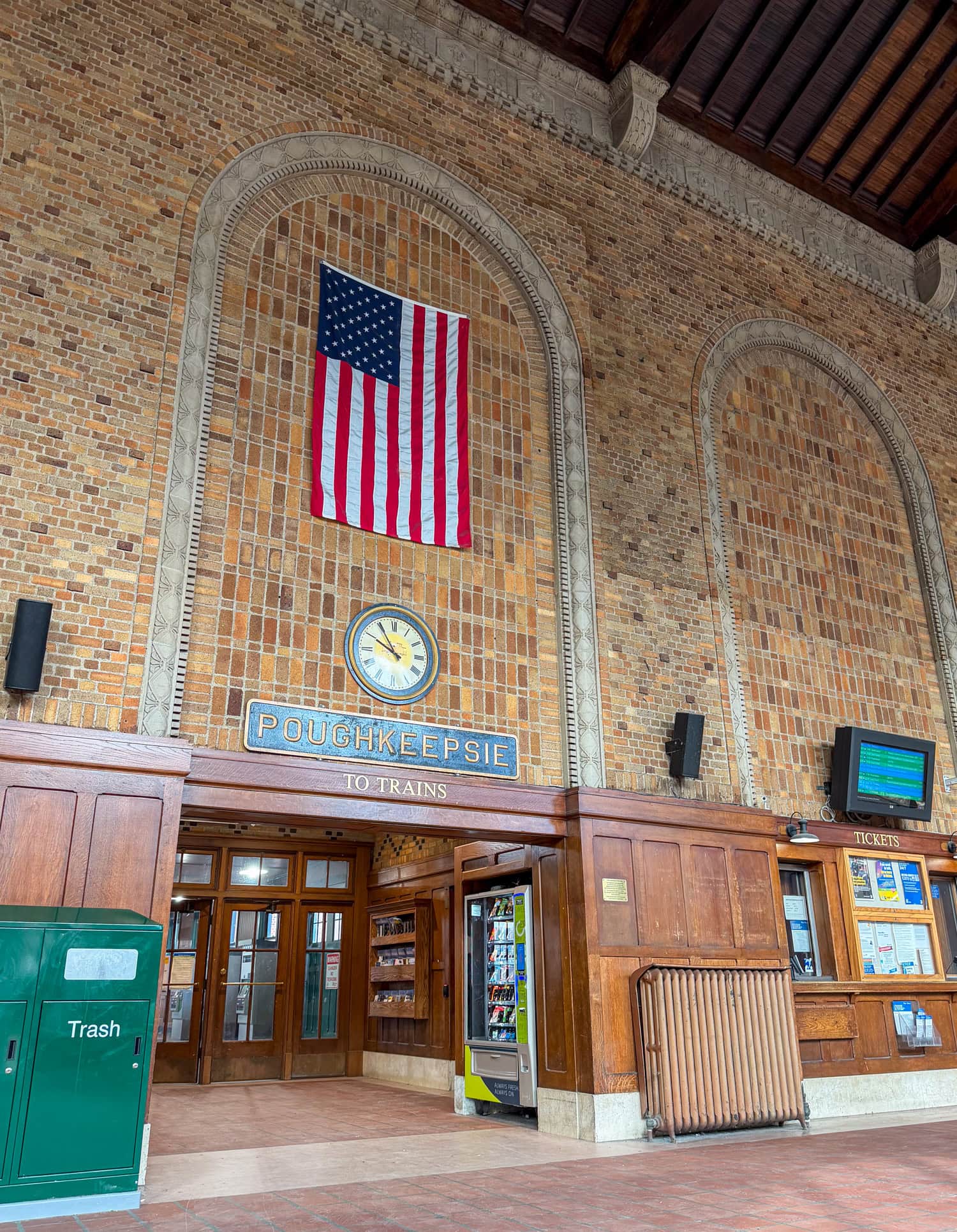
After arriving, we called a Lyft for the quick drive to the Inn at Bellefield/Hyde Park. The hotel sits right across from the CIA campus, so it's a convenient place to stay. We even booked our room with Marriott Bonvoy points.
Around 10:45 a.m., we walked over to check out the campus before our 11:30 lunch reservation.
Lunch at American Bounty Restaurant
American Bounty Restaurant sits inside Roth Hall, one of the campus's most recognizable buildings. The menu focuses on regional American cooking, with lots of ingredients sourced from the Hudson Valley and nearby farms.
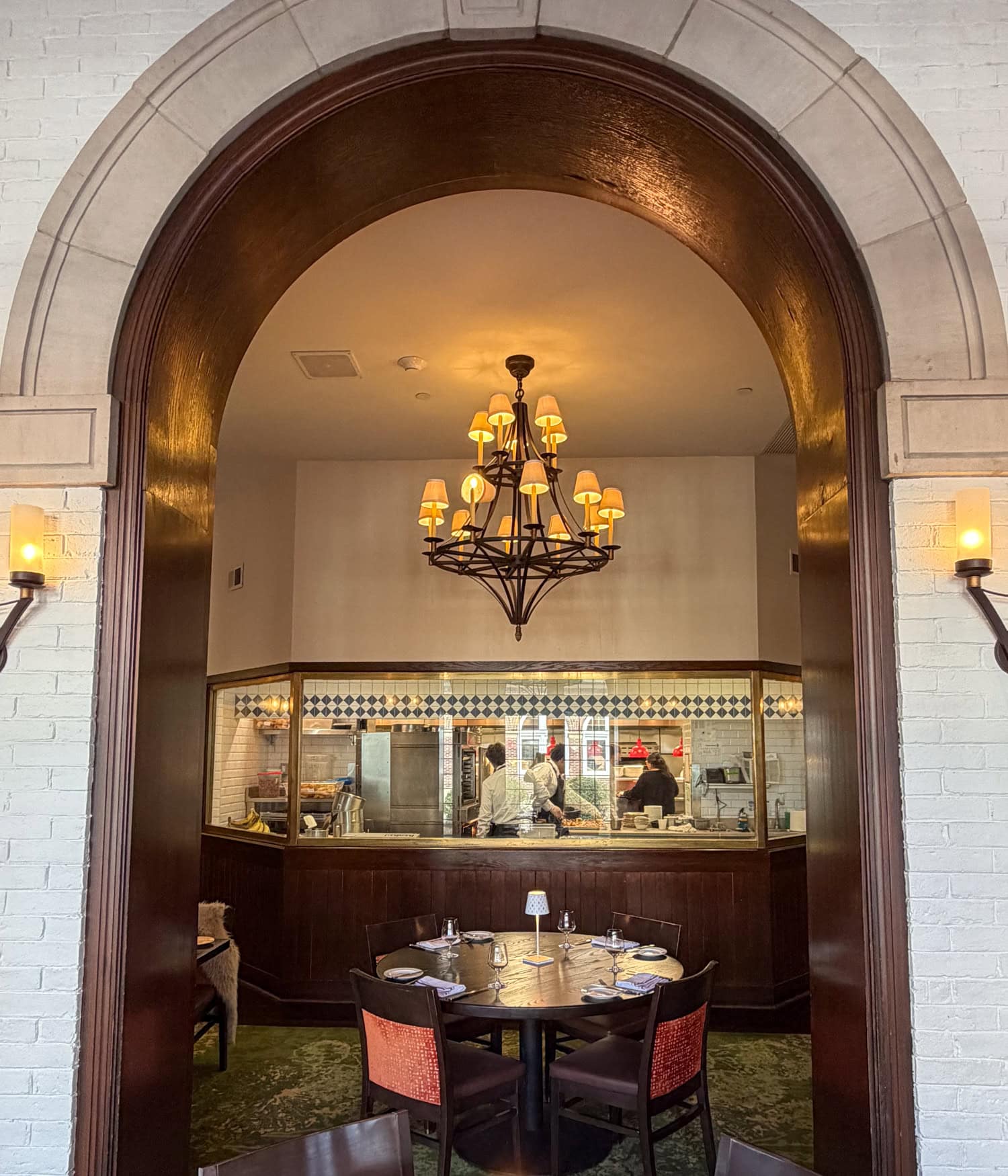
The restaurant is part of the students' training, so both the kitchen and dining room are run by CIA students under the watchful eye of their instructors.
There's a 20% student support surcharge on each bill, and students can't accept tips. Smart casual dress is requested.
Kel and I got a table near the glass-enclosed pastry area, known as the "pastry bubble," so we could watch desserts come together as we ate. We both went for the three-course lunch menu, which was $46 per person.
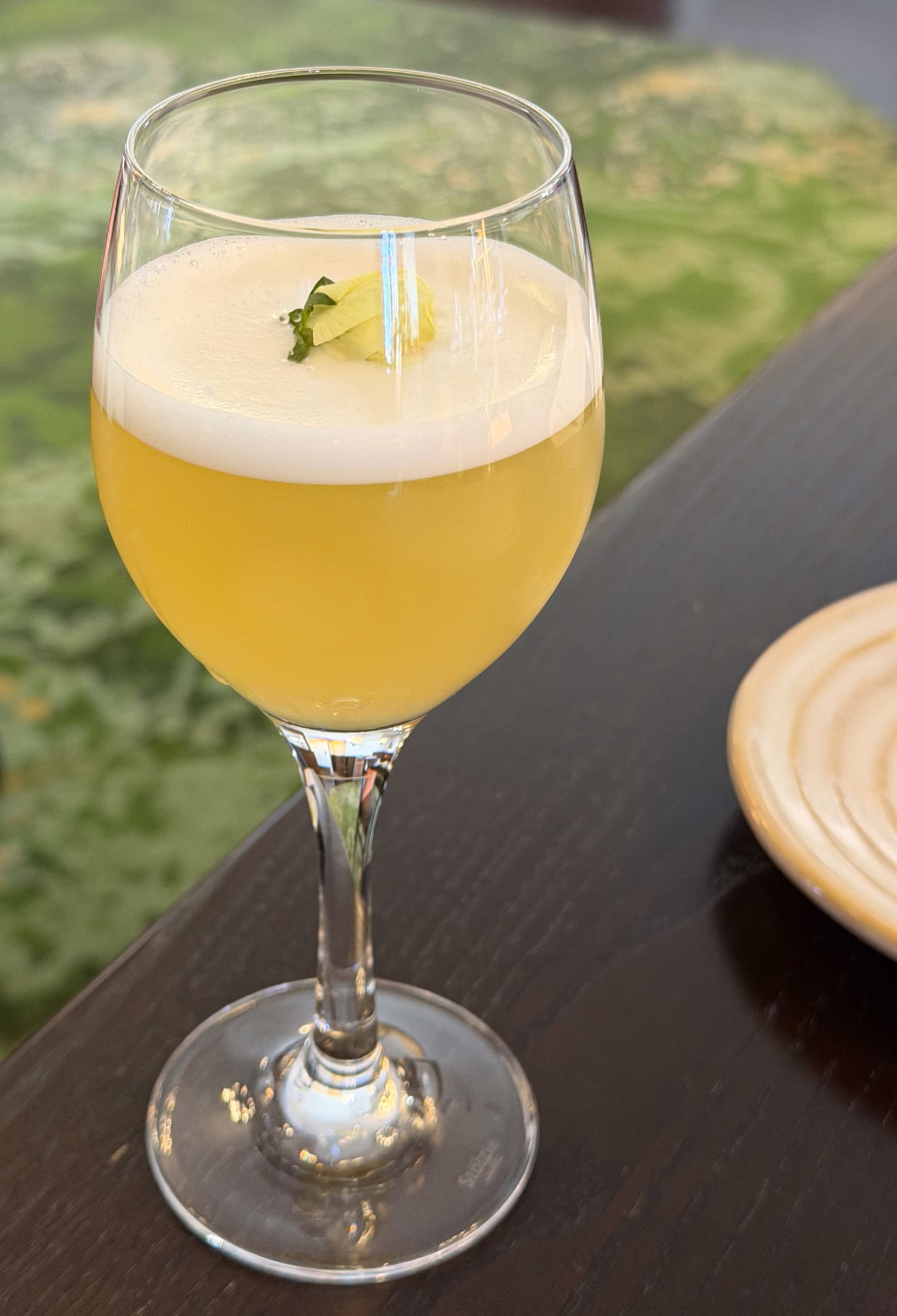
We started with slices of sourdough and brioche, served with extra-virgin olive oil, and shared a Mother's Bloom cocktail.
One of the students created the drink for Women's History Month, mixing Listening Rock Gin, lemon, St-Germain, and chamomile honey.
For my first course, I picked the smoked potato-leek soup, which came with pickled heritage apples, shallots, sourdough-sage croutons, toasted pepitas, and bacon lardons.
Kel went for the shrimp and grits, with smoked cheddar grits and andouille sausage.
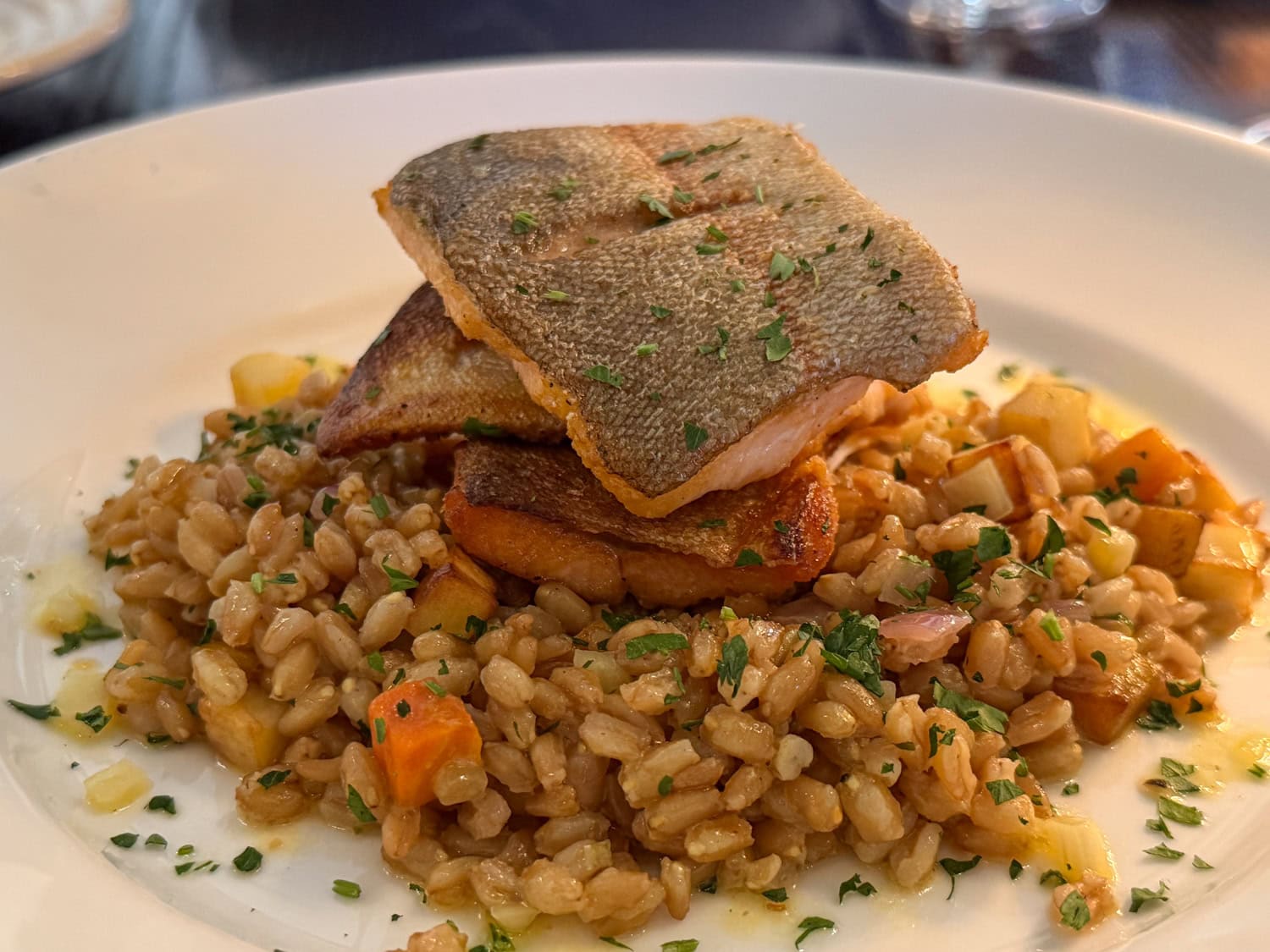
For my main, I had the seared trout special of the day. The dish, inspired by Chef Dominique Crenn, paired the fish with farro, a roasted root-vegetable ragout, and a citrus-fennel vinaigrette.
Kel chose the grilled strip loin, which came with black-barley butternut risotto, charred broccolini, roasted baby carrots, and a red-wine black-garlic sauce.
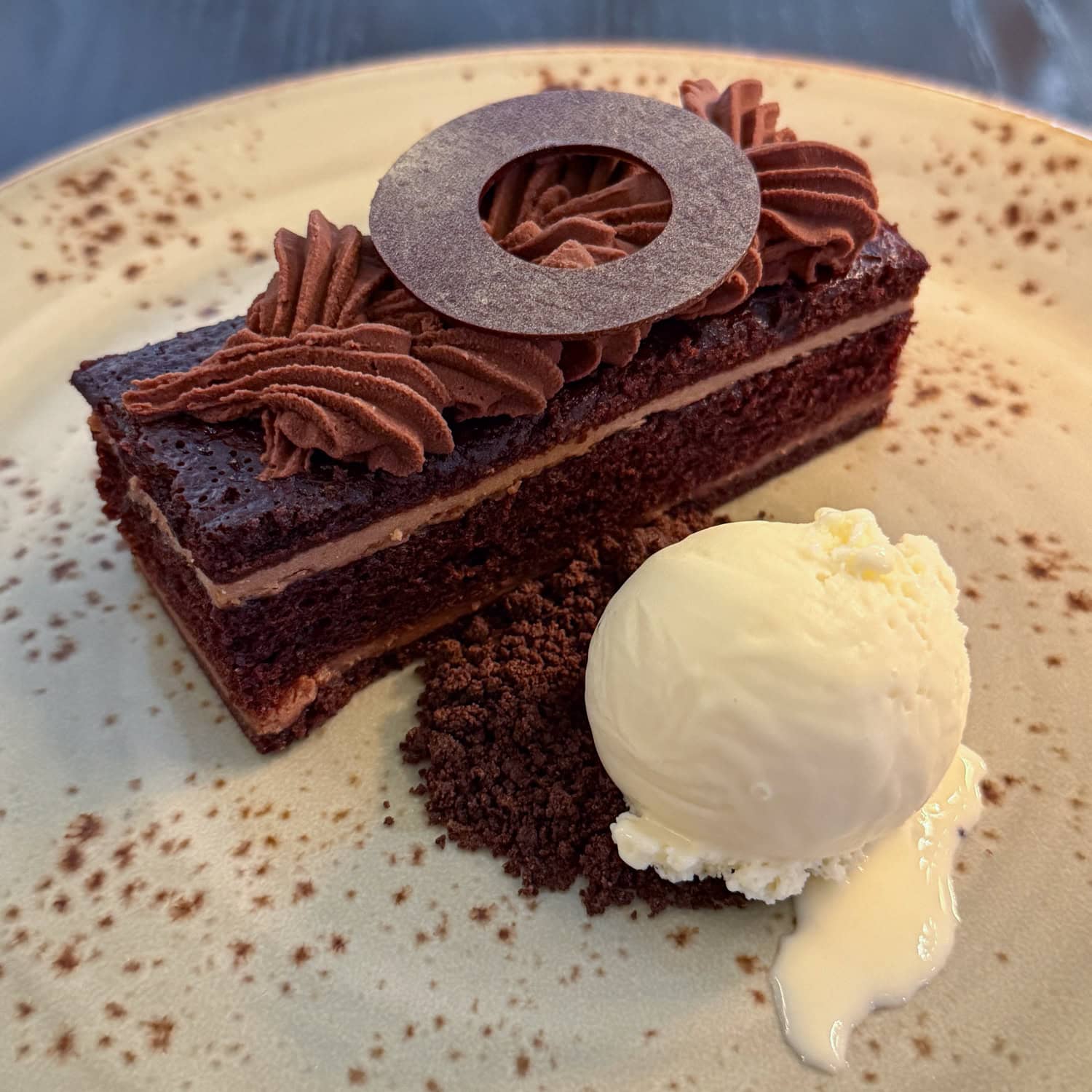
Dessert brought a whiskey chocolate cake, served with bourbon ice cream, coffee mousse, dark-chocolate whiskey ganache, and whiskey crémeux.
Kel picked the confection plate, which was an assortment of rainbow-cookie-coated almonds, kaffir lime chocolate cherries, espresso malt balls, and a popcorn chocolate bar.
Three courses for $46 seemed like a great value, especially given the quality of the ingredients and how ambitious the dishes were. The current menu is posted on the American Bounty Restaurant website.
A Quick Detour to FDR's Home & Library
After lunch, we grabbed another rideshare and made our way to the Franklin D. Roosevelt Presidential Library and Museum, just a short drive away. We had just enough time to look around before joining the 2 p.m. tour of FDR's longtime home, Springwood.
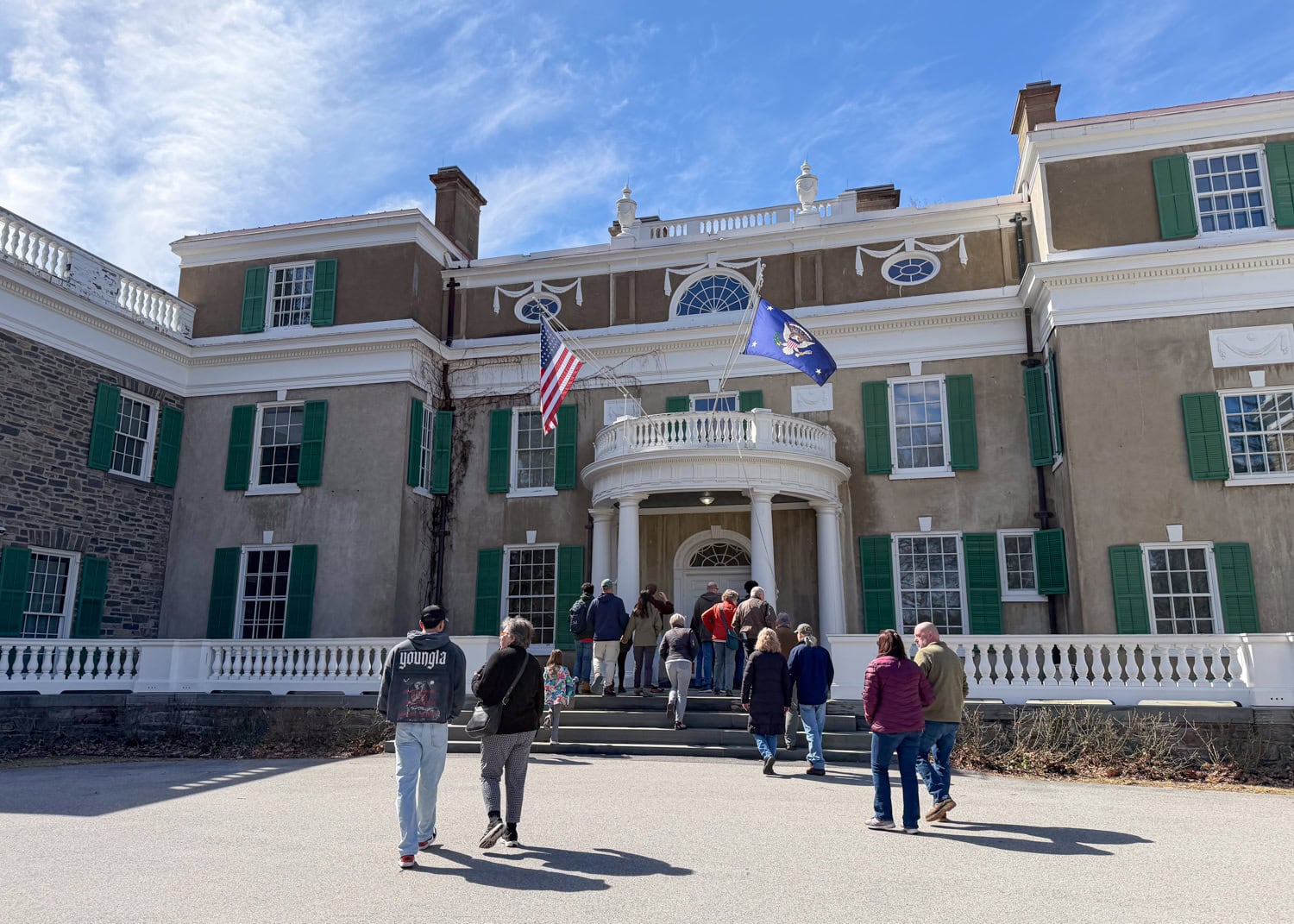
The stop made an already packed day even busier, but with the Roosevelt site so close to the CIA, it was too tempting to skip.
We got back to the hotel around 3 p.m. for a quick break before heading back to campus.
Touring the Culinary Institute of America
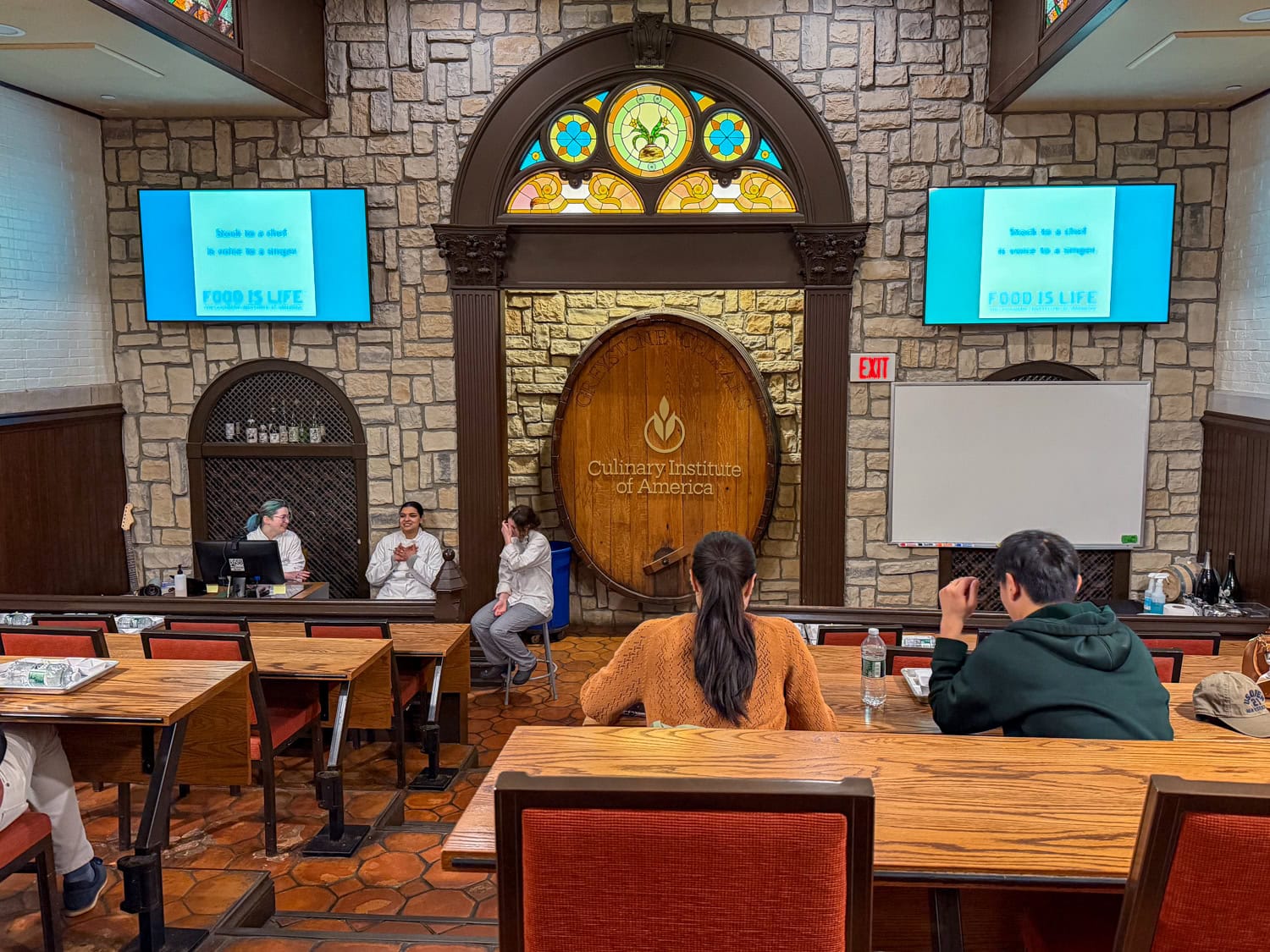
A few minutes before 4:30 p.m., we checked in for the "CIA Experience: Taste, Learn, Tour," which I had booked ahead of time on the school's website for $15 per person.
The 90-minute group tour started in a lecture hall, where we did a tasting exercise to wake up our senses. After that, our guide took us through the school and into several of the teaching kitchens.
Since classes weren't in session, the kitchens were spotless and empty.
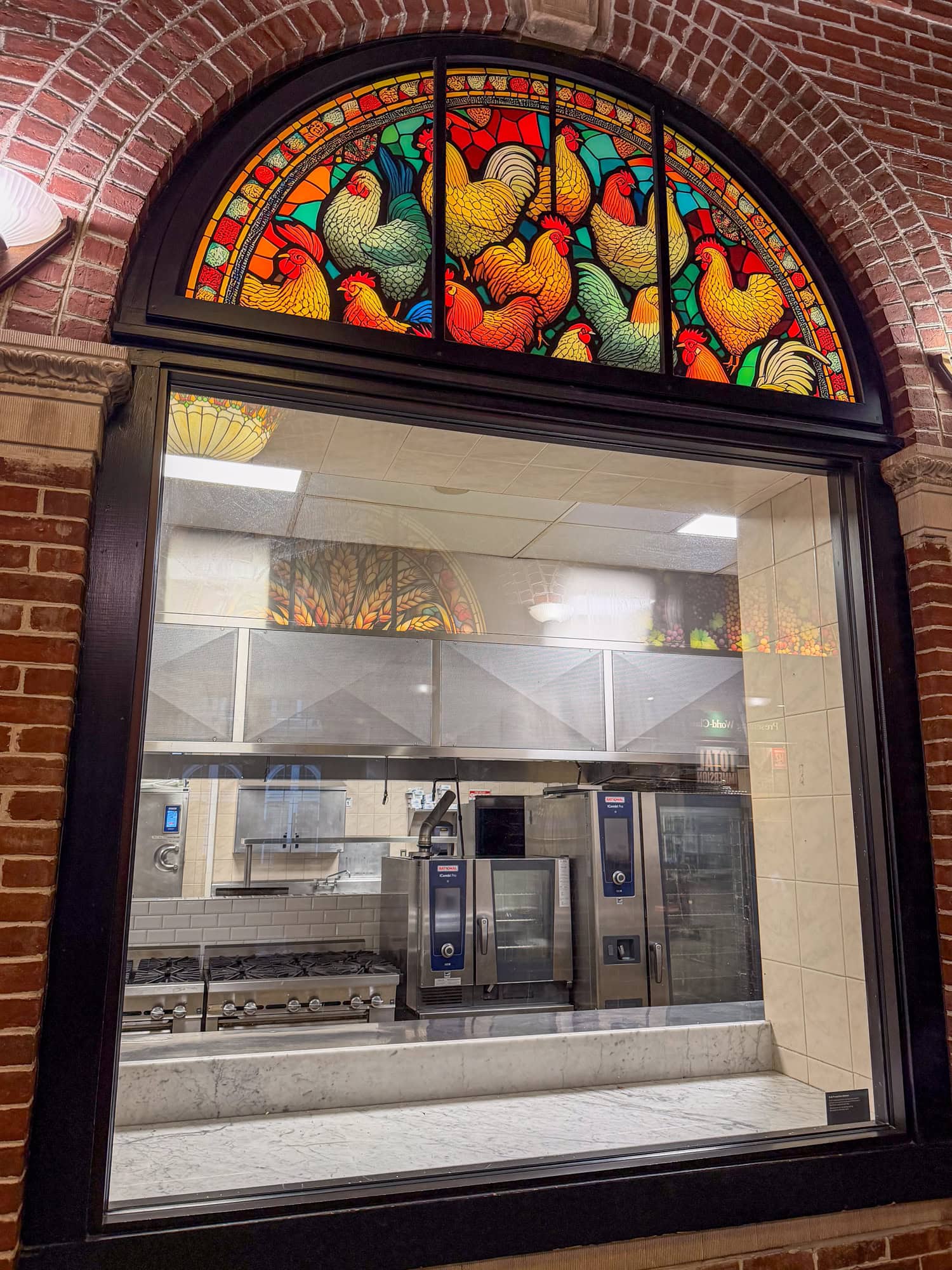
We didn't get to watch students hustling between workstations, although the quiet made it easy to look over the equipment and picture how intense things must get during class.
Walking into Farquharson Hall was one of the tour's biggest surprises. With its soaring arches, stained-glass windows, and intricately painted ceiling, the student dining hall felt more like a cathedral-or a room at Hogwarts-than a college cafeteria.
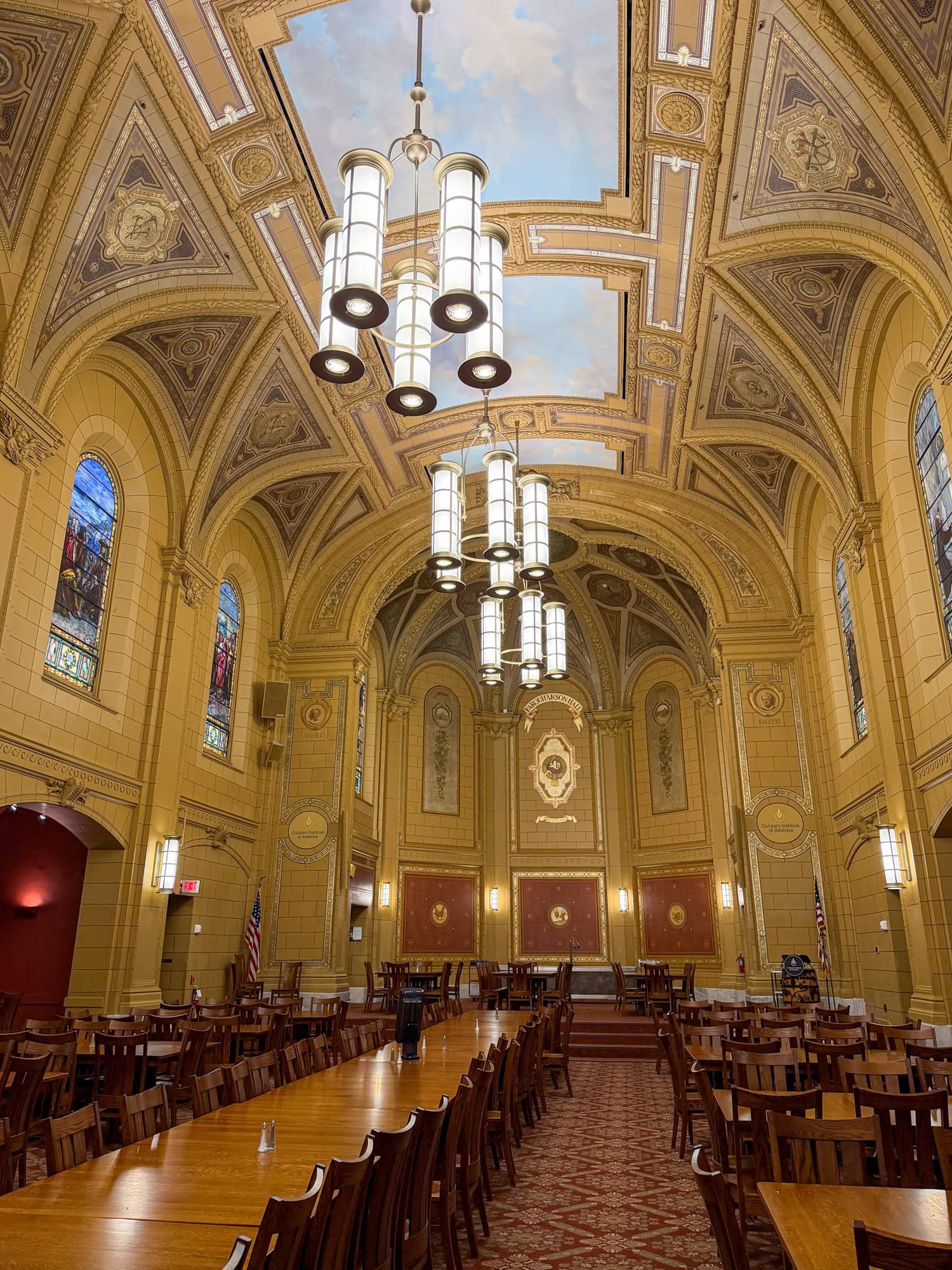
We also recognized it from Next Gen Chef, which used the dramatic space during the competition.
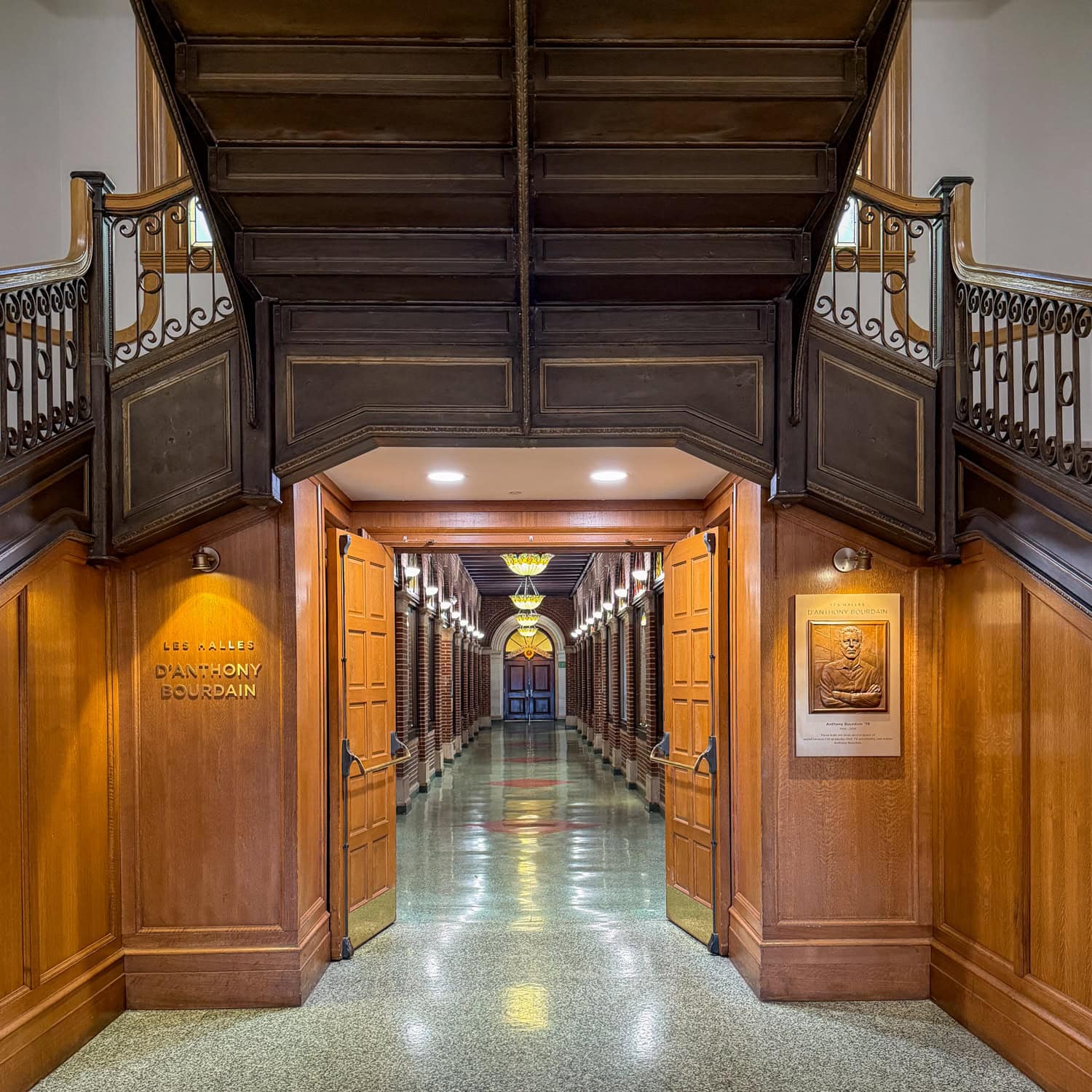
One of the most meaningful moments for me was seeing the school's tribute to Bourdain.
Spotting his photograph on the wall and walking the same halls where he once trained made the place feel connected to the writer and traveler who first sparked my curiosity about the CIA and eating adventurously.
Dinner at The Bocuse Restaurant
For dinner, we had a 6:30 reservation at The Bocuse Restaurant, the CIA's student-run spot for contemporary French cooking. Like American Bounty, Bocuse adds the same 20% surcharge, and students aren't permitted to accept tips.
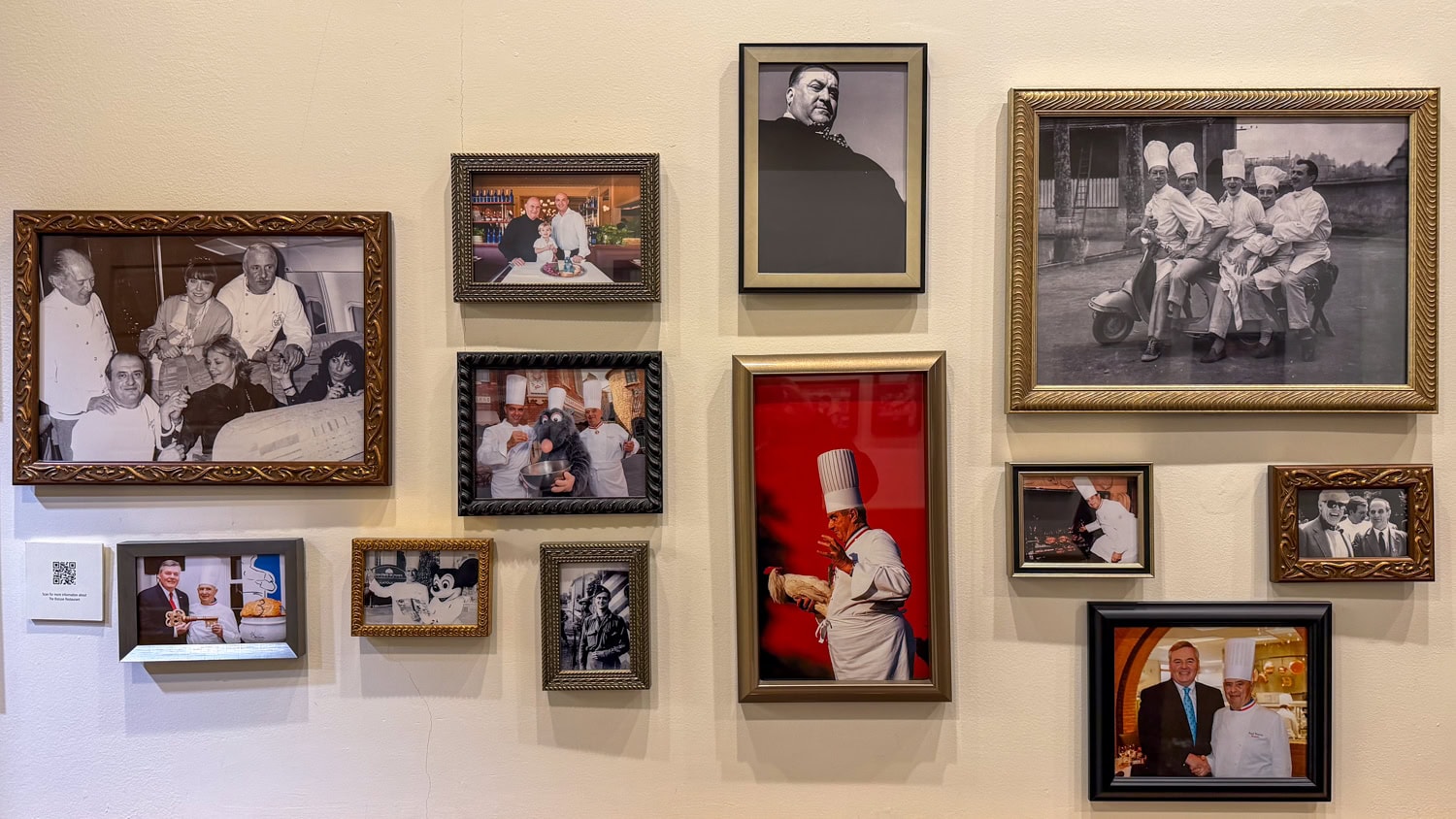
Bocuse also lent his name to the Bocuse d'Or culinary competition, whose gold, silver, and bronze trophies I later saw displayed at Geranium in Copenhagen.
A big interior window lets you look right into the kitchen, reminding you that this is both a restaurant and a working classroom.
We both went for the three-course dinner menu, which was $60. For drinks, we tried a Smoked Pears with Honey cocktail and a nonalcoholic Yuzu Refresher.
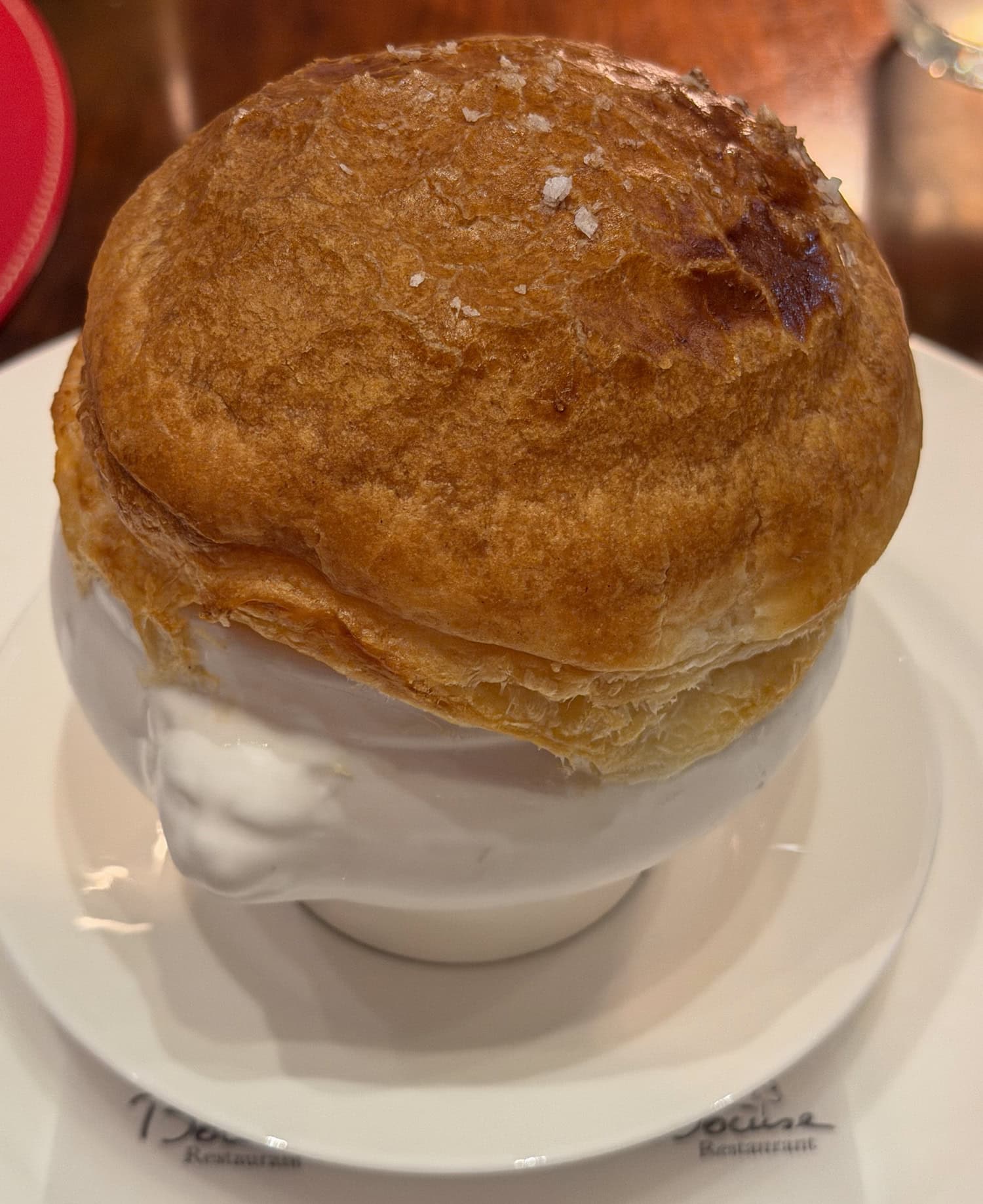
I started with the truffle soup V.G.E., a classic dish of chicken consommé, root vegetables, black truffles, foie gras, and mushrooms, all sealed under a dome of puff pastry.
Kel went for the tarte flambée, an Alsatian flatbread with onion jam, speck, crème fraîche, and Gruyère.
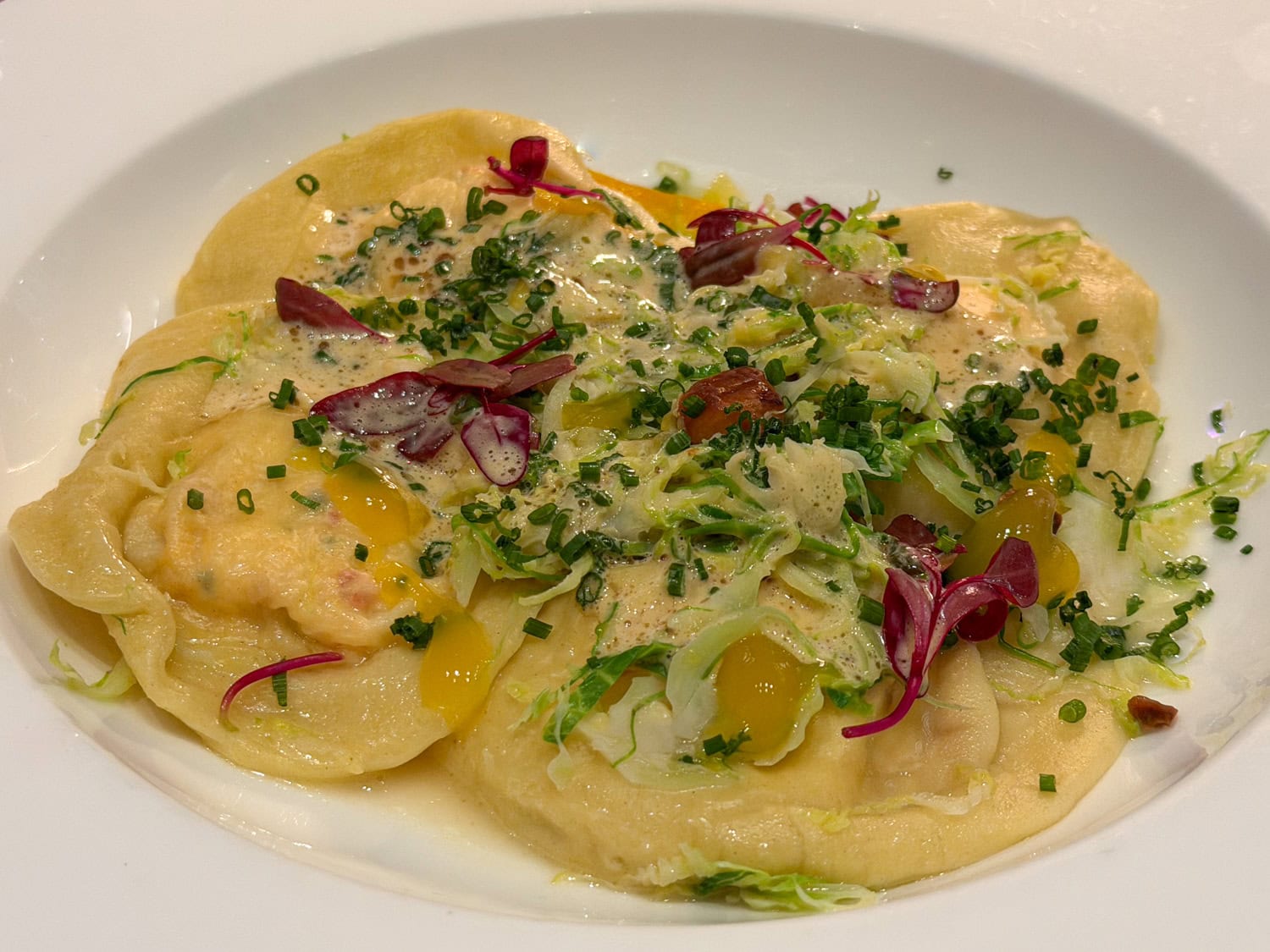
For my second course, I picked the lobster ravioli with hazelnut brown butter, Brussels sprouts, kumquats, and lobster sabayon.
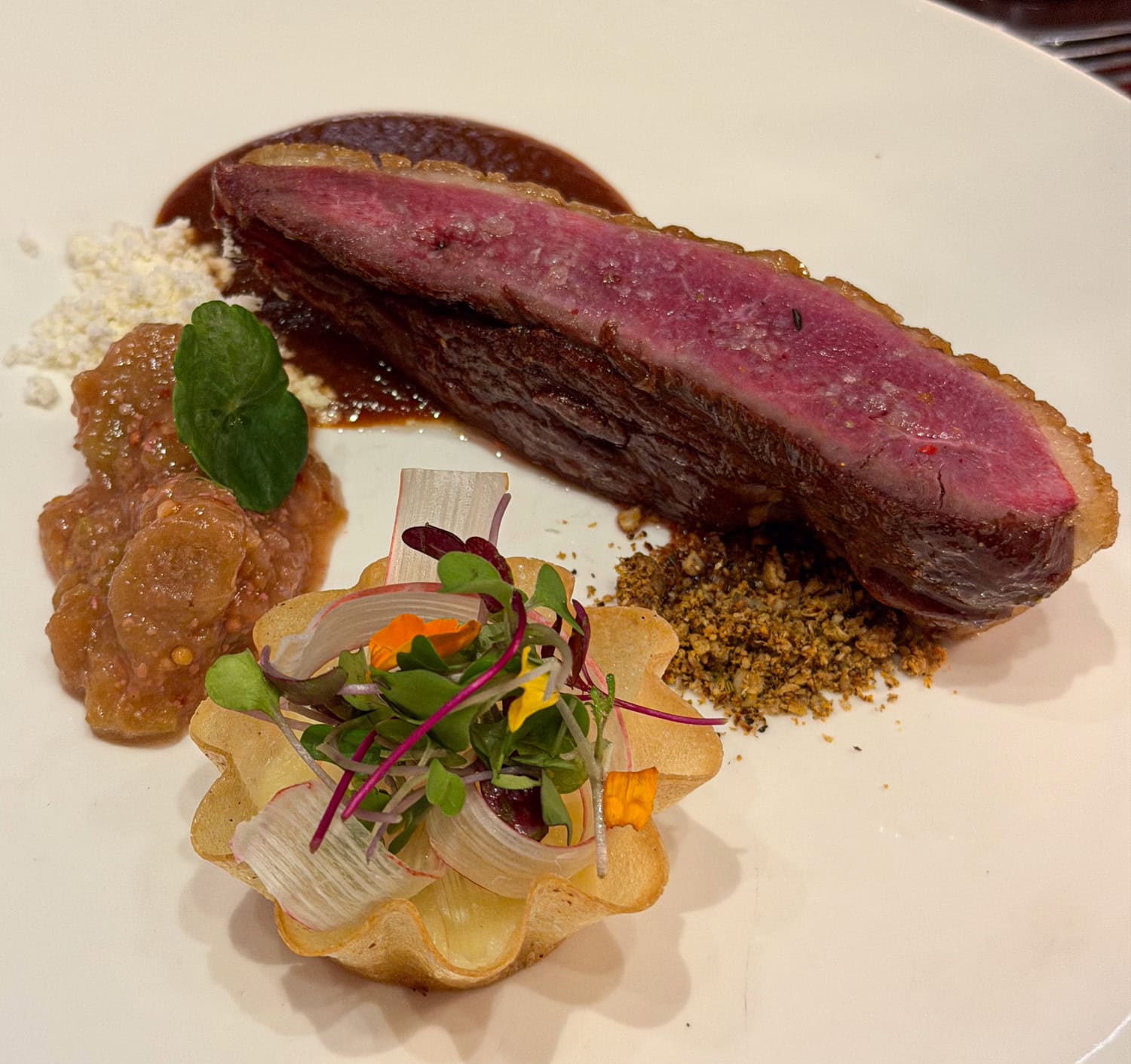
Kel chose the aged Hudson Valley duck breast, served with an orange-blossom-and-honey glaze, parsnip purée, and rhubarb compote.
For dessert, I had the Mont Blanc verrine, layered with chestnut cream, chocolate crémeux, chiffon cake, vanilla meringue, and candied chestnuts.
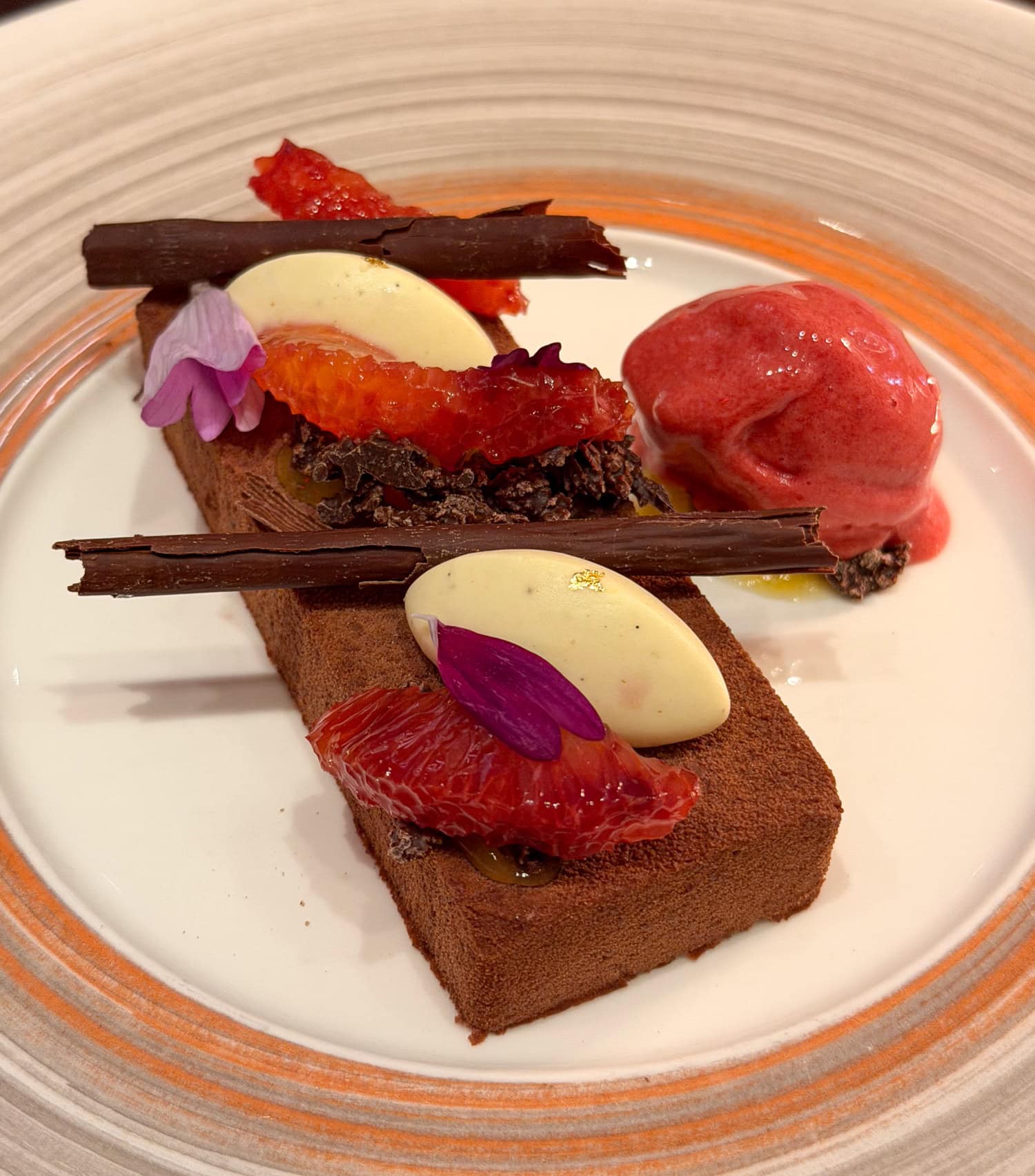
Kel finished with the dark chocolate bar, which came with dark chocolate mousse, vanilla Bavarian cream, passion-fruit sauce, and blood-orange raspberry sorbet.
A few salted-caramel chocolates came with the bill, a final sweet bite to end a generous meal.
The $60 menu proved an excellent value for a dinner of this quality and scope. After three courses-and a whole day built around eating-I left full. You can find the current menu on the Bocuse Restaurant website.
Was the Trip Worthwhile?
By the time dinner ended, it was dark, so we called a Lyft instead of walking back to the hotel. The next morning started early again: we caught the 6:58 Hudson Line train from Poughkeepsie to Grand Central, then headed to JFK for our flight home.
Our Hyde Park trip was quick, packed, and absolutely worth it. In just one overnight, we managed two memorable three-course meals, a tour of one of the country's best-known culinary schools, and a visit to the FDR historic sites.
Most of all, I loved getting a peek inside the place where Bourdain and so many other chefs got their start.
And Anthony Bourdain is far from the school's only notable graduate. Enrique Olvera, whose Mexico City restaurant Pujol introduced me to his inventive approach to Mexican cuisine, also trained here.
Eating at restaurants where students are still learning added something you don't get at a typical restaurant. With the quality of the cooking, the focus on regional ingredients, and the set menu prices, both American Bounty and The Bocuse Restaurant felt like worthy destination dining experiences.
If you're a food lover with an extra day in New York City, dining at the Culinary Institute of America makes for a delicious side trip up the Hudson.
The CIA also operates a campus at San Antonio's Pearl, one of my favorite food destinations in Texas.