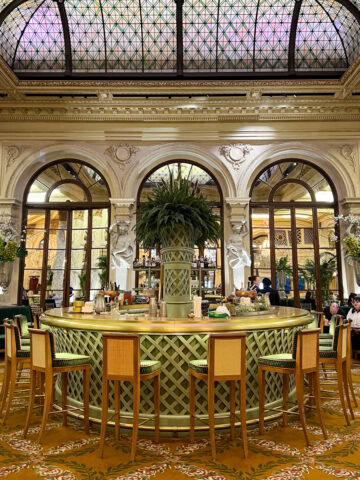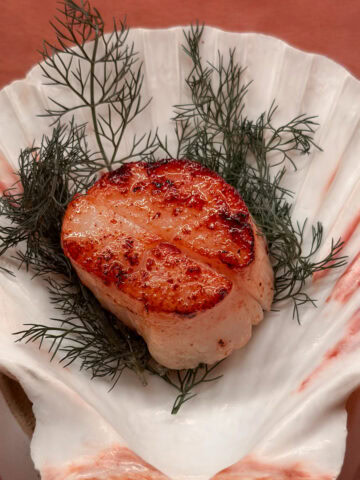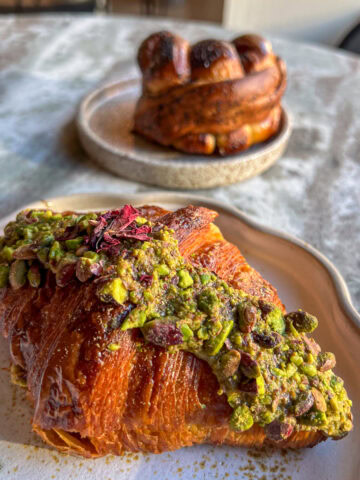
Few dining experiences capture New York City's spirit quite like an old-school steakhouse. These historic restaurants-some dating back to the 1800s-have weathered changing neighborhoods and shifting trends, yet still draw locals as well as visitors for timeless steak dinners beneath pipe-lined ceilings and in white-tablecloth dining rooms.
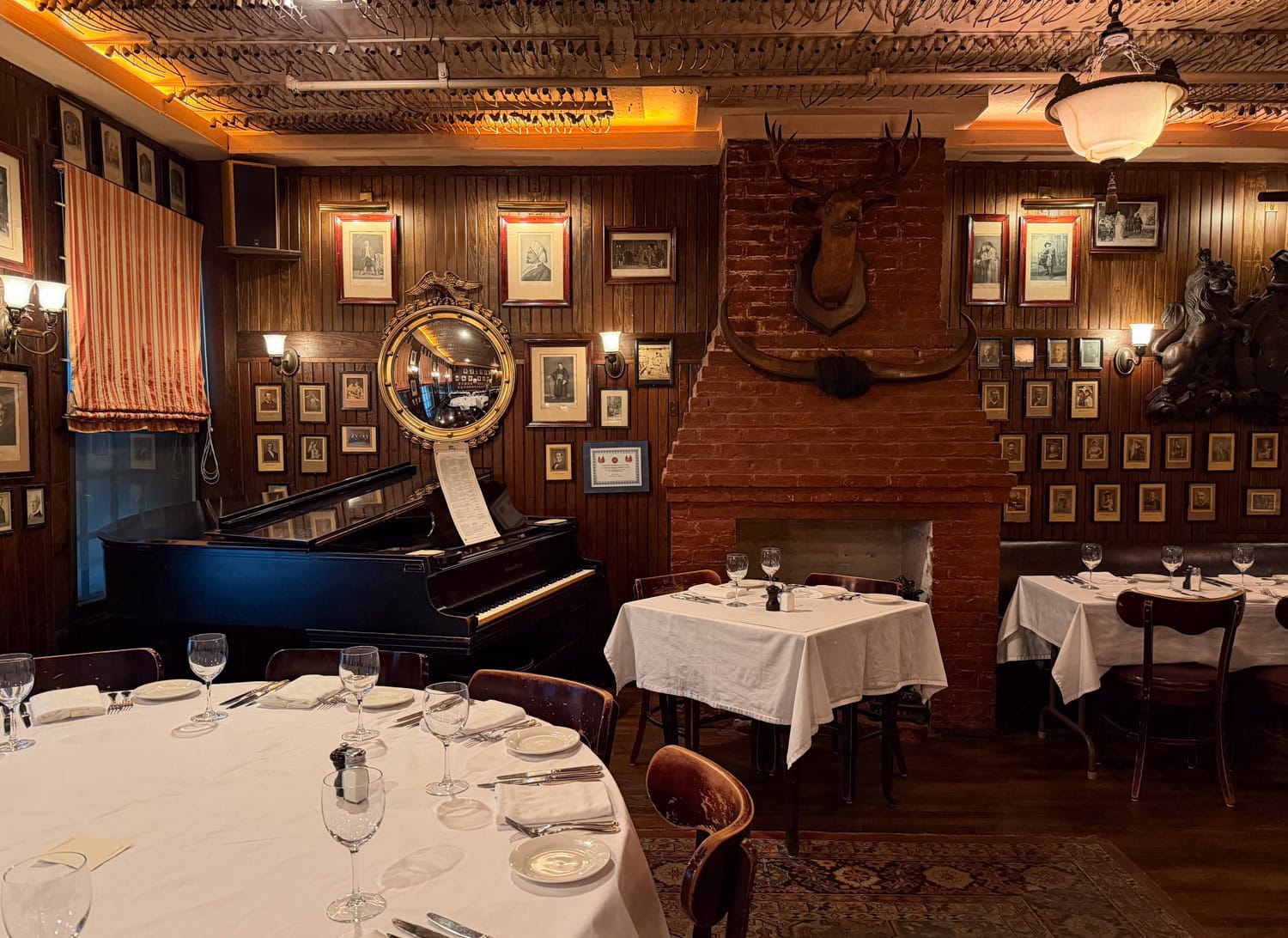
On three trips to New York City over the past few years, I set out to find the city's oldest steakhouses. Along the way, I sampled the mutton chop at Keens, shared a porterhouse for two at Peter Luger, and finished with baked Alaska at Delmonico's.
My search for great steak took on new meaning when I realized I was dining in some of the same steakhouses my parents visited while living and dating in New York City in the early 1970s.
Historic NYC Steakhouses Worth Visiting
Reservations are highly recommended for most of these restaurants, especially on weekends.
Delmonico's (1837)
Founded by Swiss immigrants Giovanni and Pietro Delmonico, Delmonico's is widely considered America's first fine dining restaurant and one of the origins of the modern American steakhouse.
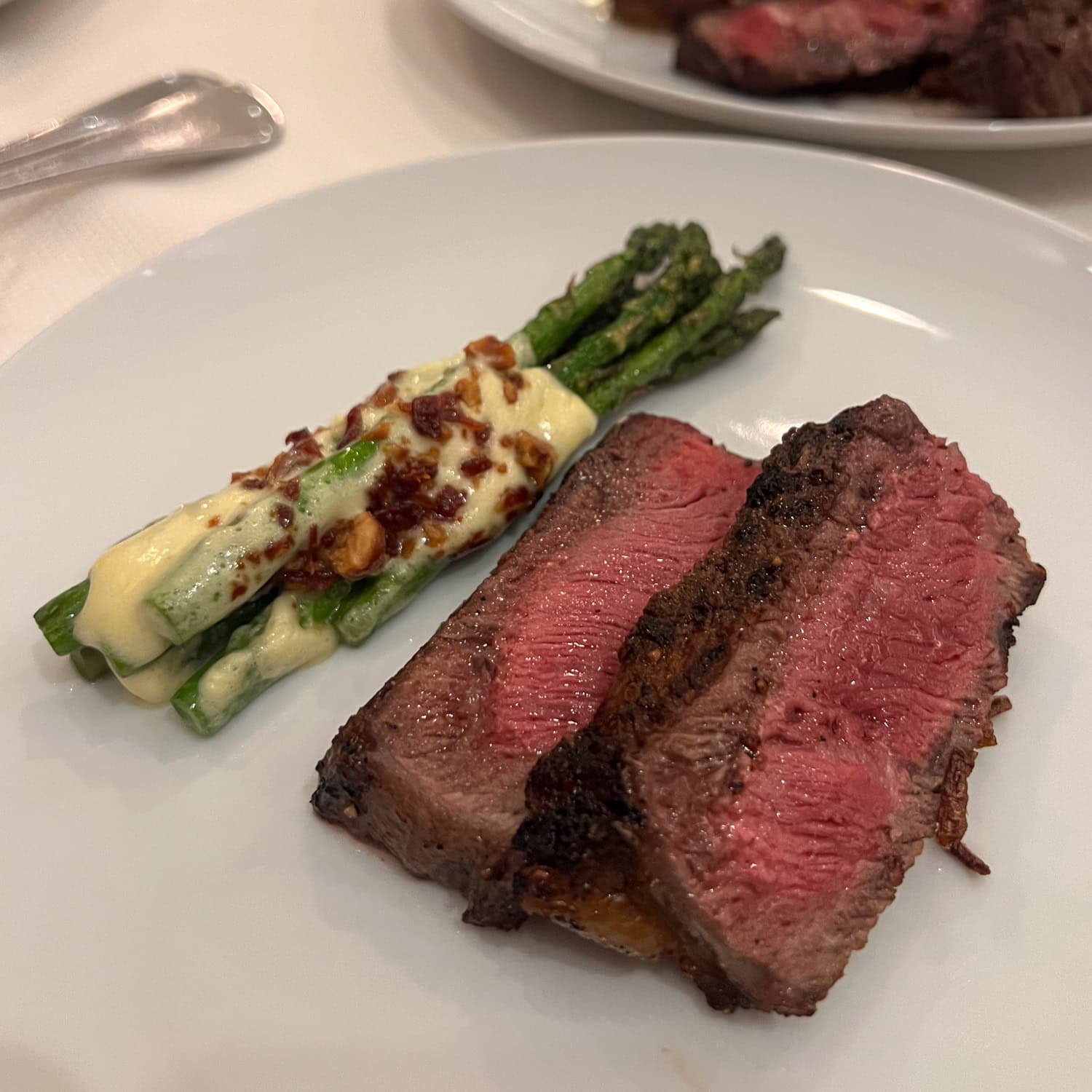
The Lower Manhattan institution helped popularize dishes like Eggs Benedict, Lobster Newberg, and baked Alaska while also lending its name to the famous Delmonico steak. This richly marbled cut appears on steakhouse menus across the country today.
Although the current dining room doesn't feel quite as old-fashioned as some of New York City's darker, wood-paneled steakhouses, dining at Delmonico's carries a sense of occasion.
Wall Street executives, politicians, celebrities, and visiting dignitaries have all eaten here over the decades, and the restaurant's Financial District location gives it a distinctly vintage New York atmosphere.
On a winter trip to New York, we stopped at Delmonico's for lunch. It turned out to be our favorite meal among all the historic steakhouses we visited.
We ordered the signature Delmonico ribeye and finished with the famous baked Alaska for dessert. The steak arrived deeply seared with a flavorful crust and plenty of marbling. The baked Alaska brought a bit of tableside drama and was every bit as good as its reputation.
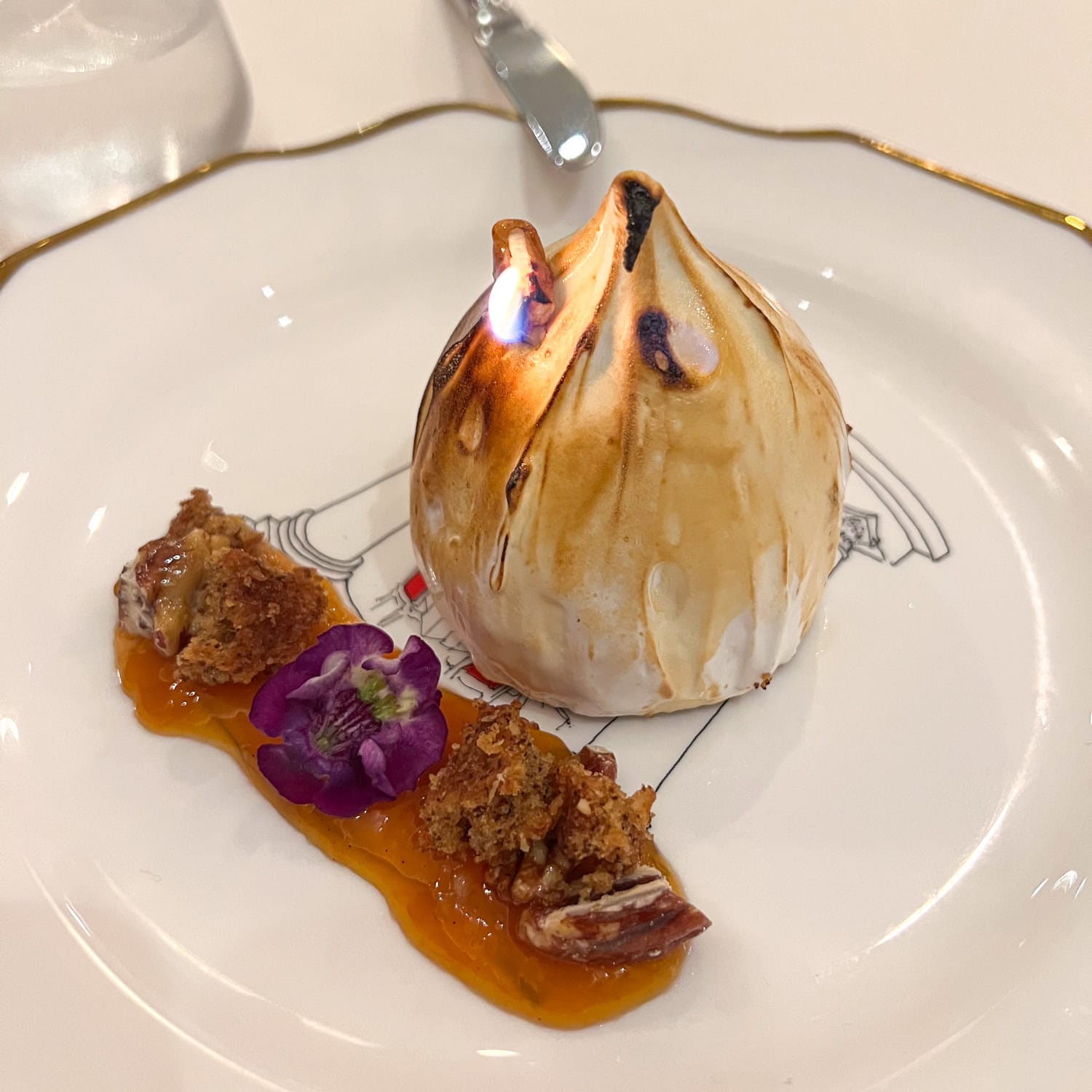
Attentive service and the restaurant's long history made our lunch feel like a quintessential New York steakhouse experience, but without any stuffiness. If you want a closer look at our meal, I wrote a separate story about Delmonico's on Feastio.
Old Homestead Steakhouse (1868)
Opened in 1868 in Manhattan's Meatpacking District, Old Homestead Steakhouse is one of the oldest continuously operating steakhouses in New York City.
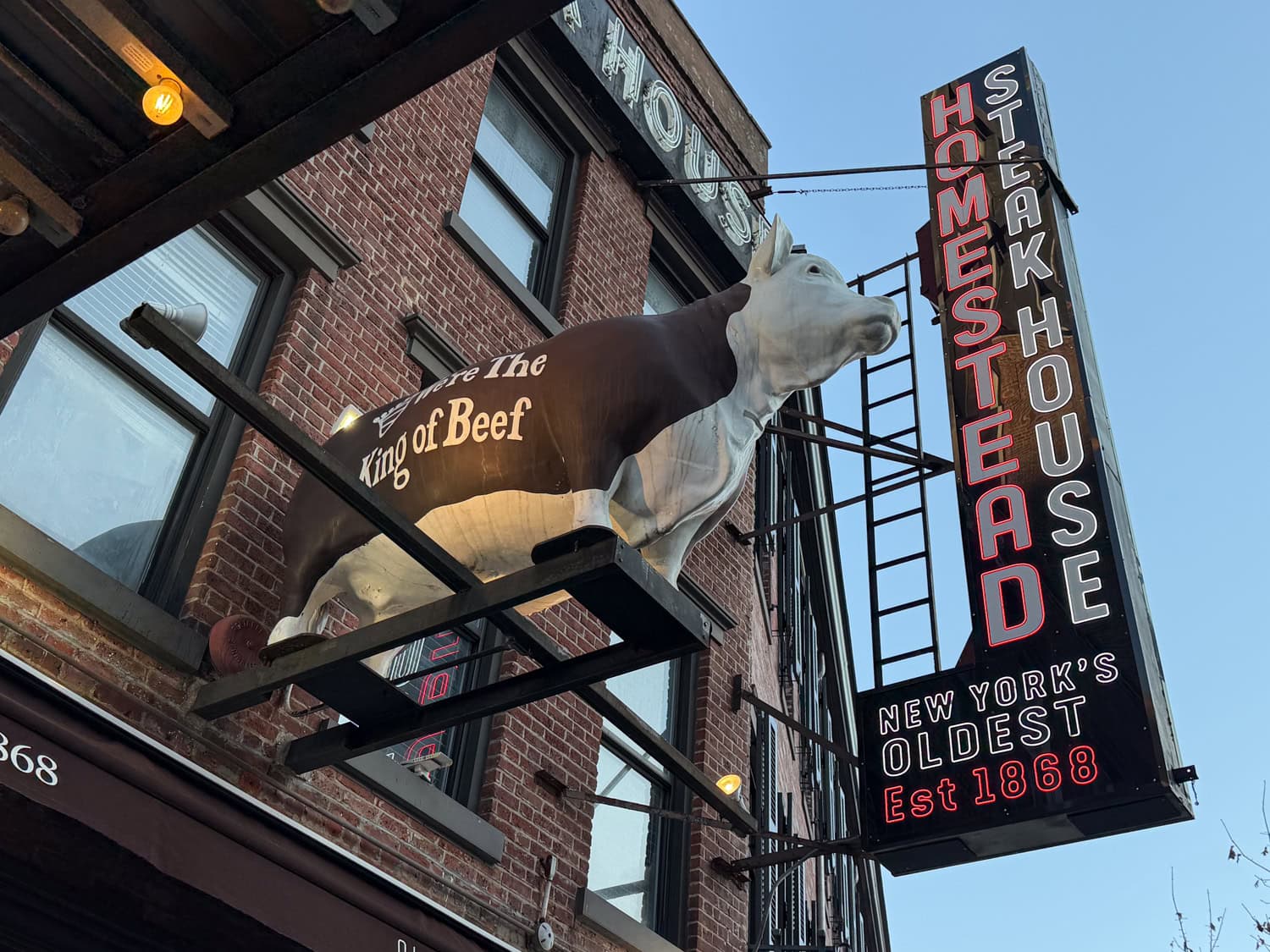
The restaurant began serving butchers, dock workers, and local laborers long before the neighborhood transformed into one of Manhattan's trendiest dining and nightlife districts.
Today, Old Homestead continues to embrace traditional steakhouse dining, but the menu has expanded to include seafood towers, wagyu beef, oversized burgers, and a few modern appetizers.
Compared to some of the darker dining rooms on this list, Old Homestead has a more contemporary feel. Still, there's something memorable about eating a steak dinner in a place that's been part of the Meatpacking District for over 150 years.
Kel and I visited Old Homestead for dinner during a recent trip to New York City. I ordered the 10-ounce filet mignon with seasoned potatoes and bordelaise sauce, while Kel chose the bacon-wrapped filet.
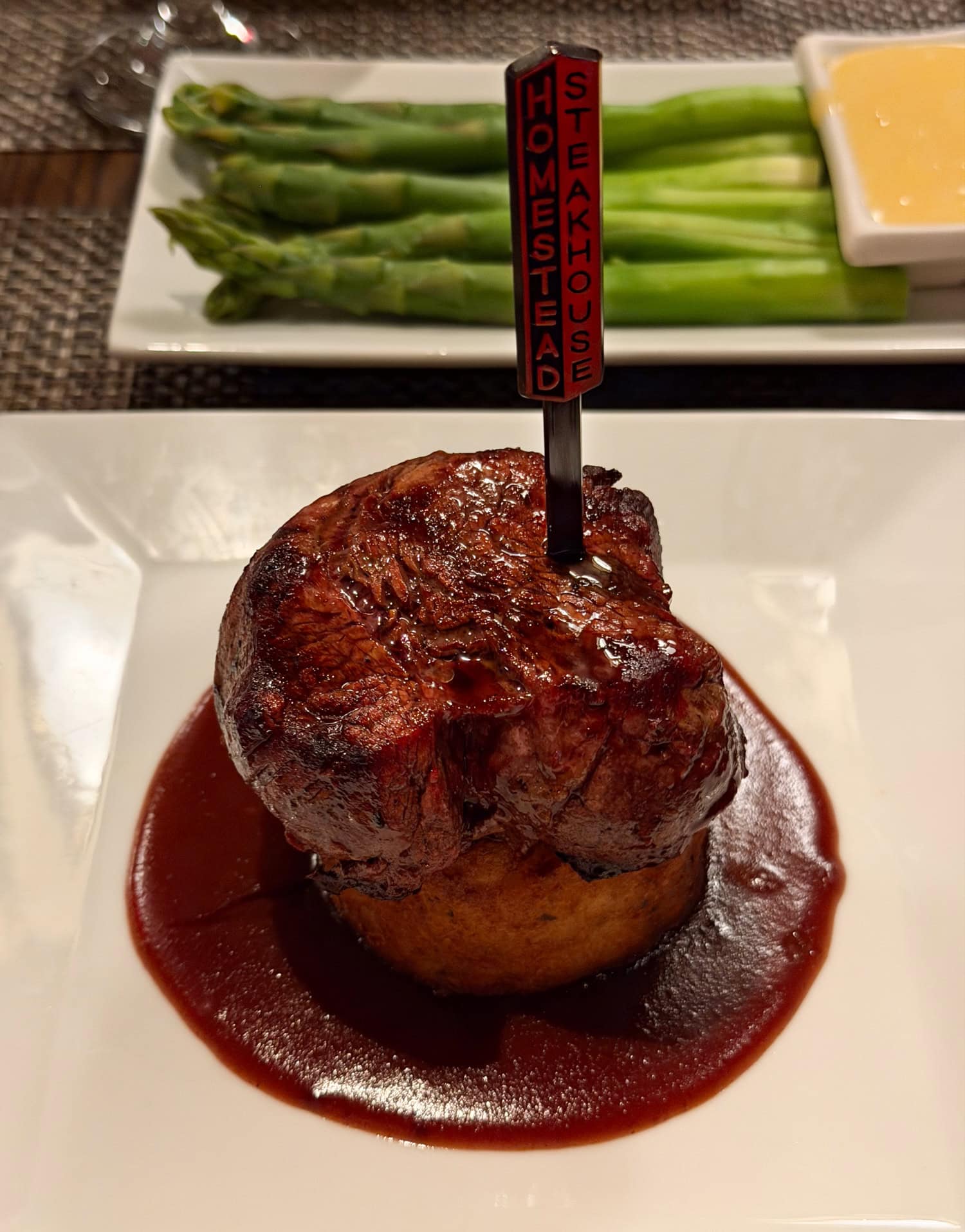
We also shared the asparagus with hollandaise and ended the meal with the restaurant's "Big Fat Chocolate Cake" for dessert.
The steaks here lean toward familiarity and comfort rather than innovation. Still, everything we tried was well-prepared and satisfying-especially with a pint of Guinness and a cocktail on the side.
Of all the historic NYC steakhouses I visited, Old Homestead felt the most contemporary. Its long history, central location, and broad menu make it a good choice if you want to experience one of the city's oldest surviving steakhouses.
Keens Steakhouse (1885)
Opened in 1885, Keens Steakhouse is one of the most atmospheric historic steakhouses in New York City.
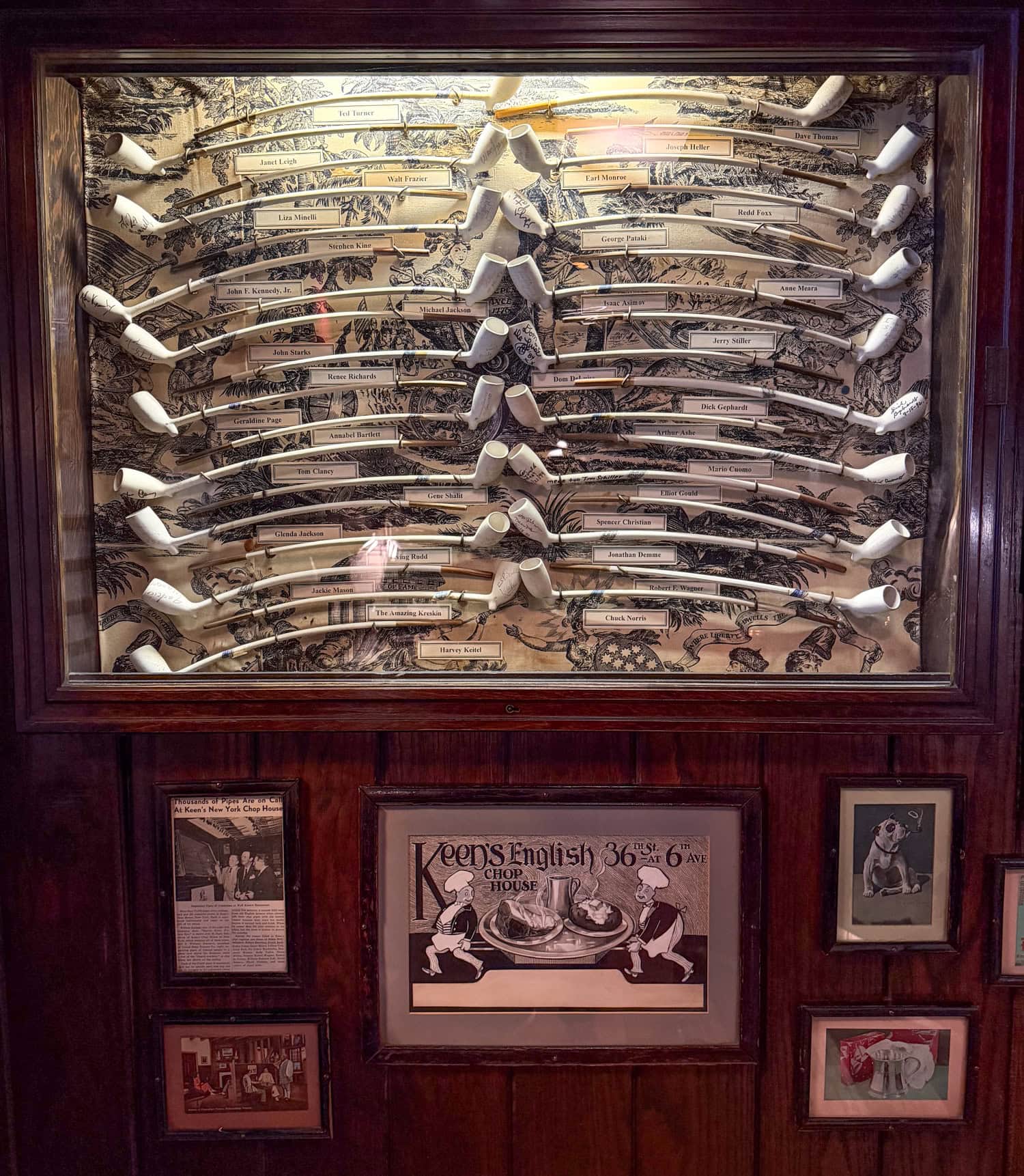
Originally founded as a gathering place for actors, writers, and members of the nearby Herald Square theater district, the restaurant is famous for its collection of more than 50,000 churchwarden pipes hanging from the ceilings and walls.
Over the decades, notable guests reportedly included Theodore Roosevelt, Babe Ruth, and Albert Einstein, helping cement Keens as one of Manhattan's classic old-school dining institutions.
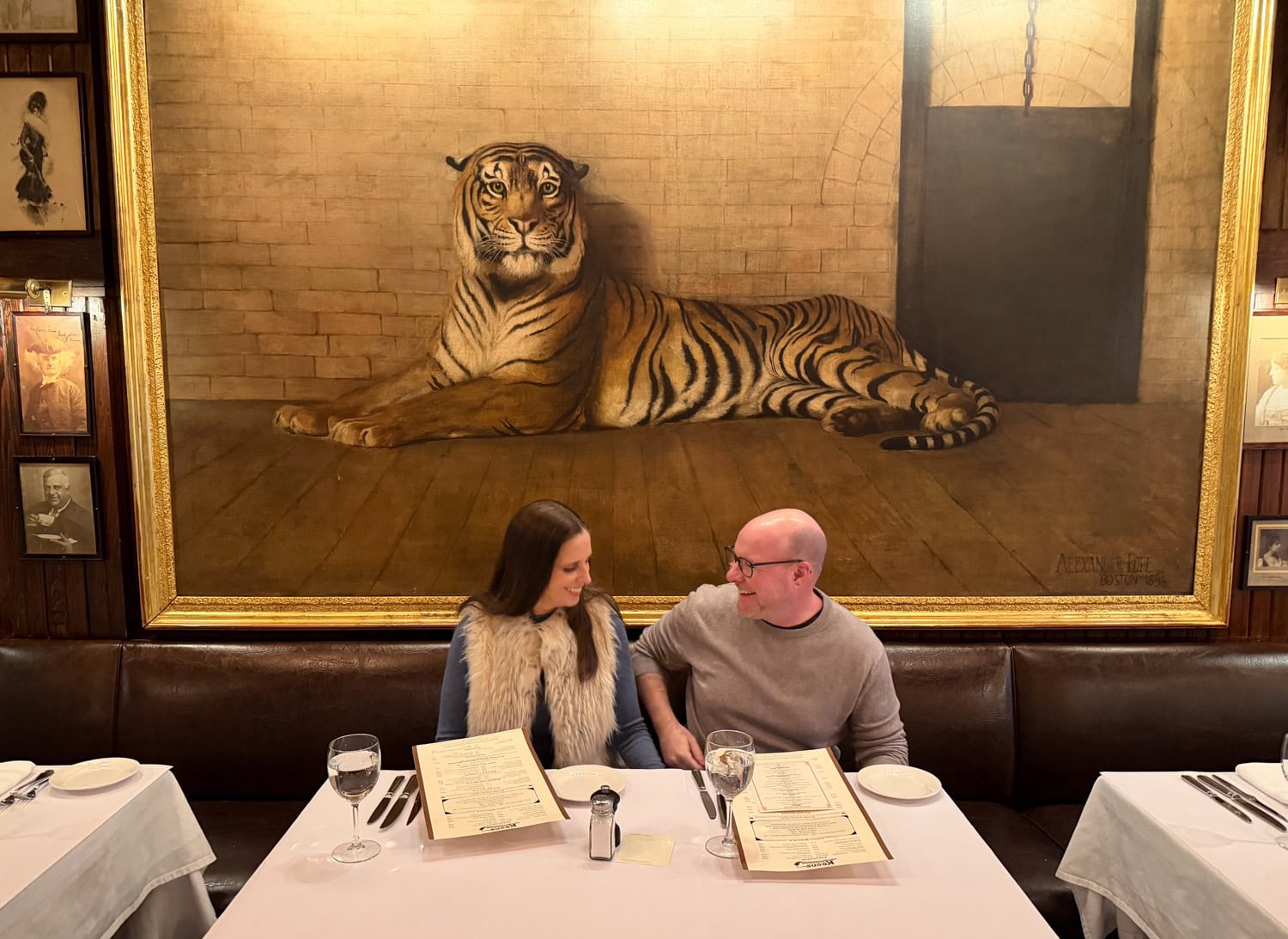
Keens was the most transportive of all the steakhouses I visited. Kel and I came for lunch on a Thursday and were seated upstairs in the Lamb Room, right beneath a massive tiger painting from 1896.
The dark-wood interior, historic photos, pipe-lined ceilings, and lively lunchtime chatter at Keens made it feel as though one were stepping into another era of New York dining.
Keens is known for its mutton chop, which comes from older sheep and is a dish you rarely see on menus these days. Since neither of us needed the massive 28-ounce bone-in version, we chose the smaller 10-ounce 'Taste of Mutton,' sliced for sharing and served with mint jelly.
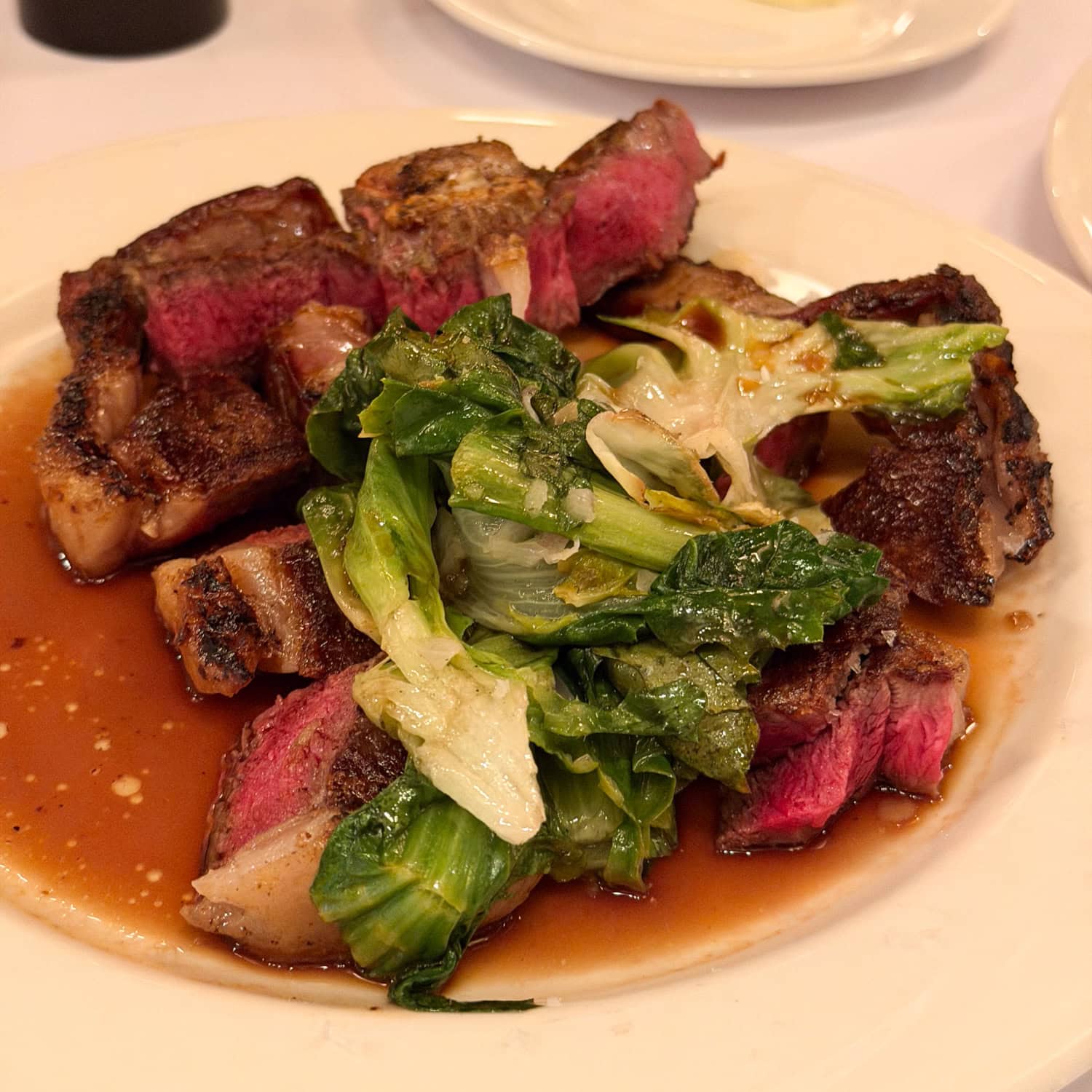
The meat was fairly tender despite mutton's reputation. It was one of the most distinctive dishes I tried on this trip. We also split an 8-ounce sirloin with fries and started with a thick, creamy lobster bisque.
For dessert, I gravitated toward the historic side of the menu and ordered both the Red Berry Bibble-a mixed-berry dessert with cream-and Keens' carrot cake, made from a recipe over a hundred years old.
With house-made ginger ale and limeade sodas on the table, the whole meal felt uniquely tied to Keens' long history. It was far more than another upscale steakhouse lunch in Manhattan.
If you want a steakhouse with the strongest sense of old New York atmosphere, Keens is probably the most memorable experience on this list.
Peter Luger (1887)
Since opening in Williamsburg, Brooklyn, in 1887, Peter Luger Steak House has become one of the most famous steakhouses in America.
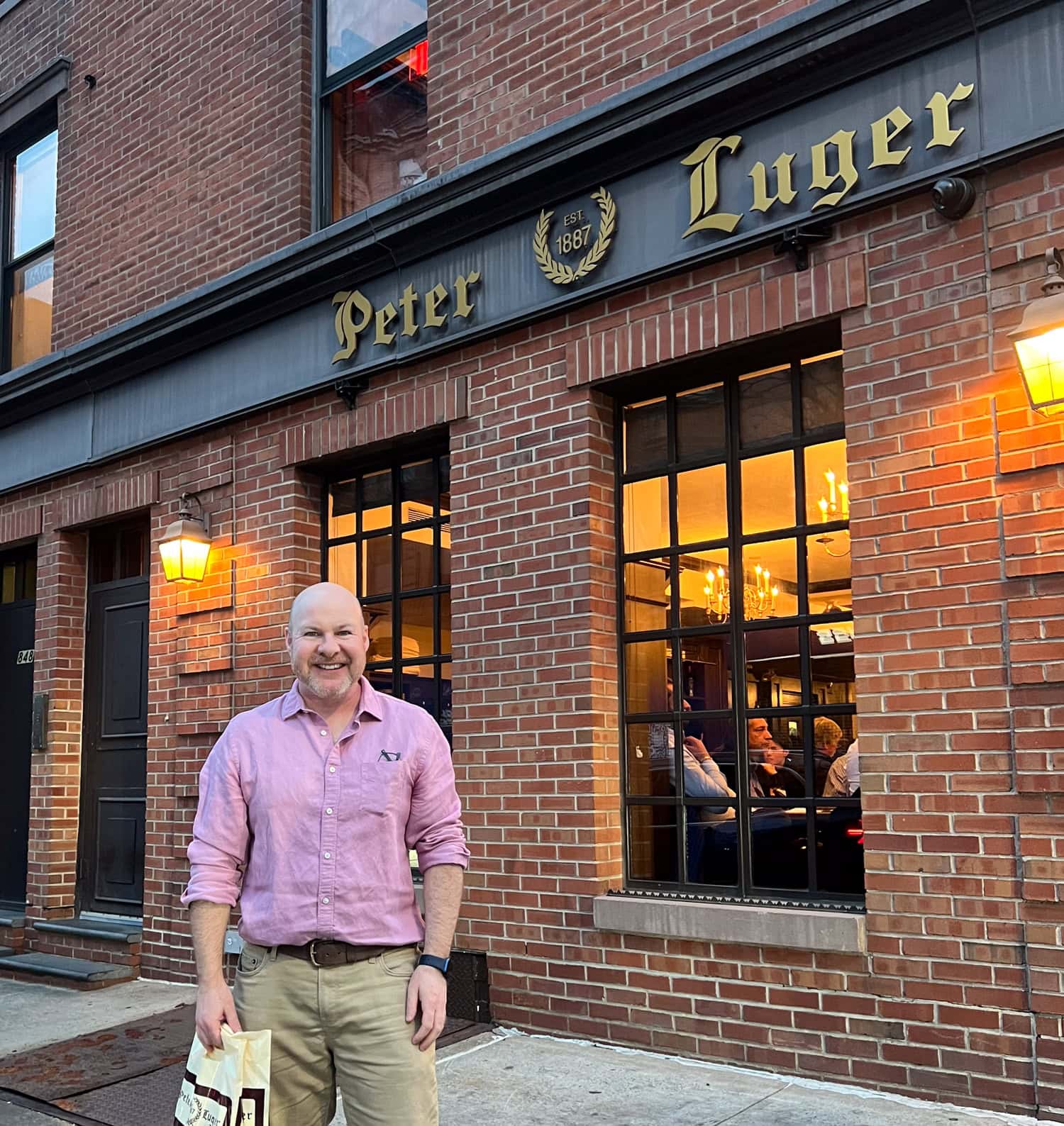
Established as a German beer hall and steakhouse near the Brooklyn waterfront, the restaurant built its reputation around dry-aged porterhouse steaks carved tableside and served sizzling in butter.
Even after nearly 140 years, Peter Luger still operates with a distinctly old-school approach, from its cash-and-debit-only payment policy to its famously no-frills service.
Kel and I visited Peter Luger's for dinner on a Wednesday evening after taking the subway from Manhattan to Brooklyn. We arrived about 45 minutes early, expecting to wait, but the restaurant seated us immediately in one of the wood-paneled dining rooms tucked away from the windows.
Peter Luger's is more understated than some of Manhattan's theatrical steakhouses, with the focus almost entirely on the food.
We started with the thick-cut slab bacon-glossy, smoky, and caramelized at the edges. For the main event, we ordered the famous porterhouse for two, a dry-aged steak so large it took over the table when it arrived.
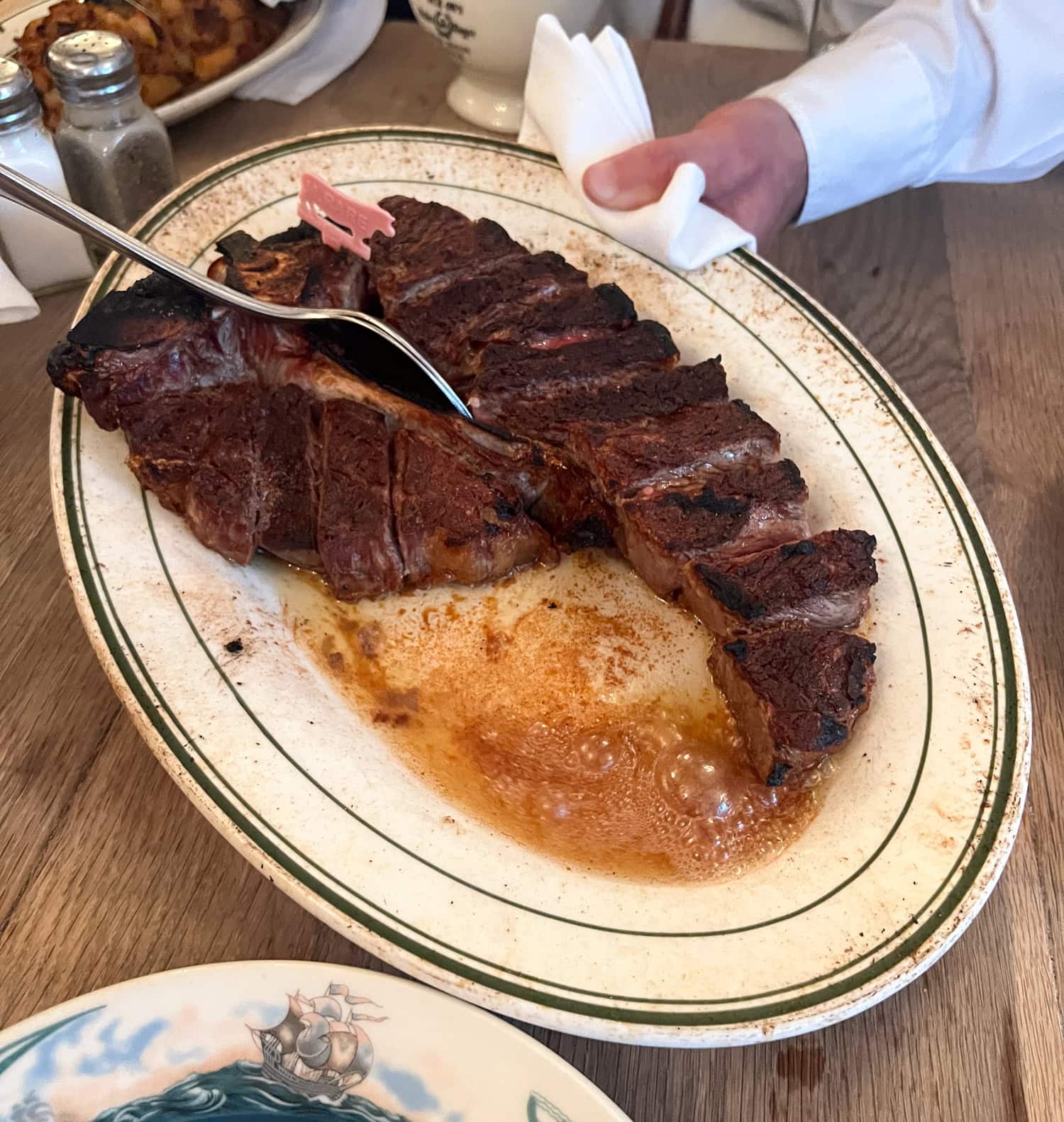
I especially enjoyed the tableside presentation, with servers slicing the steak and spooning sizzling butter underneath before serving. The steak had a deep, beefy flavor, a crisp, seared crust, and rich marbling, balanced by the filet's tenderness.
We paired the steak with pan-fried German potatoes, a dish I hadn't tried before but immediately appreciated after the first bite.
By the end, I was too full to even think about dessert, which is rare for me when traveling for Feastio. Even the way the staff wrapped up leftovers at the table felt like part of the old-school ritual.
Of all the historic NYC steakhouses I visited, Peter Luger offered the most iconic, steak-focused experience. If you want to try one of New York's most famous porterhouse steaks in a place that still feels anchored in tradition, Peter Luger is essential.
Gallaghers Steakhouse (1927)
Opened in 1927 near Broadway's Theater District, Gallaghers Steakhouse became one of New York City's classic power-dining steakhouses during the height of Broadway's golden era.
Former Ziegfeld dancer Helen Gallagher founded the restaurant and quickly became known as a gathering place for actors, athletes, politicians, and celebrities.
Gallaghers is especially recognizable for its massive glass-fronted meat locker, visible from the sidewalk, with rows of dry-aged steaks on display for passersby.
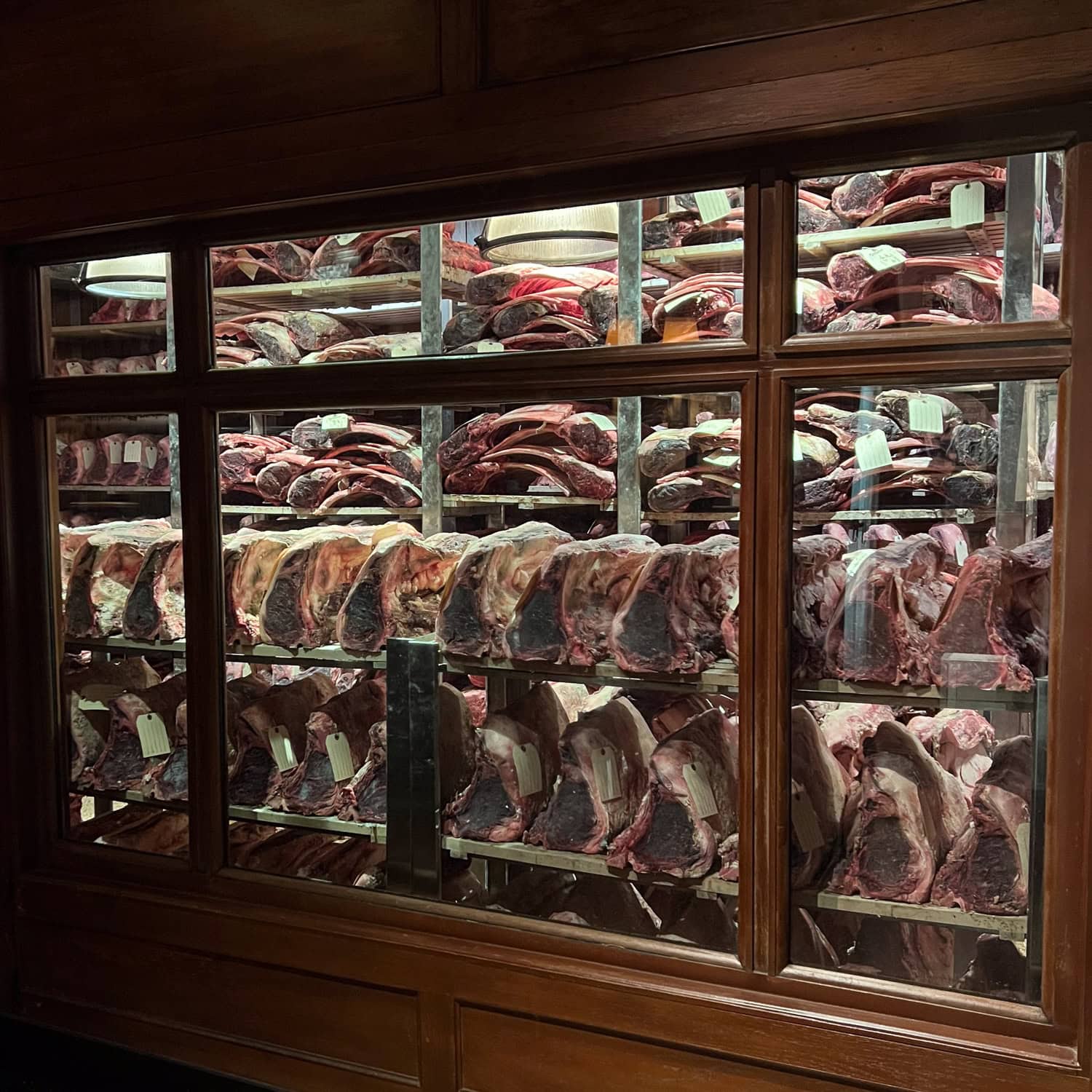
Gallaghers was the first historic steakhouse I visited in New York, and it's what inspired me to seek out more of the city's oldest steakhouses.
We stopped in for dinner as walk-ins on a Thursday night and managed to grab two seats at the bar, which only added to the lively Midtown energy.
Unlike some of the darker, quieter steakhouses on this list, Gallaghers buzzed with Midtown energy before a Broadway show. Theatergoers, tourists, and business diners filled the restaurant around us.
I ordered the Ziegfeld Follies cocktail as a nod to the restaurant's Broadway roots. We also shared the thick-cut slab bacon, a smoky, indulgent starter that came across as a New York steakhouse classic from the moment it arrived.
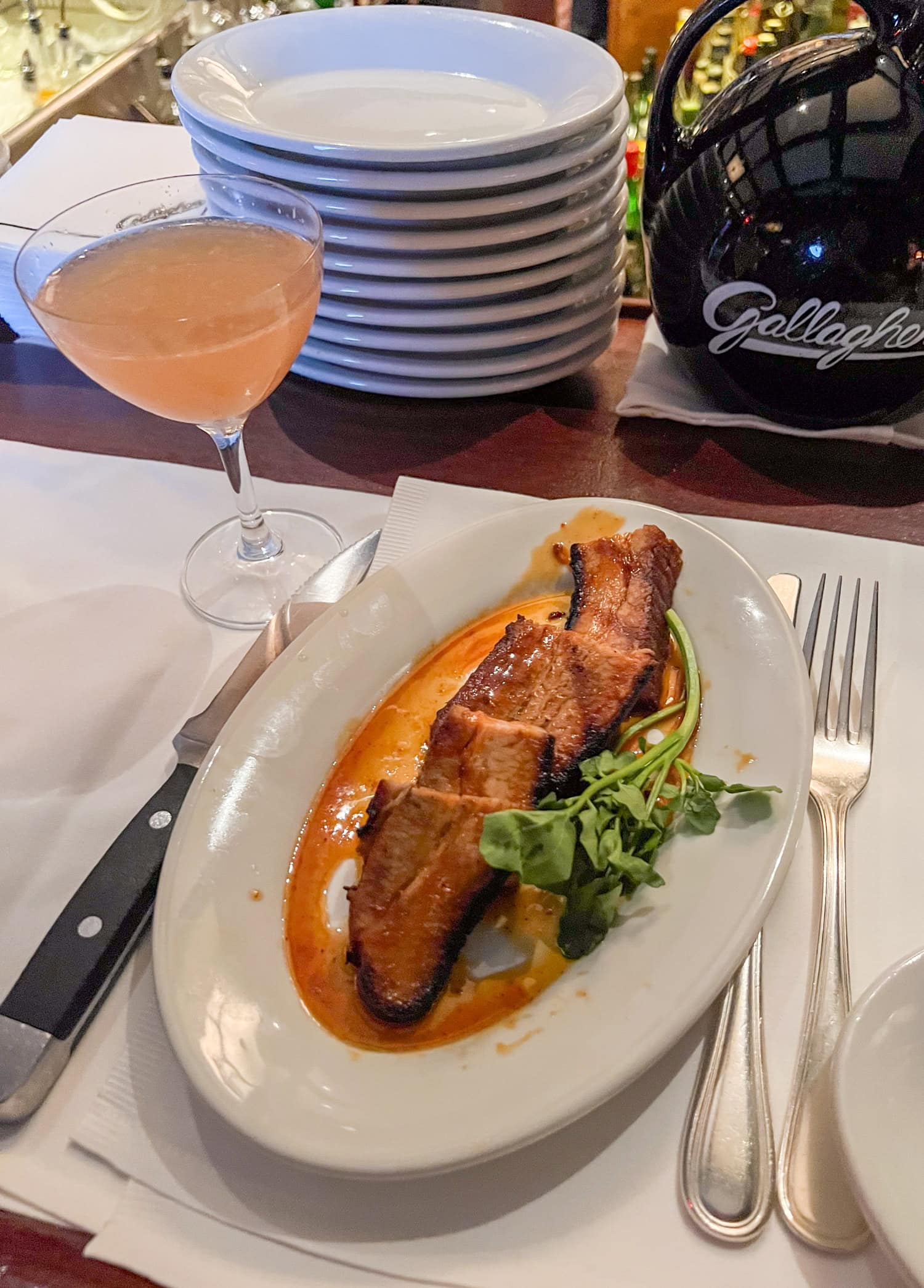
For the main course, I chose the 10-ounce filet mignon with the house sauce-tomato, butter, and herbs-while Kel went for shrimp scampi, one of her longtime favorites.
Gallaghers may not feel as steeped in history as Keens or Delmonico's, but it captures the classic Midtown steakhouse energy, closely tied to Broadway and old New York nightlife.
More importantly, Gallaghers is the place that convinced me these historic NYC steakhouses were a story worth pursuing across multiple trips.
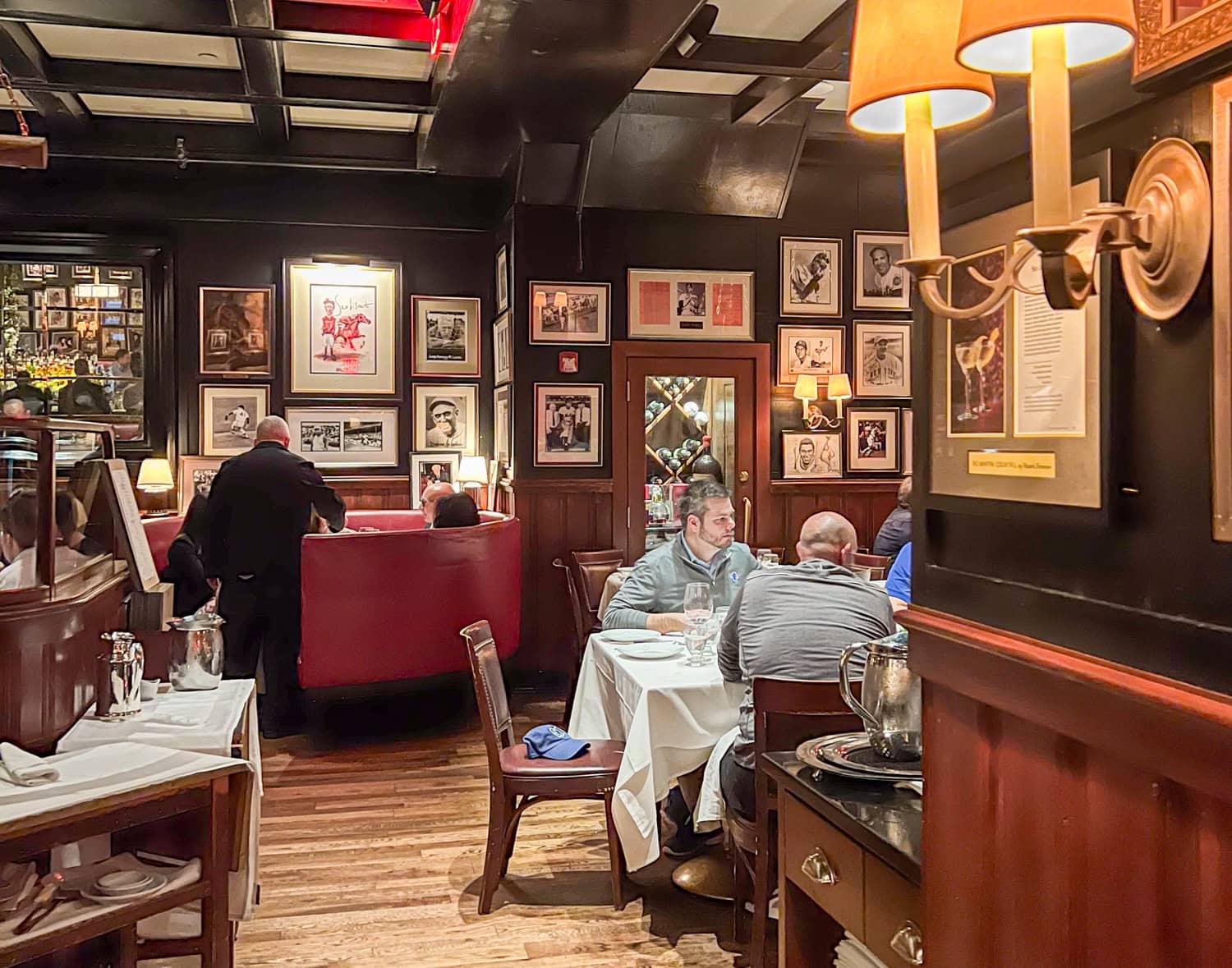
After visiting all five of these enduring NYC steakhouses, I came away appreciating how each one interprets the classic New York steakhouse in its own way.
Some lean into old-world atmosphere and tradition, while others feel more polished, theatrical, or focused almost entirely on the steak. Together, they deliver a fascinating cross-section of New York dining history, from the 19th century to today.
For me, this experience became about more than just checking famous restaurants off a list. Somewhere between the mutton chop at Keens, the porterhouse at Peter Luger, and the baked Alaska at Delmonico's, these meals started to feel connected to the bigger story of New York City and even to my own family history.
If you enjoy storied restaurants, old New York atmosphere, and memorable steak dinners, these historic steakhouses are still some of the city's most rewarding places to eat.
Looking for more dining recommendations beyond classic steakhouses? See all of the restaurants I visited during my latest trip in my NYC dining guide.