Before I visited Charleston for the first time, I thought I knew Southern food pretty well.
Living in Texas, I see biscuits, shrimp and grits, pimento cheese, and deviled eggs on menus all the time. I expected Charleston restaurants to have fantastic seafood and plenty of comfort food, but I was surprised by how different it all felt.
Over four days in Charleston, I made it my mission to try as many traditional Lowcountry dishes as I could. It didn't take long to realize that Lowcountry food is more than Southern cooking with extra seafood.
The cuisine is shaped by the Atlantic, centuries of migration and human movement, and one ingredient I found at almost every meal: rice.
What Is Lowcountry Food?
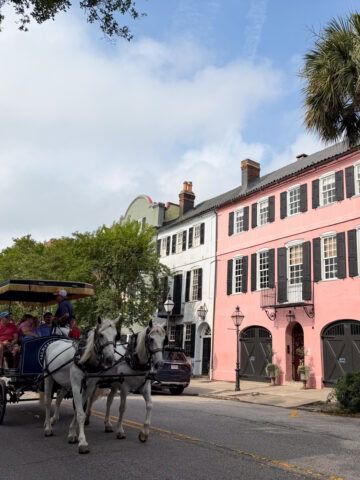
The Lowcountry runs along the South Carolina coast and into parts of Georgia. Charleston is often called the culinary heart of the South, and the food here reflects centuries of influence from many cultures.
Indigenous communities contributed ingredients like corn, which eventually became grits. European settlers brought their own cooking traditions.
Enslaved Africans, many from rice-growing regions of West Africa, contributed agricultural knowledge, ingredients, and cooking techniques that profoundly influenced the region's cuisine.
The result is one of the country's most distinctive regional cuisines, built around seafood, rice, and simple ingredients that come together to create deeply comforting dishes.
Lowcountry Food Is Defined by Water
It didn't take long to notice that water is everywhere in Charleston, and so is seafood.
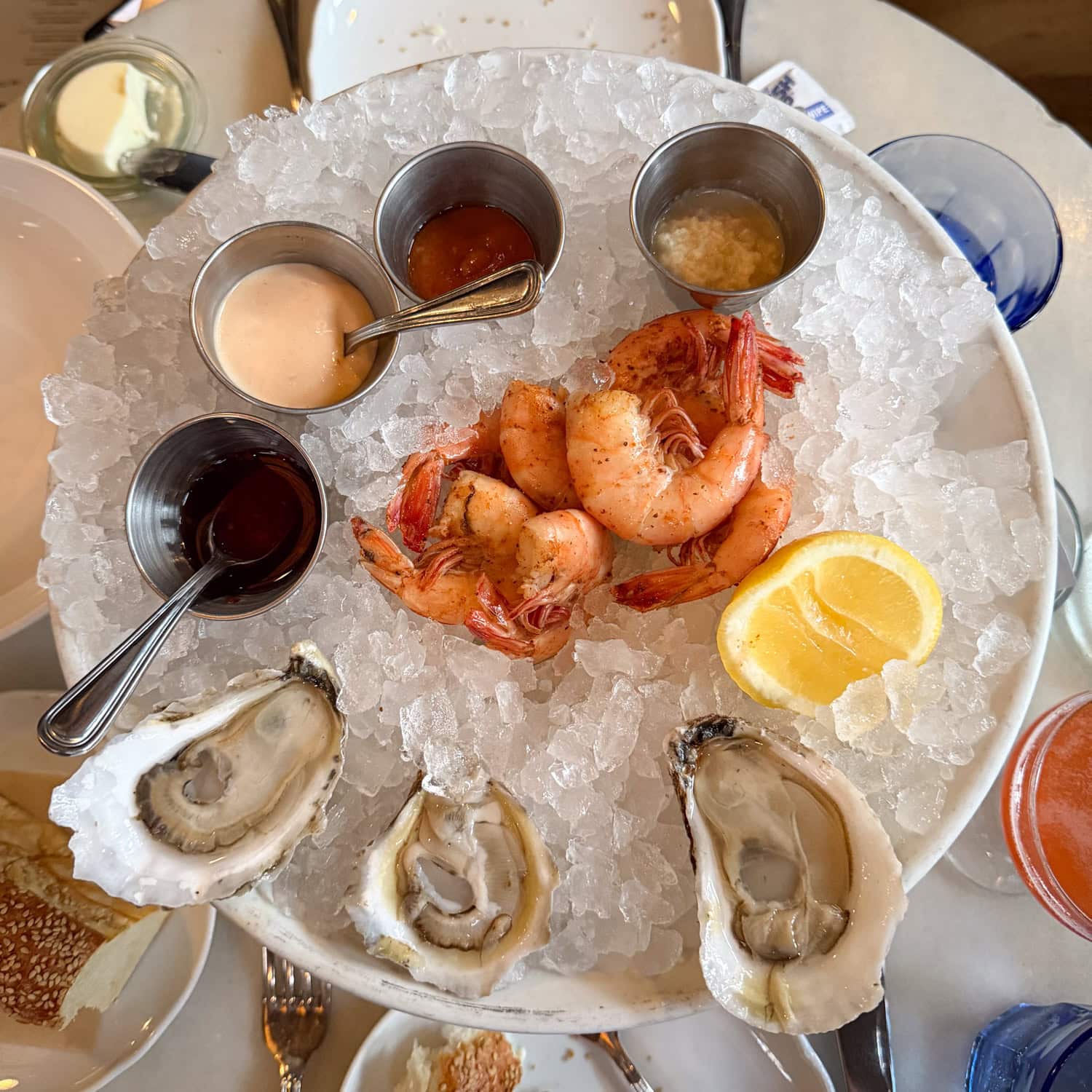
Oysters, shrimp, and crab appeared on menus everywhere, but my first taste came at The Ordinary, where we started the trip with a platter of oysters.
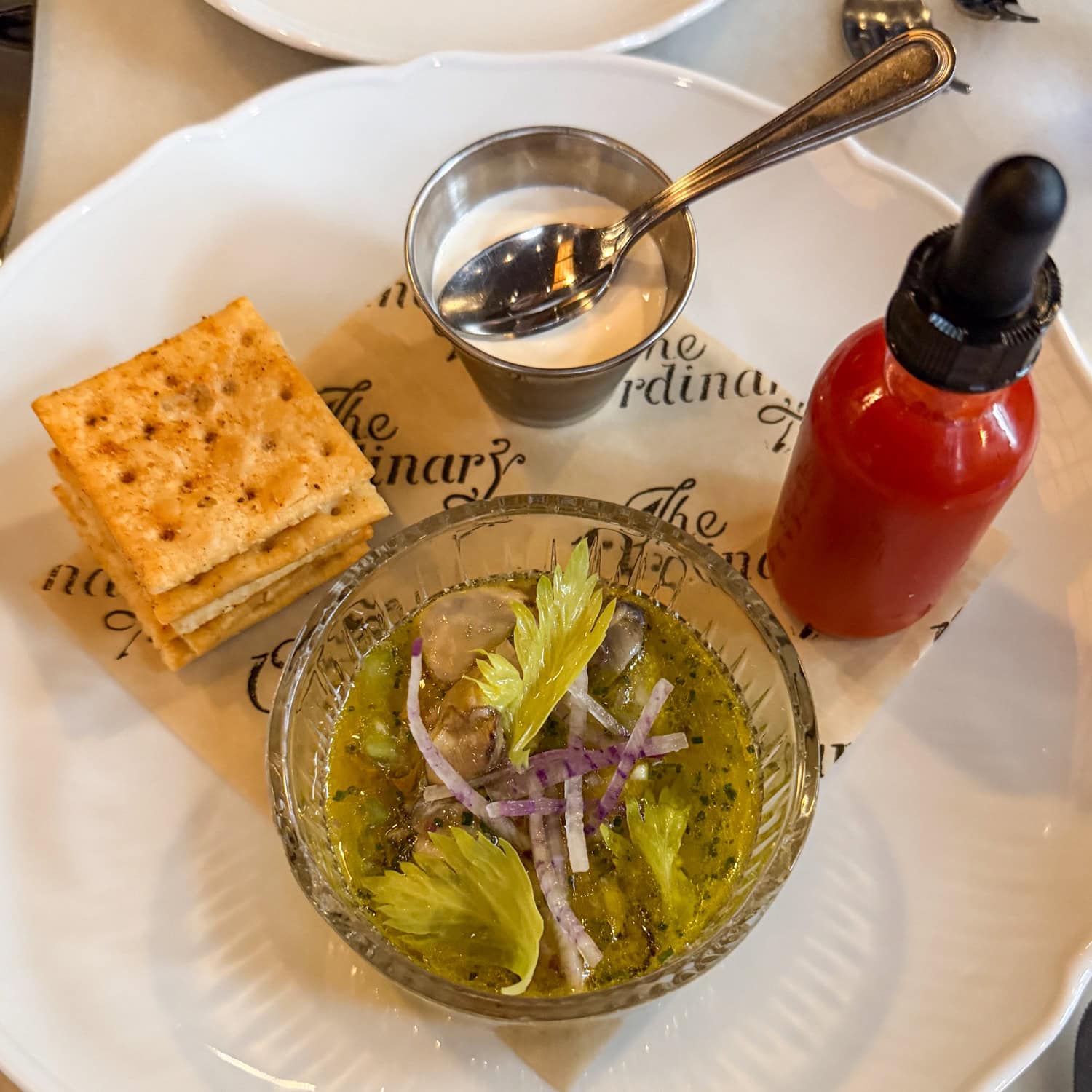
Back in Texas, I'm used to Gulf oysters-bigger and saltier. Charleston's oysters were a different experience altogether and reminded me right away that I was in a place with its own food traditions.
As I was exploring more of Charleston, it became clear that seafood isn't just another menu item here. It's one of the foundations of Lowcountry cooking.
Rice Tells the Story of the Lowcountry
Before this trip, I didn't fully appreciate just how important rice was to South Carolina's history. In fact, Charleston's wealth during the 18th and 19th centuries was built in large part on rice cultivation.
Learning that history helped explain why rice showed up at nearly every meal.
At Wild Common, I tried Carolina Gold rice, crab, and red rice. At Poogan's Porch, I ordered Hoppin' John, the classic mix of rice and black-eyed peas.
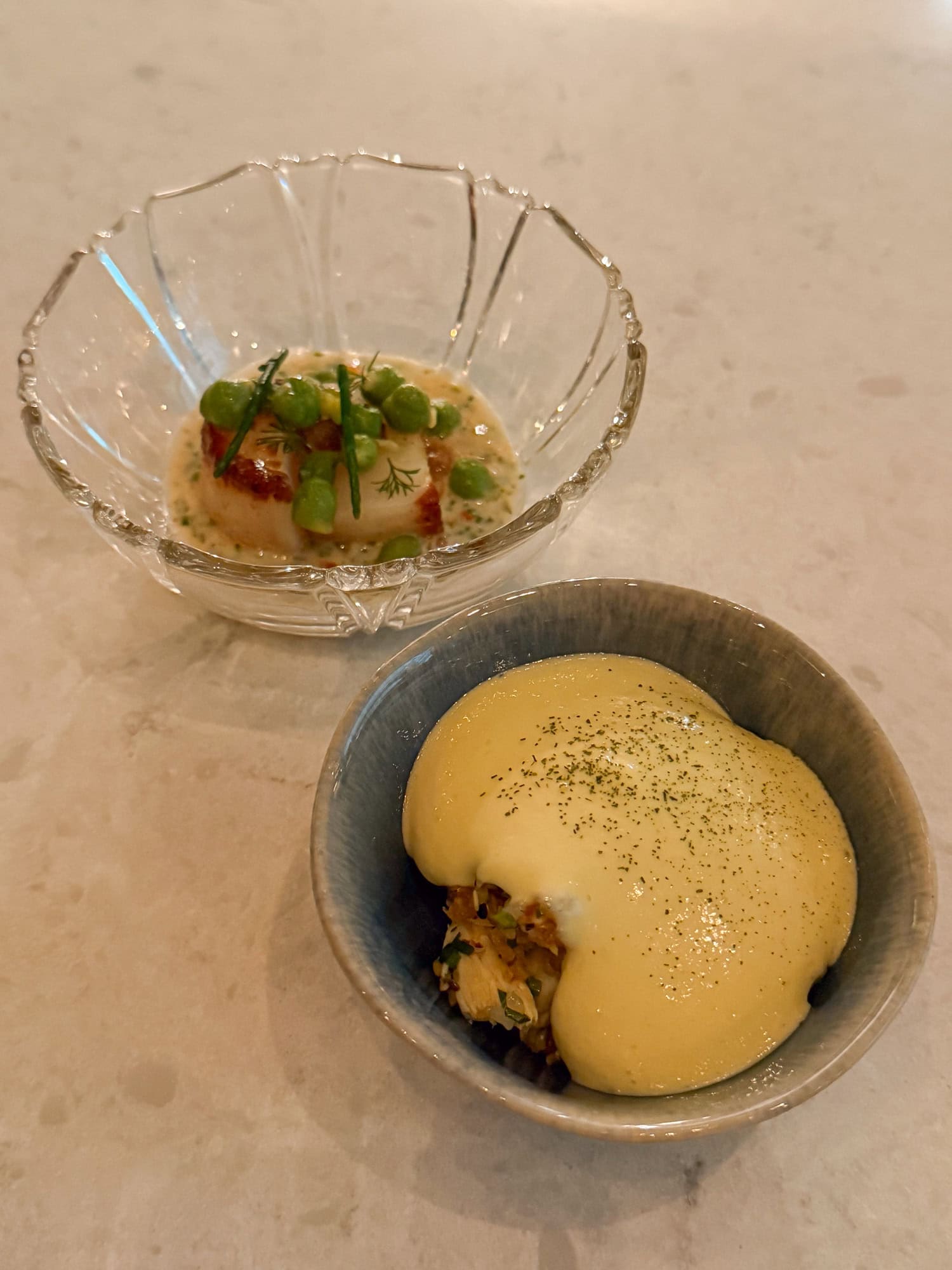
I later learned that rice cultivation in the Lowcountry depended heavily on the agricultural expertise of enslaved Africans from West Africa's rice-growing regions.
Their knowledge helped transform the region into a rice-producing powerhouse and left a lasting imprint on the cuisine that endures today.
Some of the Most Memorable Dishes Were Completely New to Me
One of my favorite parts of travel is discovering new foods, and Charleston delivered. I also found a few dishes I didn't expect to remember so clearly.
She-crab soup was new to me, and I tried it at Poogan's Porch.
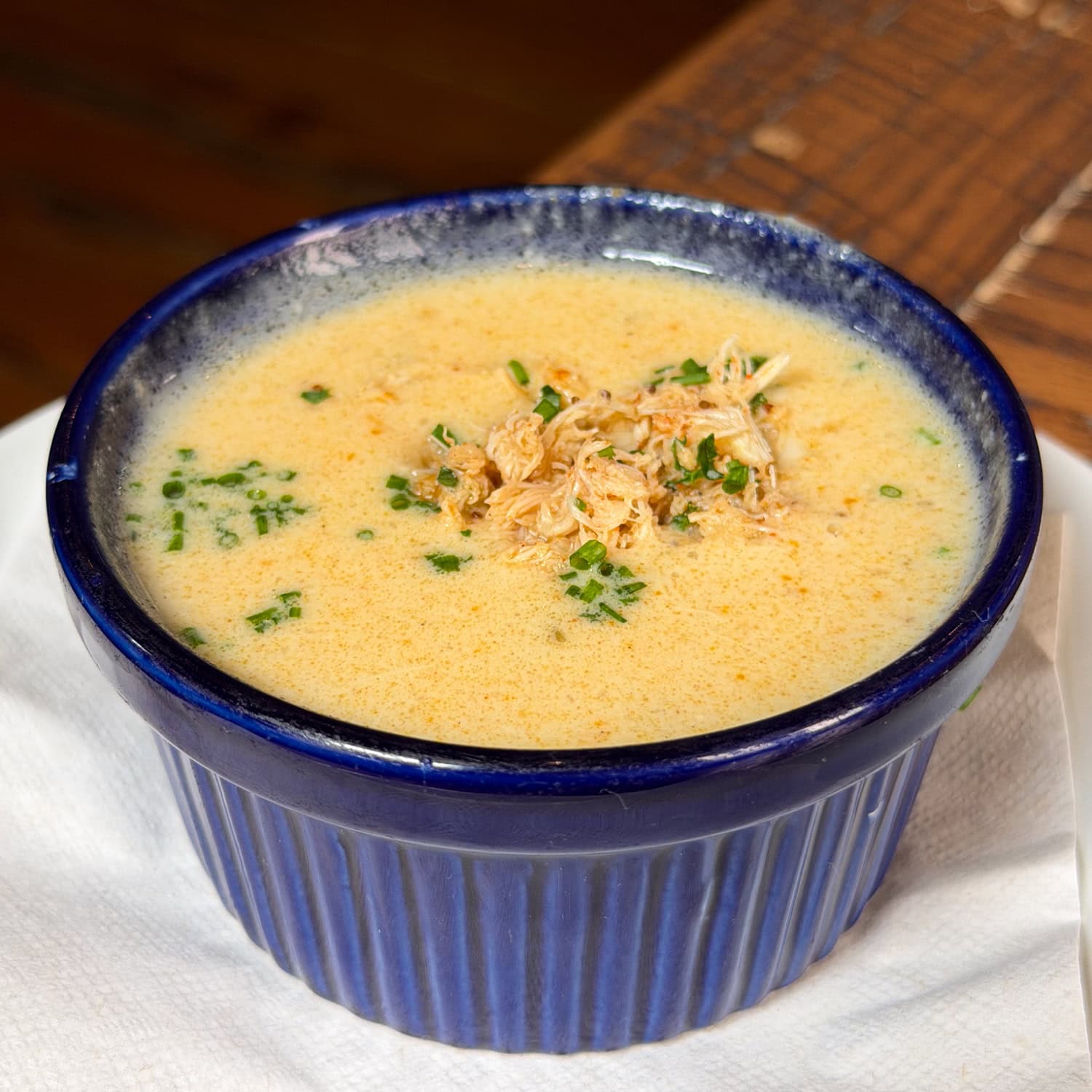
The soup was rich and creamy, named for the roe of female crabs, which gives it its flavor and color.
Hoppin' John felt familiar because I've eaten plenty of black-eyed peas and rice over the years. What was new to me was understanding the history and tradition behind the dish. Like many traditional foods, its meaning goes far beyond the ingredients themselves.
These were the dishes that made me feel like I was discovering a true regional cuisine, not just eating my way through another Southern city.
Familiar Southern Comfort Foods Feel Different Here
Not every Lowcountry dish was new to me. Shrimp and grits, biscuits, pimento cheese, and fried green tomatoes are all foods I've had before.
Charleston gave me greater context for why these dishes matter and how they fit into the region's food culture.
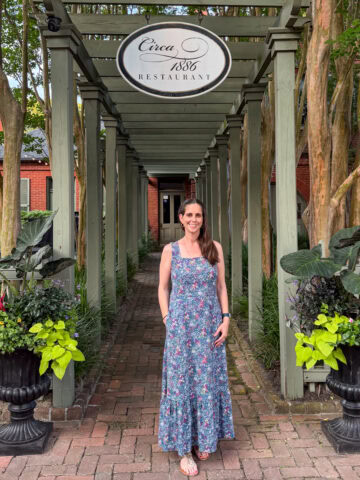
We ordered shrimp and grits for breakfast at Circa 1886. You can find versions of this dish all over the South, but eating it in Charleston made it impossible to ignore how closely it's tied to the area's history, ingredients, and sense of place.
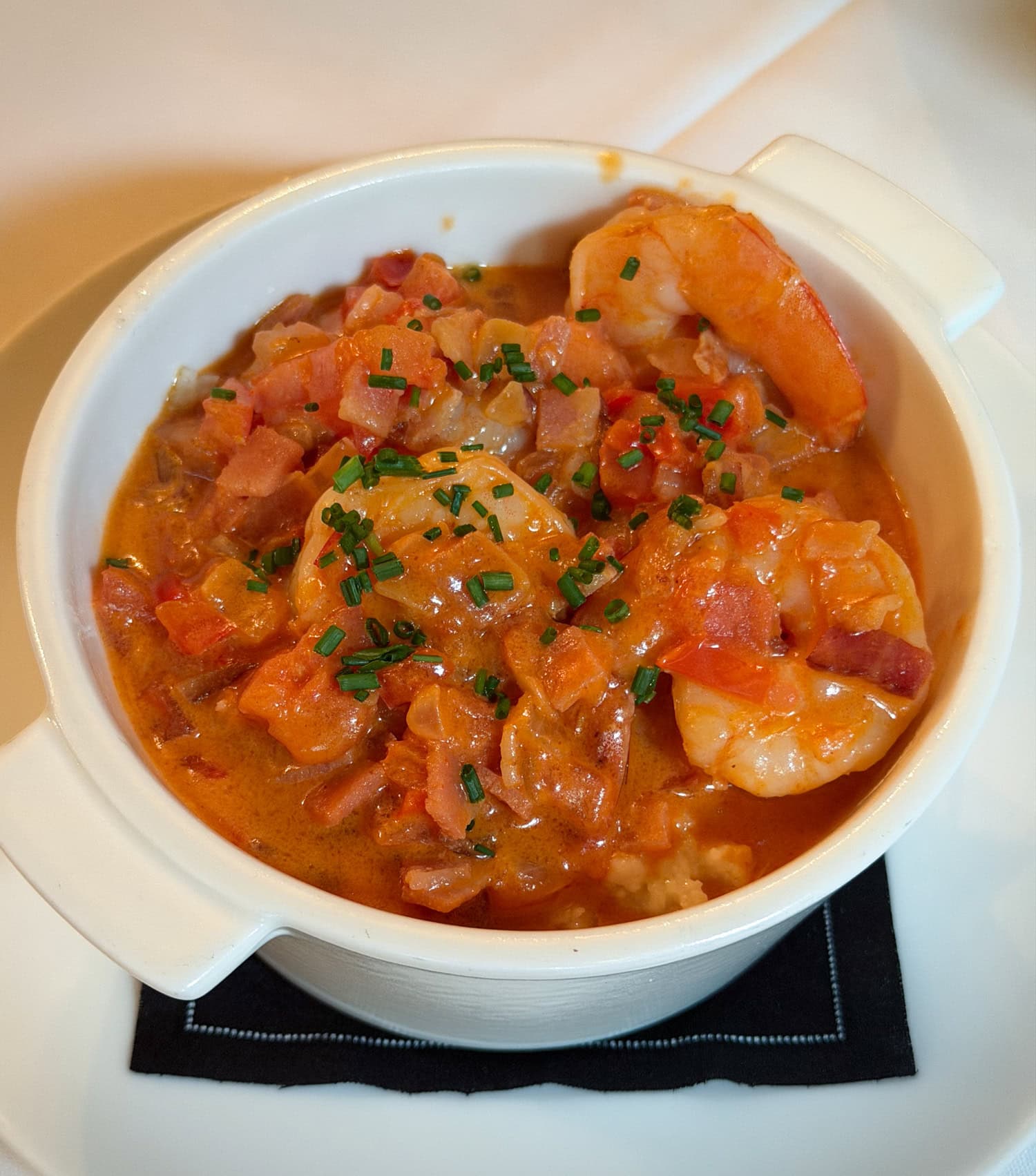
I also had a memorable Southern brunch at Husk, where every plate highlighted local ingredients and traditions.
I was surprised to learn that grits have much deeper roots than I realized. That history helped me see why shrimp and grits feel so connected to the region. Indigenous communities in the Southeast were making ground corn dishes long before Europeans arrived.
The more I learned about the history of grits, the more I realized that many of Charleston's best-known dishes have stories that go back long before the city's restaurant scene.
The Best Versions of Familiar Favorites Surprised Me
Not every memorable dish in Charleston was uniquely Lowcountry, though. At Magnolias, I had some of the best biscuits of the trip: buttery, flaky, and exactly what I hoped to find in Charleston.
The fried green tomatoes were an even bigger surprise. Before this trip, Kel and I had never quite understood the appeal of the dish, so we decided to try versions at both Poogan's Porch and Magnolias.
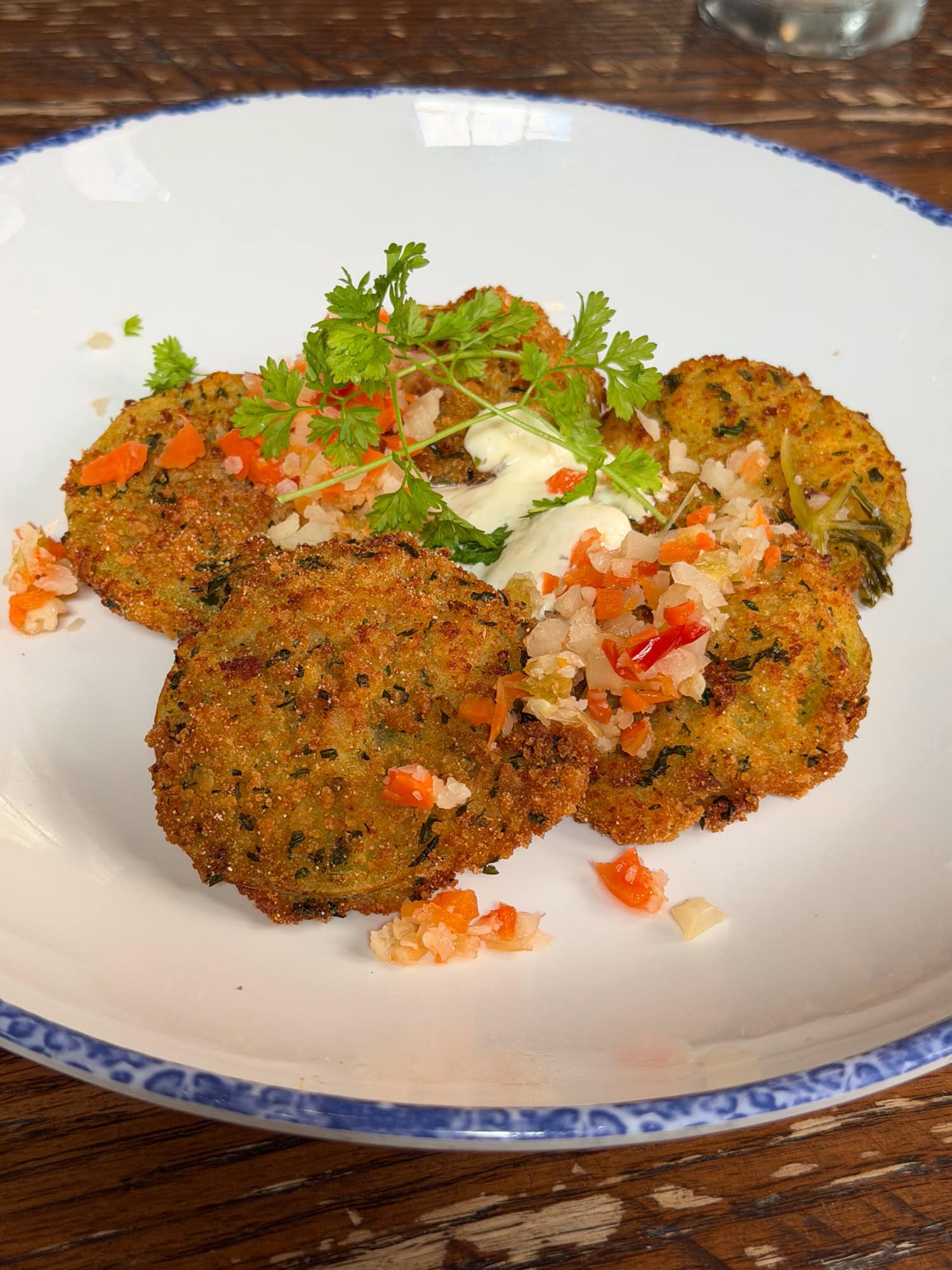
In the end, we preferred the version at Magnolias, but both helped us appreciate why fried green tomatoes have become such a Southern classic.
Pimento cheese seemed to be everywhere I looked. Seeing it on so many menus reminded me how important simple, familiar foods are to Southern cooking.
Somehow, I never got around to ordering deviled eggs, even though I saw them on several menus. I didn't feel like I missed out, though; I've had them in plenty of Austin restaurants.
What I Still Want to Try
Even after everything I ate on my first trip to Charleston, I felt like I'd only scratched the surface of Lowcountry cuisine. There was still so much more I wanted to try.
I never managed to try a Lowcountry boil, also called Frogmore stew, and I missed out on fried seafood platters and shrimp rolls. That's part of why I'm already looking forward to going back.
My long weekend in Charleston was enough to introduce me to Lowcountry cuisine, but it also left me with a much longer list of dishes to try on my next visit.
Final Thoughts
Before visiting Charleston, I assumed Lowcountry food was just Southern cuisine with more seafood. Instead, I found a regional cuisine shaped by waterways, rice fields, and the intertwined histories of Indigenous communities, European settlers, and enslaved Africans.
Every meal, from a bowl of she-crab soup to a plate of shrimp and grits, offered another glimpse into that history.
Four days wasn't nearly enough time to understand it all, but it was enough to leave me planning my next trip-and my next meal.
Disclosure: Explore Charleston and Wentworth Mansion hosted portions of my visit to Charleston, including complimentary lodging and dining experiences. This article reflects my honest impressions and was written independently.